






There's nothing more frustrating than crafting the perfect updo, only to have it droop or fall out by midday. But a style that lasts from morning to night is achievable. With the right preparation and techniques, you can keep your hair secure.
Start with the Right Foundation
The secret
to a long-lasting updo begins before you even start styling. Most stylists agree that hair is easier to work with when it's not freshly washed. Day-old hair has more natural grit and texture, which helps pins and elastics grip more effectively. If you must start with clean hair, create artificial texture. A spritz of dry shampoo or a texturizing spray at the roots will absorb excess oil and add the pliability needed to hold a style. For extra body, you can also apply a volumizing mousse to damp hair before blow-drying.
Build a Secure Structure
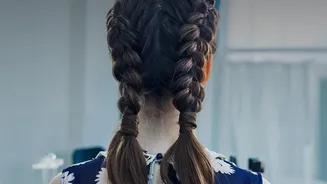
A sturdy updo is like a well-built house—it needs a solid structure. This often starts with a secure ponytail or base. Using quality hairpins and elastics is non-negotiable. For many styles, creating an anchor is key. This can be done by crossing two bobby pins to lock them in place. Another pro tip is to backcomb or tease the hair at the roots before pinning; this creates a cushion for the pins to grip onto. For more complex styles, building from the bottom up and securing each section as you go ensures the entire updo is stable. Finally, don't underestimate the power of braids. Incorporating braids into your updo provides an internal structure that is less likely to fall apart.
Tips for Fine or Silky Hair
Fine hair's tendency to be slippery is the biggest challenge for updos. The key is to create as much texture and grip as possible. Avoid heavy serums or conditioners that make hair even silkier. Instead, texturizing sprays and dry shampoos are your best friends. When it comes to securing the style, traditional bobby pins often slide out. Consider using spin pins, which are coiled and grip fine hair much more effectively. Another technique is to tie sections with small, clear elastics before pinning to create a more secure anchor point. Avoid perfectly slicked-back styles, as they can accentuate thinness; a slightly undone, softer look often creates an illusion of more volume.
Tricks for Thick or Heavy Hair
For those blessed with thick, heavy hair, the primary challenge is managing the weight to avoid headaches and gravitational collapse. A single, high bun can put too much strain on one spot. Instead, distribute the weight. Consider styles like a double stacked bun or a braided crown that spreads the hair's mass across the scalp. Using large, sturdy hair forks or clips can be more effective than dozens of small bobby pins. Sectioning is also a crucial strategy. Breaking a ponytail into multiple segments or creating several twists or buns can make the style more manageable and secure.
Embracing Curly and Wavy Hair
Curly hair has a natural advantage for updos thanks to its inherent volume and texture, which helps hold styles in place. The focus here is on working with your curl pattern, not against it. To ensure longevity, it’s best to start with stretched curls, which can be achieved through methods like braid-outs or twist-outs, as this reduces shrinkage and tension. Hydration is key to preventing frizz, so start with well-moisturized hair. Styles that embrace the natural texture, like a high pineapple updo, a messy cascade, or a twisted bun, are often the most successful and easiest to maintain. Using gentle hair elastics, like scrunchies, can help secure the hair without causing breakage.
The Finishing Touches that Lock It In
Once your updo is constructed, the final step is to lock it in place. A good-quality hairspray is essential. For a strong hold that doesn't look stiff or crunchy, opt for a flexible-hold or stronghold spray and apply it from a distance of about six to eight inches. If you want to tame flyaways without adding stiffness, a light mist of shine spray or a tiny amount of smoothing cream applied to the palms of your hands and gently smoothed over the hair can work wonders. Before you head out, do a final check from all angles using a second mirror to ensure there are no loose pieces.