






The Quantum Cold Problem
One of the defining images of quantum computing is a complex, chandelier-like structure of wires and pipes. That entire apparatus is a super-powered refrigerator, designed to cool a small processor to temperatures colder than deep space, often near absolute
zero. This extreme cold is necessary to combat a problem called decoherence. Qubits, the basic units of quantum information, are incredibly fragile. Their special ability to exist in multiple states at once—a property called superposition—is easily destroyed by tiny interactions with their environment, such as heat, vibration, or stray electromagnetic fields. When a qubit loses its quantum state, the information it holds is lost, leading to computational errors. Keeping the system ultra-cold slows down these environmental interactions, giving the qubits enough stability, or 'coherence time', to perform calculations. However, these cryogenic systems are massive, expensive, and energy-intensive, confining quantum computing largely to specialized labs and limiting its practical application.
A Breakthrough in Gold
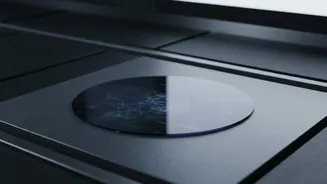
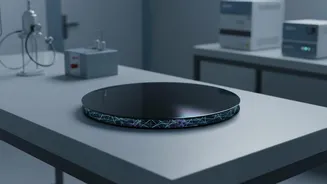
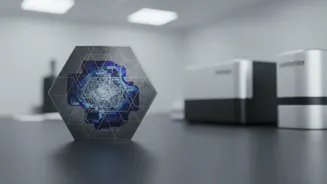
A recent breakthrough from physicists at Louisiana State University (LSU), published in the journal Nature, offers a way to bypass the cold. They have created what is being called the first room-temperature quantum material able to sort and transport different quantum states of light while preserving the information they carry. The material itself is an ultrathin 'metacrystal' built from a film of gold on a glass chip. Using focused ion beams, the research team carved hundreds of microscopic slits into the gold. These tiny structures act like artificial atoms that, together, form a crystal with no natural equivalent. This metacrystal acts as a filter, directing different kinds of quantum light along separate paths without scrambling the fragile quantum information, a feat previously thought to require cryogenic temperatures.
Redefining Practical Operation
The development is significant because it directly addresses what 'practical operation' means for quantum technology. For quantum computers to move from the lab to the data center, they need to be smaller, cheaper, and more reliable. A material that eliminates the need for bulky cryogenic refrigeration is a massive step in that direction. The LSU team's metacrystal demonstrated 'robust transport', meaning it can move quantum states from one point to another without them breaking down, a process essential for building circuits and communication pathways within a quantum device. By proving this is possible under everyday conditions, the discovery establishes a blueprint for engineering a new class of materials. This could accelerate the development of not just quantum computers, but also other quantum technologies like ultra-secure communication networks and highly sensitive detectors.
The Road Ahead Is Still Long
While this discovery is a major milestone, it is not the final piece of the puzzle. The new material works with quantum states of light (photons), which is one of several leading approaches to building quantum computers. Other methods, using superconducting circuits or trapped ions, still face the cold barrier. Furthermore, this material demonstrates a key principle—maintaining coherence at room temperature—but it's a foundational component, not a complete quantum computer. The next steps will involve integrating these types of materials into larger, more complex systems and proving they can scale. The journey to a fault-tolerant quantum computer, one that can correct its own errors and run complex algorithms, remains an engineering challenge that will likely take many more years and breakthroughs to solve.