





Why 20 Minutes is a Game-Changer
Don't underestimate the power of short, consistent workouts. Research shows that brief, intense exercise sessions can be remarkably effective for building muscle and improving overall health. The key is intensity and consistency. A focused 20-minute routine
performed daily provides the stimulus your muscles need to adapt and grow stronger over time. This approach is not only efficient but also easier to stick with, turning fitness into a sustainable habit rather than a time-consuming chore. By using your own body weight, you provide enough resistance to challenge your muscles, leading to gains in strength and definition without needing a single piece of equipment.
The Three-Minute Dynamic Warm-Up
Before you start, it's crucial to prepare your muscles to prevent injury and improve performance. A dynamic warm-up gets your blood flowing and increases your range of motion. Spend about three minutes on this sequence: - Jumping Jacks (60 seconds): A classic way to raise your heart rate. - Arm Circles (60 seconds): Do 30 seconds of forward circles and 30 seconds of backward circles to loosen up your shoulders. - Leg Swings (60 seconds): Hold onto a wall or bedpost for balance. Swing one leg forward and backward for 30 seconds, then switch to the other leg.
The 14-Minute Full-Body Circuit
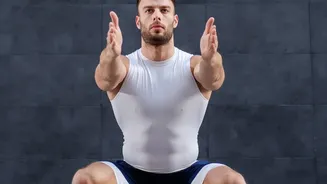
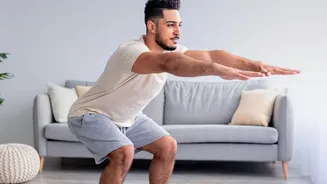
This circuit is designed to work your entire body using compound movements. The structure is simple: perform each exercise for 40-45 seconds, then rest for 15-20 seconds before moving to the next. Complete two full rounds of the following five exercises. 1. Push-Ups: The ultimate upper-body exercise for chest, shoulders, and triceps. If a standard push-up is too difficult, start with knee push-ups or incline push-ups against your bed or desk. 2. Bodyweight Squats: This targets your quads, hamstrings, and glutes. Stand with feet shoulder-width apart and lower yourself as if sitting in a chair, keeping your back straight and chest up. 3. Lunges: Excellent for single-leg strength and stability. Step forward with one leg and lower your hips until both knees are at a 90-degree angle. Push back to the start and alternate legs. 4. Plank: A core-strengthening champion. Hold a high plank position, keeping your body in a straight line from head to heels. Engage your abs and glutes. 5. Glute Bridges: Lie on your back with your knees bent and feet flat on the floor. Lift your hips toward the ceiling, squeeze your glutes at the top, and then lower back down.
The Three-Minute Cool-Down
After your workout, dedicate a few minutes to static stretching. This helps improve flexibility and aids in muscle recovery. Hold each stretch for about 30 seconds without bouncing. - Chest Stretch: Stand in a doorway and place your forearms on the frame, with elbows slightly below shoulder height. Step forward gently to feel a stretch across your chest. - Quadriceps Stretch: Standing, hold onto something for balance. Grab your right foot and gently pull your heel towards your glute. Repeat on the left side. - Hamstring Stretch: Sit on the floor with one leg extended straight and the other bent. Gently lean forward over the straight leg until you feel a stretch.
Consistency and Progression Are Key
The secret to seeing real results is consistency. Aim to complete this routine at least five days a week. As you get stronger, you'll need to make the exercises more challenging to continue building muscle. This is known as progressive overload. You can achieve this by increasing the number of repetitions within the 40-second window, slowing down the movement to increase time under tension, or switching to more advanced variations. For example, progress from knee push-ups to standard push-ups, or from standard squats to jump squats to increase the intensity. Listening to your body is crucial; rest when you need to, but always aim to push your limits just a little further each week.