



The Giants Take Centre Stage
The latter half of the year is prime time for viewing our solar system's two largest planets. First up is Saturn, which reaches opposition on October 4, 2026. Opposition is when Earth passes directly between a planet and the Sun, making the planet appear
at its biggest and brightest for the year. Visible all night long, the ringed jewel will be a stunning sight in even a small telescope. Following this, Jupiter takes the celestial spotlight. Though its opposition technically falls in early January 2027, it will be a brilliant, unmissable object in the evening sky throughout November and December 2026. It will be the brightest star-like object in the night sky during this period, easily outshining everything except the Moon.
Meteor Showers Return
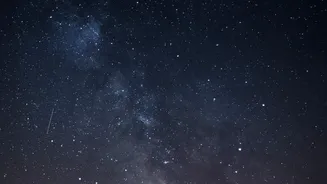
If the Perseids left you wanting more, the sky has you covered. The Orionid meteor shower, which originates from the dust of the famous Halley's Comet, peaks on the night of October 21-22. While a bright moon may wash out some of the fainter meteors, you can still expect to see up to 20 fast, bright streaks per hour in the hours before dawn. In mid-November, the Leonids make their appearance, peaking on the night of November 16-17. While not a storm year, the Leonids are known for their incredible speed, often leaving glowing trails that linger for a few seconds.
December's Dazzling Geminids
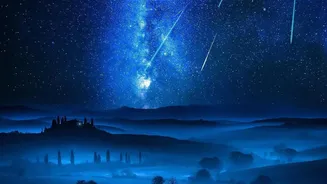
The undisputed king of meteor showers, the Geminids, will be the grand finale of 2026. Peaking on the night of December 13-14, this is the one event you don't want to miss. The Geminids are known for being bright, plentiful, and often multi-coloured, with rates reaching up to 120 meteors per hour in dark, clear skies. Unlike most showers which come from comets, the Geminids are born from an asteroid called 3200 Phaethon. In 2026, viewing conditions are nearly perfect, as the crescent moon will set early in the evening, leaving the sky dark for the prime viewing hours after midnight. Even the more modest Ursid meteor shower follows a week later around December 21-22, offering a final sprinkle of shooting stars before the year ends.
A Map of Seasonal Stars
As we move into autumn, look for the Great Square of Pegasus, a large asterism that serves as a guidepost to the autumn sky. Nearby, you'll find the 'W' shape of Cassiopeia. From a truly dark location, you might even be able to spot the faint, fuzzy patch of the Andromeda Galaxy, our closest major galactic neighbour. As winter approaches, the magnificent constellation of Orion the Hunter will begin to dominate the eastern sky after sunset. His bright belt is one of the most recognisable patterns in the sky, pointing downwards towards Sirius, the brightest star in our night sky, and upwards towards the orange giant Aldebaran in Taurus.
Tips for the Best View
To make the most of these celestial sights, your best tool is a dark sky. The increasing light pollution in our cities can obscure all but the brightest objects. For events like meteor showers, try to travel to a location away from city lights. Places like the Hanle Dark Sky Reserve in Ladakh, parts of the Rann of Kutch, Jaisalmer, or Coorg offer spectacular viewing conditions. Allow your eyes about 20-30 minutes to fully adapt to the darkness; you'll be amazed at how many more stars become visible. While planets are bright enough to be seen from a city balcony, a good pair of binoculars can reveal Jupiter's four largest moons or give you a clearer sense of Saturn's shape.