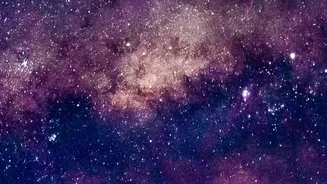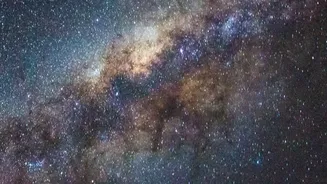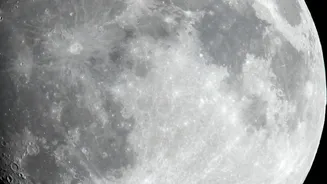


The Challenge of Photographing Darkness
Capturing the faint light of distant stars is difficult for any camera. It's especially hard for smartphones, which have tiny lenses and image sensors compared to traditional DSLR or mirrorless cameras. In photography, capturing light is everything. A
larger sensor can gather more light, resulting in a cleaner, brighter image with less grain, or what photographers call “noise.” For years, the small sensors in phones made them nearly useless for serious night sky photography. Photos would come out dark, blurry, and full of digital noise. To get a good astro photo, a camera needs to let in as much light as possible, which typically requires a long exposure time (keeping the shutter open) and a high light sensitivity setting (ISO). On a phone, this would normally lead to a noisy, smeared mess.
Software Is the New Hardware
This is where computational photography changes the game. It refers to the use of powerful processing and clever algorithms to digitally enhance an image at the moment of capture. Instead of relying purely on optics and sensor size, phones now use their powerful processors to overcome physical limitations. Features like Google's Night Sight, Apple's Night Mode, and Samsung's similar modes are all built on this principle. They don't just take one picture; they use software to intelligently combine multiple images and data points into one superior photograph, essentially doing what a professional photographer might do manually in editing software, but automatically and in seconds.
The Core Technique: Image Stacking
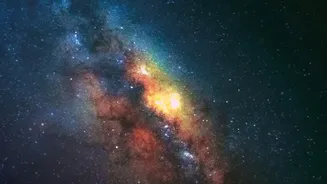
The most important technique for mobile astrophotography is called image stacking. Instead of one long exposure, which would be blurry from hand-shake and the Earth's rotation, the phone rapidly captures a series of short exposures over several seconds, or even minutes if on a tripod. The software then aligns these individual frames, accounting for the slight movement of the stars. By averaging these images together, the random digital noise in each frame is significantly reduced, while the consistent light from the stars and celestial objects is reinforced. The result is a single, composite image that is much cleaner and more detailed than any of the individual shots would have been.
AI as the Intelligent Director
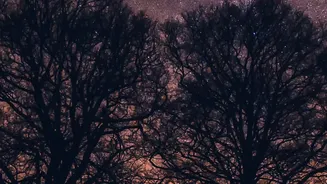
Artificial intelligence plays a crucial role in orchestrating this entire process. Modern smartphone processors use machine learning and neural engines to analyze the scene in real-time. When an astrophotography mode is activated, usually by detecting that the phone is on a tripod and pointed at a dark sky, the AI takes over. It determines the optimal number of frames to capture and the right exposure settings for each. The AI is also trained to differentiate between parts of the image, for instance, telling the sky apart from trees or buildings in the foreground. This allows it to apply different enhancements, like selectively brightening the stars without overexposing the landscape. Some AI models are even trained on thousands of professionally captured astrophotographs to learn what a good night sky image should look like.
Putting It All Together for the Final Shot
When you press the shutter button in an astrophotography mode, a complex sequence unfolds. The phone captures numerous frames, automatically discards any that are too blurry, and aligns the sharpest ones. It then fuses them together to boost brightness and reduce noise. Simultaneously, AI algorithms work to correct colors, enhance details, and apply a final tone map that makes the image pop, often inspired by how artists portray night scenes. The entire process, which can involve synthetic exposure times of several minutes, happens automatically. The final image that appears on your screen is not a single photograph in the traditional sense, but a computationally constructed representation of the night sky, far beyond what the small camera sensor could see on its own.