






A Revolution in Warfare
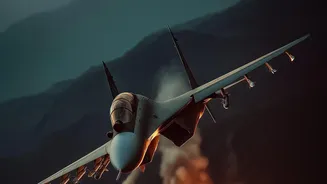
Autonomous defense systems are no longer a far-off concept. These technologies, often grouped under the term Lethal Autonomous Weapons Systems (LAWS), are weapons that can independently search for, identify, and engage targets without direct human control.
This goes beyond current remote-controlled drones. We are talking about AI-powered drone swarms, robotic ground vehicles, and intelligent targeting systems that make life-or-death decisions in fractions of a second. Proponents argue these systems can be more precise and keep human soldiers out of harm's way. However, critics warn of the grave ethical, legal, and security risks of removing humans from the loop, creating accountability vacuums and the potential for rapid, unintended escalation of conflict.
The Investment Boom
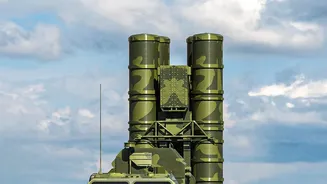
The primary driver of diplomatic urgency is money. Global military expenditure has soared, reaching nearly $3 trillion in 2025. A significant and growing portion of this is being funnelled into AI and autonomy. The United States, China, and Russia are leading the charge, collectively pouring trillions into these next-generation systems. The U.S. Department of Defense's 2026 budget, for example, includes a record $13.4 billion specifically for AI and autonomous systems. Private capital is also flooding in, with defense tech startups like Anduril Industries reaching massive valuations on the back of investor interest in autonomy. This isn't just a Western phenomenon; countries across the Indo-Pacific and the Middle East are also increasing their budgets for AI-enabled military hardware.
The UN's Deliberate Pace
In stark contrast to the lightning pace of technological development is the slow, deliberate world of international diplomacy. For nearly a decade, nations have been meeting at the UN in Geneva under the framework of the Convention on Certain Conventional Weapons (CCW). These discussions, held by a body known as the Group of Governmental Experts (GGE), aim to establish common ground on how to address the challenges of LAWS. However, the process is notoriously slow, hampered by a consensus-based model that means any single nation can effectively veto progress. For years, the talks produced little more than reports and shared understandings, while the technology itself continued to advance.
Technology Forcing the Diplomatic Hand
The sheer scale of recent investment has changed the dynamic, creating a palpable sense of urgency. The rapid proliferation of these systems is no longer a future hypothetical; it is an imminent reality. This has pushed many nations to realize that failing to act now could mean facing a world where these weapons are widely deployed without any rules, a 'fait accompli' on the battlefield. The mismatch between the speed of development and the pace of regulation has become a central point of concern. As a result, the GGE meetings have taken on a new intensity. A recent session in September 2026 managed to agree on a set of 'elements' for a potential future instrument, a key step that had been elusive for years. The UN officially launched a comprehensive initiative in October 2026 to establish a coordinated international framework.
A Deep and Persistent Divide
While talks may be accelerating, agreement is far from certain. The international community is deeply split. A large bloc of states, supported by humanitarian organizations, is calling for a legally binding treaty to ban or strictly regulate LAWS, arguing that meaningful human control must always be maintained. On the other side, major military powers with significant investment in this technology, including the U.S. and Russia, have resisted calls for a binding ban. These countries prefer a non-binding framework of 'best practices' and argue that existing international humanitarian law is sufficient. This fundamental disagreement—a ban versus guidelines—remains the primary obstacle to a global consensus.