






Beyond the Screen: Defining Physical AI
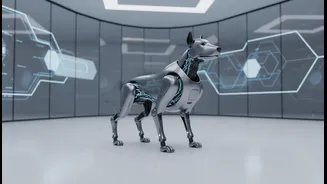
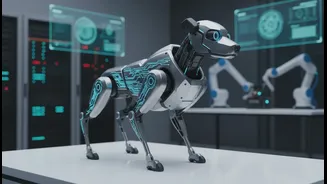
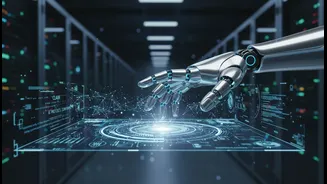
At its core, Physical AI refers to artificial intelligence systems that can perceive, reason, and act in the real world. Unlike the AI in a chatbot or a search engine that operates entirely in a digital space, Physical AI bridges the gap between bits
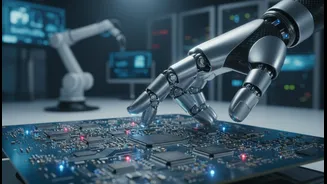
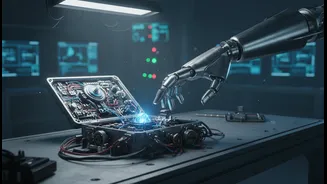
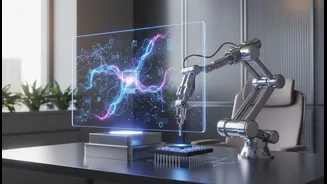
and atoms. It combines advanced AI models with physical hardware like robots, sensors, cameras, and motors. This allows a machine to observe its environment, understand what is happening, and then physically perform a task. Previously, a factory robot might have been programmed to perform one specific, repetitive motion, like welding a single seam thousands of times. Physical AI introduces a layer of intelligence, giving robots the ability to operate autonomously and adapt to new situations without being explicitly programmed for every single action.
From Words to Actions
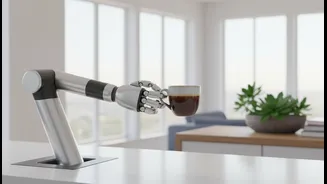
The key use case for robotics and AI teams is the ability to translate human language into robotic action. Modern systems, often called vision-language-action (VLA) models, are trained on vast datasets that include text, images, and data from robot interactions. This enables them to understand a command like, “pick up the red apple from the basket.” The AI perceives the scene through its cameras, identifies the correct object based on the language prompt, plans the necessary sequence of movements, and guides the robotic arm to complete the task. This is a significant leap from traditional robotics, which required a specialist to write complex code for every new task. With Physical AI, the interaction becomes more intuitive, allowing for a broader range of tasks and faster development cycles.
A New Toolkit for Robotics
For robotics teams, Physical AI is a game-changer. It lowers the barrier to deploying robots in complex, unstructured environments. Instead of painstakingly coding for every possible variable, developers can leverage generalist AI models that come pre-trained with a foundational understanding of the physical world. Companies like Google DeepMind and various startups are developing these models, which can be fine-tuned for specific robots and tasks with relatively small amounts of new data. This dramatically accelerates the process of getting a robot to perform a new function. It also makes robots far more flexible. An AI-powered robot in a warehouse, for example, could be retasked from packing boxes to sorting items with a simple command, adapting its own movements and grip strength accordingly.
Putting Physical AI to Work
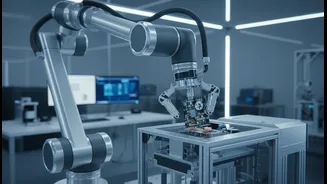
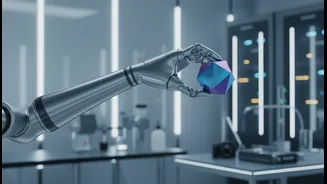
The potential applications span nearly every industry. In manufacturing, robots with Physical AI can perform quality inspections or adapt to changes on an assembly line without needing to be completely reprogrammed. In logistics and warehousing, they can handle the chaotic environment of a fulfillment center, picking and packing items of various shapes and sizes. Healthcare is another promising area, with AI-powered surgical assistants performing procedures with high precision and lab robots handling samples to reduce human error. Even agriculture stands to benefit, with autonomous tractors and harvesters that can navigate fields and adapt to crop conditions. These applications are moving from the lab into early real-world deployments, signalling a major shift in automation.
Challenges on the Path to Autonomy
Despite the rapid progress, significant hurdles remain. The physical world is infinitely more complex and unpredictable than a digital environment. Ensuring a robot can operate safely and reliably around humans is a paramount concern. Handling unexpected situations—like a dropped object or a slippery surface—is a major technical challenge that separates impressive demos from production-ready systems. Furthermore, the cost of hardware and the difficulty of collecting the vast amounts of real-world data needed to train these models can be prohibitive. Issues like connectivity are also critical; a robot that loses its connection can become a hazard. Overcoming these challenges is the central focus for researchers and companies working to make Physical AI a widespread reality.