

A New Flashpoint in a Long Conflict
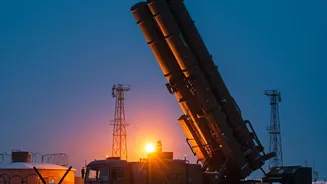
Tensions between the U.S. and Iran have once again flared, with a series of incidents in mid-November 2026 heightening concerns across the Middle East. According to U.S. officials, American forces conducted what they termed 'self-defense' strikes on an Islamic
Revolutionary Guard Corps (IRGC) missile site on Iran's Qeshm Island. This action was reportedly in response to several attempted Iranian drone attacks on U.S. military installations in Bahrain and Kuwait over a period of just a few days. While the U.S. reported that these Iranian attacks were intercepted without causing damage, the rapid exchange has drawn global attention back to the fragile security situation in the Persian Gulf and the Strait of Hormuz, a critical artery for global oil shipments.
A Puzzling Overlap on the Map
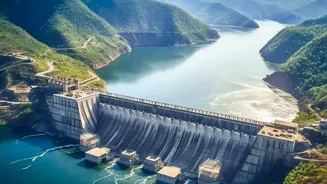
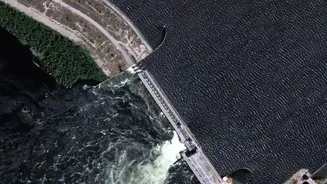
This latest round of conflict has cast a spotlight on a subject of increasing debate among military and water security analysts: the geographical relationship between Iran's vast network of dams and its secretive military installations. For years, experts have questioned the logic behind Iran's prolific dam-building, with at least 533 documented across the country, many in areas where the civilian or agricultural justification seemed weak. Recently, analysts noticed a striking pattern: maps of U.S. and Israeli airstrikes against suspected missile facilities showed a significant overlap with the locations of these dams, forming a broad arc from north to south. This has fueled speculation that the placement is not coincidental.
Strategic Asset or Dangerous Gamble?
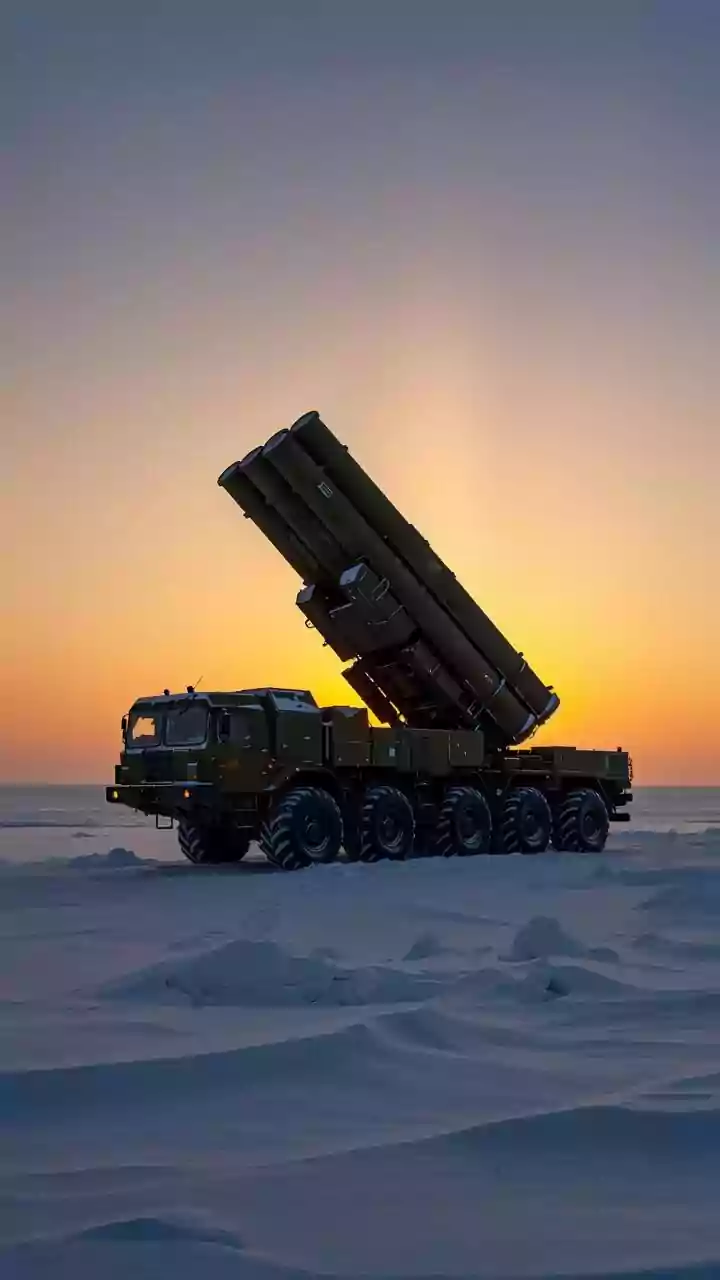
The leading theory is that some of these massive water projects may also serve a clandestine military purpose. Iran's 'missile cities'—vast underground complexes for producing, storing, and launching drones and missiles—require immense and reliable resources. Experts suggest that co-locating these bases near dams could provide them with an independent and resilient source of both electricity and water, crucial for maintaining 'operational continuity' even if the national grid is disrupted during a conflict. However, this theory is not universally accepted. Other experts argue that both dams and military bunkers are naturally built in remote, mountainous regions for geographical and geological reasons, making the proximity a coincidence rather than a coordinated strategy. These critics warn that framing civilian infrastructure as 'dual-use' is dangerous and could be used to justify attacks that are prohibited under international law.
A High-Stakes Target Environment
Regardless of intent, the result is an incredibly high-stakes military landscape. Dams are granted special protection under international humanitarian law because their destruction can cause catastrophic downstream flooding and endanger civilian populations. An attack on a dam, or even a near-miss, could lead to a devastating humanitarian crisis, disrupting water supplies and power for millions of people. This creates a complex dilemma for U.S. and Israeli military planners. The proximity of a missile base to a dam may make it a more resilient military asset for Iran, but it also makes targeting that asset fraught with risk. The potential for immense collateral damage forces commanders to weigh the military advantage of a strike against the potential for a humanitarian disaster.
A Volatile and Uncertain Future
The discussion has already triggered sharp reactions from Tehran. Iranian Parliament Speaker Mohammad Bagher Ghalibaf issued a warning that if the U.S. and Israel consider its dams to be dual-use targets, Iran will apply the same logic to any port, power plant, or dam located near American or Israeli bases. This rhetorical escalation highlights how interwoven civilian and military infrastructure has become in modern conflict. While the connection between Iran's dams and its missile program remains speculative and unproven, the perception alone has added another layer of complexity and danger to an already volatile region.