



A Day Longer Than a Year?
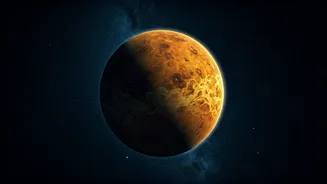
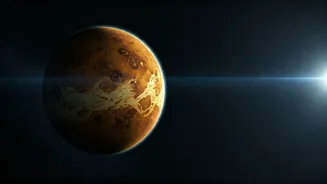
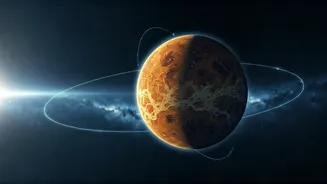
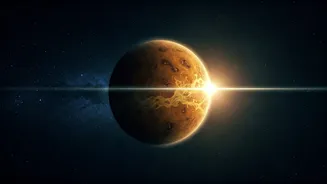
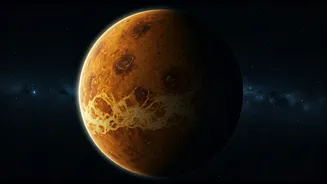
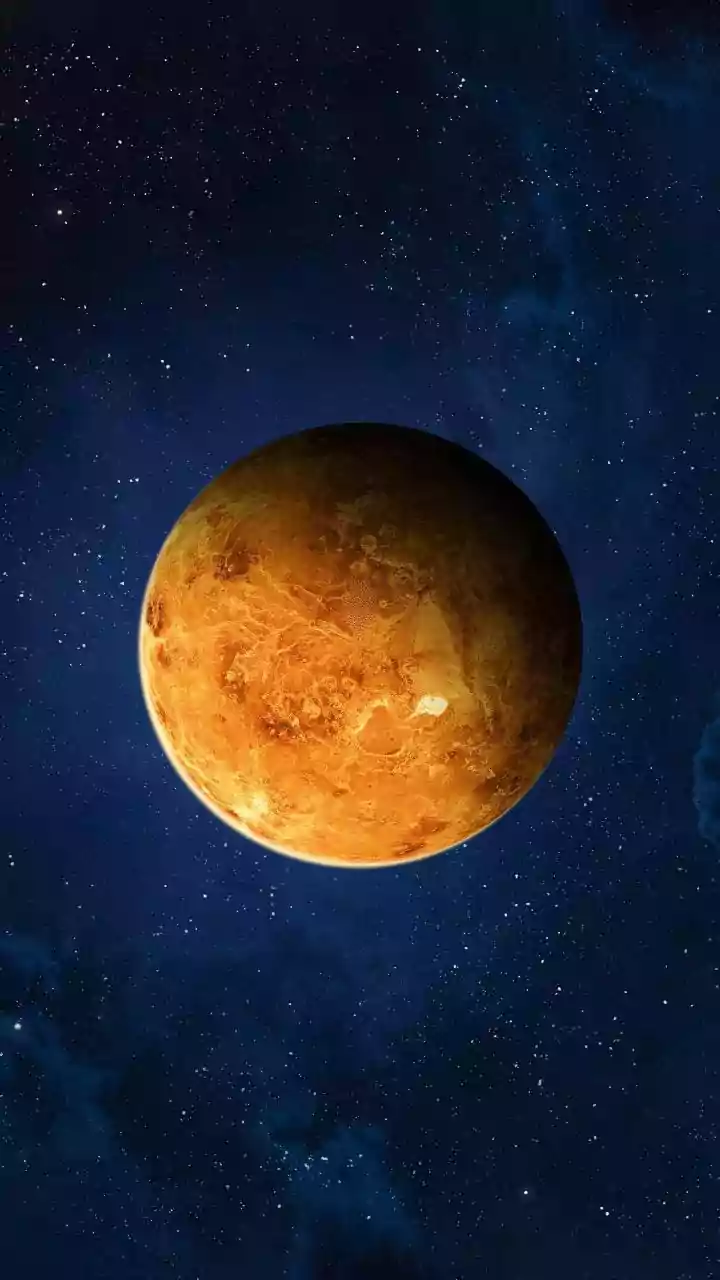
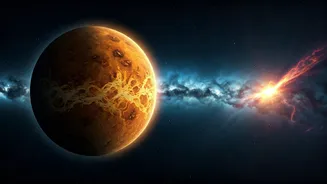
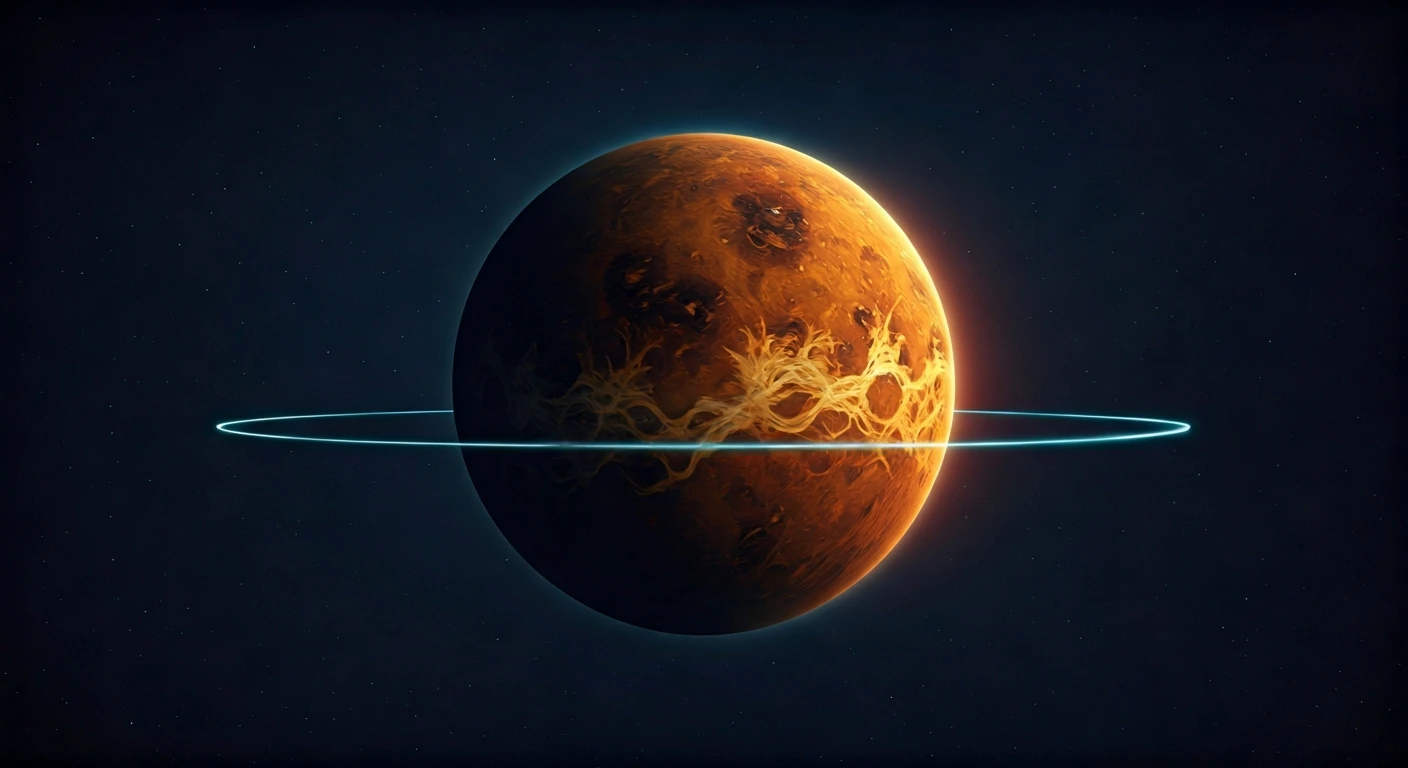
Let’s get the mind-boggling numbers out of the way first. Venus takes about 225 Earth days to complete one orbit around the Sun. That’s its year. However, it takes Venus a staggering 243 Earth days to rotate just once on its axis. This is called its sidereal
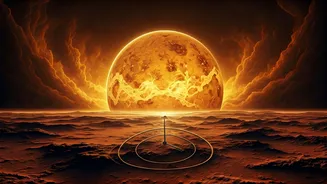
day. So, yes, a single spin of the planet (a day) is actually longer than its entire journey around the Sun (a year). If you could stand on Venus, you'd experience a 'year' passing before a full 'day' was complete. This simple, bizarre fact is what causes astronomy lovers and curious minds on social media to periodically express their shock and wonder. It’s one of those realities of our solar system that feels more like science fiction than fact, challenging our Earth-centric idea of how time and planetary mechanics should work.
The Retrograde Twist
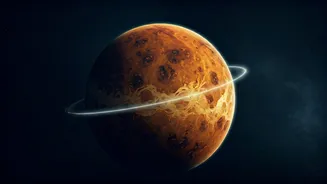
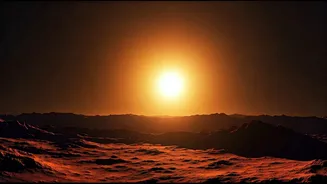
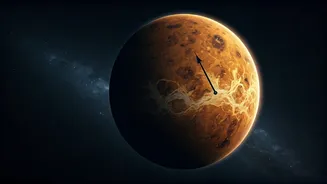
The weirdness doesn't stop there. Venus also spins 'backwards'. While Earth and most other planets in our solar system rotate counter-clockwise on their axis (prograde motion), Venus rotates clockwise (retrograde motion). This has a profound effect on its day-night cycle. Because it spins backwards so slowly while orbiting the sun, the time from one sunrise to the next—what we call a solar day—is much shorter than its rotational period. A solar day on Venus is about 117 Earth days. So, while it takes 243 Earth days for the planet to fully spin once, you'd only have to wait 117 days for the Sun to return to the same spot in the sky. This means a Venusian would experience roughly two 'sunrises' in a single Venusian year. It’s a beautifully complex dance of orbital mechanics and rotation that makes our sister planet one of the most peculiar places in the solar system.
Why The Bizarre Spin?
Scientists don't have a single, definitive answer for why Venus is the solar system's oddball, but they have two leading theories. The first is the 'giant impact' hypothesis. Early in the solar system's history, a planet-sized object may have collided with Venus with such force that it not only slowed its rotation to a crawl but completely reversed its direction. Such cataclysmic events were common in the chaotic early days of planetary formation. The second theory points to Venus's incredibly thick and heavy atmosphere—about 90 times denser than Earth's. Over billions of years, powerful atmospheric tides, created by the Sun's gravitational pull on this dense blanket of gas, could have acted as a brake. This 'atmospheric torque' might have been strong enough to slow the planet's original spin and eventually cause it to start rotating in the opposite direction. It’s possible that both factors played a role in creating the Venus we see today.
Why The Internet Is Obsessed
This information isn't new; scientists using radar mapping confirmed Venus's slow rotation decades ago. So why does it keep 'shaking up the internet'? The answer lies in the joy of collective discovery. For every person who already knows this fact, there are thousands learning it for the first time on platforms like Reddit, X (formerly Twitter), or Instagram. The fact is so counterintuitive that it sparks immediate fascination. It’s a perfect piece of 'mind-blown' trivia that is easy to share and fun to contemplate. In an age of information overload, a simple, verifiable, and truly wondrous fact about the universe provides a moment of shared awe. It reminds us that our own cosmic backyard is filled with strange and amazing phenomena just waiting to be discovered by a new audience.
More Than Just Cosmic Trivia
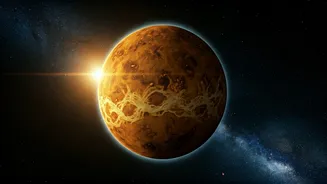
Understanding Venus's rotation is about more than just satisfying curiosity. Venus is often called Earth's 'evil twin' because it is similar in size and mass but has a runaway greenhouse effect, a toxic atmosphere, and surface temperatures hot enough to melt lead. Studying why our neighbour turned out so differently is crucial for understanding planetary science. Its slow rotation and thick atmosphere are deeply connected to its extreme climate. By studying Venus, scientists can refine their models of planetary atmospheres, climate change, and what makes a planet habitable. These lessons are increasingly vital as we discover thousands of exoplanets orbiting other stars. Understanding a world like Venus helps us narrow the search for another Earth.