




Bhubaneswar: The Temple City
Any spiritual tour of Odisha rightfully begins in its capital, Bhubaneswar, often called the 'Temple City of India'. This is where the story of Kalinga architecture unfolds across hundreds of ancient shrines. The crown jewel is the Lingaraj Temple, an 11th-century
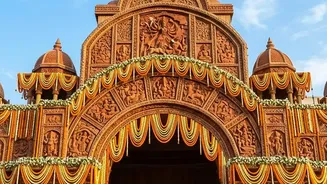
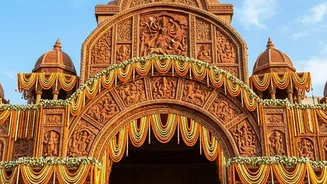
masterpiece dedicated to Lord Shiva. Its towering 180-foot spire dominates the skyline, a testament to the Somavamsi dynasty that built it. While entry into the main sanctum is reserved for Hindus, a viewing platform allows all visitors to appreciate its grandeur. Another essential stop is the Mukteshwar Temple. Built in the 10th century, it is often called the 'Gem of Odisha' for its exquisite and detailed carvings. Its beautiful arched gateway, or 'torana', is a celebrated icon of Kalinga artistry and marks a transition in temple architecture.
Konark: The Chariot of the Sun God
A short drive from Bhubaneswar leads to one of India’s most astonishing monuments: the Konark Sun Temple. This 13th-century marvel is a UNESCO World Heritage Site, conceived as a colossal chariot for the Sun God, Surya. The temple features 24 intricately carved wheels, symbolising the hours of the day, and is pulled by seven mighty horses, representing the days of the week. Though the main tower collapsed centuries ago, the surviving structures, including the massive assembly hall (Jagamohana), are covered in breathtaking sculptures. European sailors once called it the 'Black Pagoda' because its dark silhouette served as a crucial navigational landmark on the Bay of Bengal coast. The temple is not just a place of worship but a scientific instrument; some of its wheels function as accurate sundials.
Puri: Abode of the Lord of the Universe
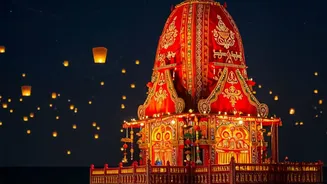
The journey culminates in Puri, one of the four sacred Char Dham pilgrimage sites for Hindus. The city is home to the world-renowned Jagannath Temple, dedicated to Lord Jagannath, a form of Lord Vishnu, along with his siblings Balabhadra and Subhadra. Built in the 12th century, the temple is a spiritual epicentre, believed to grant liberation from the cycle of rebirth. Its most famous event is the annual Rath Yatra, or Chariot Festival, where the deities are brought out of the temple in massive, elaborately decorated chariots, pulled by millions of devotees. The word 'juggernaut' in English is derived from this very procession. Unlike many temples, the idols here are carved from wood and are ceremoniously replaced every 12 to 19 years in a ritual called Nabakalebara.
The Soul of Odisha: Craft Villages
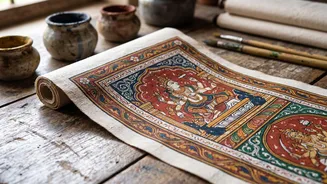
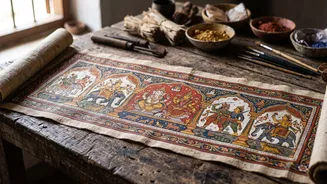
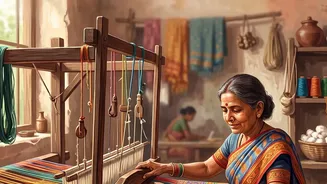
No tour of Odisha is complete without experiencing its living artistic traditions. A typical itinerary includes stops at heritage craft villages like Raghurajpur and Pipili. Raghurajpur, located near Puri, is famous for its master Pattachitra painters, who create intricate mythological narratives on treated cloth scrolls. Every house in this village is an artist's studio, with walls adorned with vibrant murals. Pipili is the center for appliqué work, a craft that originated from the needs of the Jagannath Temple. Here, artisans stitch colourful fabric pieces onto cloth to create elaborate canopies, umbrellas, and other decorative items used in temple rituals and festivals. Visiting these villages allows for direct interaction with the artisans and an opportunity to support their centuries-old legacy.
Planning Your Spiritual Journey
A five-day tour offers a comprehensive glimpse into Odisha's 'Golden Triangle' of Bhubaneswar, Puri, and Konark. The best time to visit is between October and March, when the weather is cool and pleasant, ideal for temple exploration. A typical route starts in Bhubaneswar, covers the ancient temples, then proceeds to Konark for a day trip before heading to Puri as a base for both the Jagannath Temple and the nearby craft villages. While most monuments are open to all, it's important to remember that some active temples, like Lingaraj and Jagannath, have entry restrictions for non-Hindus. However, their architectural and spiritual presence can be appreciated from designated viewing areas. This journey offers more than just sightseeing; it’s an immersion into a culture where faith, art, and history are profoundly intertwined.