





What Are Bio-Based Filtration Walls?
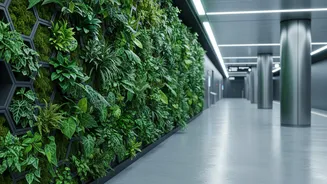
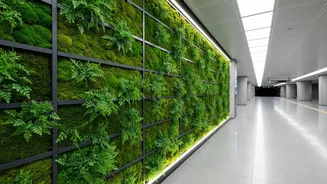
Bio-based filtration walls, often called 'living walls' or 'biowalls', are vertical structures covered in living plants or moss that are specifically designed to clean the air. Think of them not just as decoration, but as active, natural air purifiers.
These systems are more than just potted plants on a shelf; they are engineered ecosystems. Typically, air is actively pulled by fans through the plant's root zone, where the real magic happens. This process, known as biofiltration, uses living microorganisms to break down pollutants. In India, biotech startups have even developed technologies that amplify the natural air-cleaning abilities of plants, creating a powerful, sustainable alternative to purely mechanical filters.
The Science of a Breathing Wall
The primary function of these walls is to tackle the cocktail of pollutants found in urban air, especially in enclosed spaces like metro stations. They are particularly effective against fine particulate matter (PM2.5 and PM10), which are tiny, harmful particles that can lodge deep in our lungs. Moss, a common component of these walls, is exceptionally good at this. Its large, porous leaf surface area acts like a natural magnet, trapping dust and pollutants. But it doesn't just stop there. Microbes living on the moss and in the soil of other plants break down harmful volatile organic compounds (VOCs) and nitrogen oxides into harmless substances. Essentially, the wall 'digests' the pollution, converting it into its own biomass.
More Than Just Clean Air
While improved air quality is the main goal, the benefits don't end there. These living walls have a natural cooling effect, which can reduce the reliance on energy-intensive air conditioning systems. They also act as natural sound dampeners, absorbing some of the ambient noise common in busy transit hubs. Furthermore, integrating nature into sterile urban environments has proven psychological benefits, a concept known as biophilia. Studies have shown that even brief exposure to nature can reduce stress, lower heart rates, and improve cognitive function, making the daily commute a more pleasant and calming experience for passengers.
Real-World Examples and Indian Potential
This technology is already being deployed globally. In Europe, projects like the 'CityTree' have been installed in cities including London and Berlin, sometimes right inside train stations. These units combine moss cultures with IoT technology to monitor air quality and optimise the filtration process, with a single unit claiming to have the air-cleaning power of 275 conventional trees. In India, while large-scale metro walls are not yet widespread, the groundwork is being laid. An initiative in Delhi introduced 'oxygen chambers' at some metro stations, using a combination of purifiers and specific NASA-approved plants to reduce particulate matter and toxic gases. Gurugram-based startup UBreathe has developed plant-based purifiers that have been piloted in various urban settings, showing significant reductions in pollutants. These local innovations highlight the immense potential for Indian cities to adopt and adapt this green technology for their own public transport networks.
The Challenges and the Future
Implementing these living systems is not without its challenges. The initial cost of installation can be high, and the walls require ongoing maintenance, including a consistent supply of water, nutrients, and appropriate light to keep the plants healthy. However, as the technology becomes more efficient and scalable, these costs are expected to decrease. The future lies in integrating these bio-filters directly into the design of new public infrastructure. For a country like India, grappling with some of the world's most severe urban air pollution, investing in such sustainable, nature-based solutions is not a luxury, but a vital step towards creating healthier, more livable cities for generations to come.