








The Prelude: A Double-Edged Sword
For weeks, North India has baked under a relentless sun. The recent arrival of pre-monsoon showers, driven by western disturbances, brought a much-needed respite. Temperatures in places like Shimla and Dehradun have dipped, and the parched earth has finally
seen rain. [7, 19] However, this relief is laced with apprehension. These initial spells are not the gentle showers many hope for; they are often intense, accompanied by gusty winds and thunderstorms. [9, 19] This activity, while not the monsoon proper, acts as a precursor, saturating the soil and priming the region for what is to come. It's a period of transition where the danger of the season begins to announce itself long before its official arrival.
A Tense Wait: The Delayed Arrival
The India Meteorological Department (IMD) has been tracking the steady northward advance of the Southwest Monsoon, which has already covered regions like Mumbai, Bihar, and Jharkhand. [4, 10] Yet, its final push into the hills has been sluggish. The normal onset date for the monsoon in Himachal Pradesh is June 25, but as of this date, its official entry is still pending. [7] This delay, however, is deceptive. It is not a sign of a weaker monsoon but rather a brief pause. [7] Meteorologists note that while the sustained wet spell of the monsoon is yet to begin, conditions are becoming favorable for its advance into Uttarakhand and other parts of Northwest India in the subsequent days. [10] For residents and authorities, this is a critical window for preparation.
The Forecast: A Looming Transformation
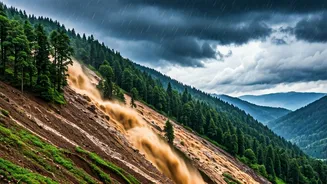
The real story of the monsoon's transformative power lies in the forecast for the coming days. The IMD has issued a yellow alert for Himachal Pradesh, predicting that rainfall activity will intensify significantly from June 29, with the possibility of isolated heavy showers. [7] Similarly, Uttarakhand is expected to see fairly widespread to widespread rainfall on June 29 and 30. [9, 14] The IMD's bulletins explicitly warn that hilly areas are vulnerable and advise initiating action for heavy rainfall warnings. [10] This isn't just rain; it's a force that can redraw maps overnight. Disasters caused by landslides and floods are a grimly regular feature of the monsoon in the Himalayas, where intense rainfall can trigger catastrophic events in a matter of hours. [17]
Life on the Edge: The Human Impact
The shift from scorching heat to a wet, unstable weather pattern has immediate consequences for daily life. Tourism, a vital part of the hill economy, enters a precarious phase. While the pre-monsoon greenery is an attraction, the threat of landslides and road closures is a major deterrent. [5, 17] Authorities are already issuing advisories for residents and pilgrims, particularly those on routes to high-altitude shrines in Uttarakhand, to remain alert. [22] The memory of past monsoons, which have washed away roads, damaged homes, and stranded thousands, looms large. [17] The 'change' brought by the monsoon is therefore not just environmental but deeply psychological, instilling a mix of relief and anxiety as communities brace for a season of isolation and potential danger.