








The Silent Threat of Lifestyle Inflation
Lifestyle inflation, often called “lifestyle creep,” is the common phenomenon where your spending increases as your income grows. The cheap takeout you loved is replaced by upscale restaurant delivery. The reliable sedan is traded in for a luxury SUV.
While treating yourself isn't inherently bad, the problem arises when these upgrades become the new baseline, consuming your entire raise and leaving you with the same (or worse) financial cushion as before. It’s a subtle trap. You feel richer because you’re earning more, but your financial health hasn’t actually improved. Your expenses have simply risen to meet your new income, leaving you on the same paycheck-to-paycheck treadmill, just with shinier objects.
The Solution: A 50/30/20 Salary Split
The most effective tool to combat this is a simple, proven framework: the 50/30/20 rule. Think of it as a pre-planned allocation for every dollar you earn. Popularized by Senator Elizabeth Warren in her book, "All Your Worth," this guideline provides a clear, balanced approach to managing your after-tax income.
Here’s the breakdown:
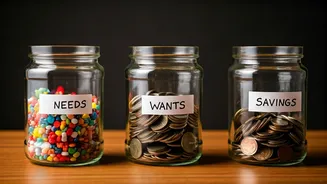
- 50% for Needs: This slice of your income covers your absolute essentials. These are the expenses you must pay to live and work: housing (rent or mortgage), utilities, groceries, transportation to your job, insurance, and minimum debt payments.
- 30% for Wants: This is your lifestyle category. It includes all the non-essential things that make life more enjoyable: dining out, hobbies, streaming subscriptions, vacations, new clothes that aren't replacements, and tickets to a concert.
- 20% for Savings & Debt Repayment: This crucial portion is for your future self. It encompasses building your emergency fund, saving for retirement (like contributing to a 401(k) or IRA), investing in the stock market, and making extra payments on high-interest debt like credit cards or student loans.
How the Split Actively Prevents Creep
The magic of the 50/30/20 split isn't just in organizing your money; it’s in creating automatic guardrails. When you get a $500 monthly raise, your instinct might be to absorb it all into your “Wants” category—a bigger car payment, more dinners out. But the rule forces a different, smarter path.
Following the split, that extra $500 is automatically divided: $250 can go toward your Needs (perhaps rising rent), $150 can be enjoyed in the Wants category, and a full $100 goes directly to savings or debt. You are systematically paying your future self first. By capping your “Wants” at 30% of your total income, you build a permanent barrier against unchecked spending. Your lifestyle can still improve, but it does so in a controlled, sustainable way, while your savings rate grows right alongside it.
Putting the Strategy into Practice
Knowing the rule is one thing; living by it is another. The key is automation. First, calculate your after-tax monthly income. Then, set up automatic transfers from your checking account. On payday, have 20% of your income automatically moved to a separate high-yield savings account or investment account. By moving the money before you have a chance to see and spend it, you remove the element of willpower.
Next, track your spending for a month or two to see where you stand. Use a budgeting app or a simple spreadsheet to categorize your expenses into Needs, Wants, and Savings. You may find you’re spending 40% on Wants and only 10% on Savings. Don't be discouraged. The goal isn’t immediate perfection, but gradual adjustment. Look for easy wins: can you cancel a subscription you don’t use? Can you cook one more meal at home per week? Small changes can shift your percentages back into alignment.