






Understanding the Yield Gap
In agriculture, the 'yield gap' is a crucial concept. It represents the difference between the maximum possible crop yield under ideal conditions and the actual yield a farmer achieves. This gap signifies untapped potential on existing farmland. Closing
it is seen as a key strategy to enhance food security for a growing global population without clearing more land for agriculture. The reasons for this gap are complex, ranging from pest and disease pressure to water availability and nutrient management. Historically, the primary solution proposed by experts and policymakers has been the aggressive adoption of modern technology.
The Promise of a Technological Fix
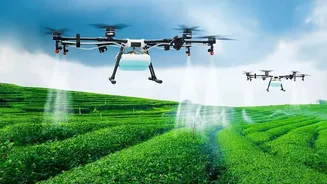
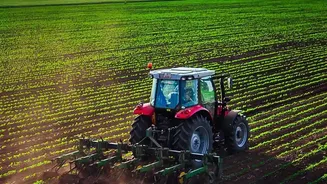
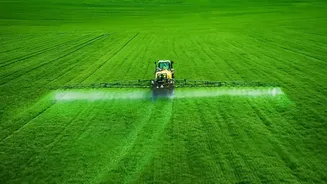
The allure of a technological solution is powerful. Innovations like high-yield hybrid seeds, precision agriculture guided by satellites, AI-powered analytics, and efficient irrigation systems have revolutionised farming. These tools promise to optimize inputs like water and fertilizer, minimize waste, and manage fields with unprecedented accuracy. In India, the Green Revolution was a testament to how technology—specifically new seed varieties and chemical inputs—could dramatically boost food production. Consequently, the prevailing wisdom has been that bridging the yield gap is primarily an engineering and technology challenge. However, even the most advanced tractor or genetically superior seed cannot perform optimally on degraded, lifeless land.
The Missing Foundation: Soil Health
This is where the 'soil gap' comes in. The headline's claim posits that the gap in yield is not just about a lack of technology, but a fundamental deficit in soil health. Soil is not merely dirt; it is a complex, living ecosystem teeming with microorganisms that are vital for plant growth. Healthy soil provides essential nutrients, retains water, and maintains a structure that allows plant roots to thrive. When soil is degraded, its ability to perform these functions collapses. As much as 60% of crop yield can be dependent on soil fertility alone. This means no amount of technological intervention can fully compensate for a weak foundation.
How a 'Soil Gap' Cripples Yields
A 'soil gap' manifests in several ways. The most critical component is the loss of soil organic matter (SOM), which is composed of decomposed plant and animal residues. SOM is the lifeblood of fertile soil. It improves soil structure, helps it act like a sponge to hold water during dry spells, and is a natural reservoir of crucial plant nutrients like nitrogen and phosphorus. When SOM is depleted, soil becomes compacted, loses its water-holding capacity, and becomes less fertile. This forces farmers to become more reliant on chemical fertilisers, which can be costly and lead to further environmental issues. Research shows a direct correlation between soil organic matter and crop yields, with significant gains observed as SOM levels increase, especially in depleted soils.
India's Ground Reality
For India, this issue is particularly urgent. An estimated 30% of the country's total land area is affected by soil degradation. India loses an alarming 5.3 billion tonnes of topsoil annually to erosion. Decades of intensive farming, overuse of chemical fertilizers like urea, and unsustainable practices like monocropping and residue burning have taken a severe toll. The organic carbon content in Indian soils, a key indicator of health, has plummeted in many regions from around 1% to as low as 0.3% over the last 70 years. States at the heart of the Green Revolution, such as Punjab and Haryana, are now facing severe soil degradation. This widespread 'soil gap' not only limits current yields but also threatens the long-term sustainability of Indian agriculture and the livelihoods of millions of farmers.