



The Unsung Hero of the Breakfast Table
In the grand theatre of Indian breakfasts, some dishes get all the applause. The crispy, golden dosa, the fluffy idli, the indulgent chole bhature—they are the stars. And then there is upma. It’s not flashy. It doesn’t demand an elaborate preparation
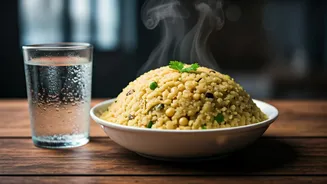
or a special occasion. It is the quiet, reliable, and utterly dependable hero that shows up on a busy Tuesday morning, a lazy Sunday, or whenever you need a quick, wholesome meal without any fuss. Its beauty lies not in complexity, but in its profound simplicity. It’s the meal that says, “I’ve got you,” providing a warm, savoury foundation for the day ahead when you simply don’t have the time or energy for anything more demanding.
A Symphony in a Single Pan
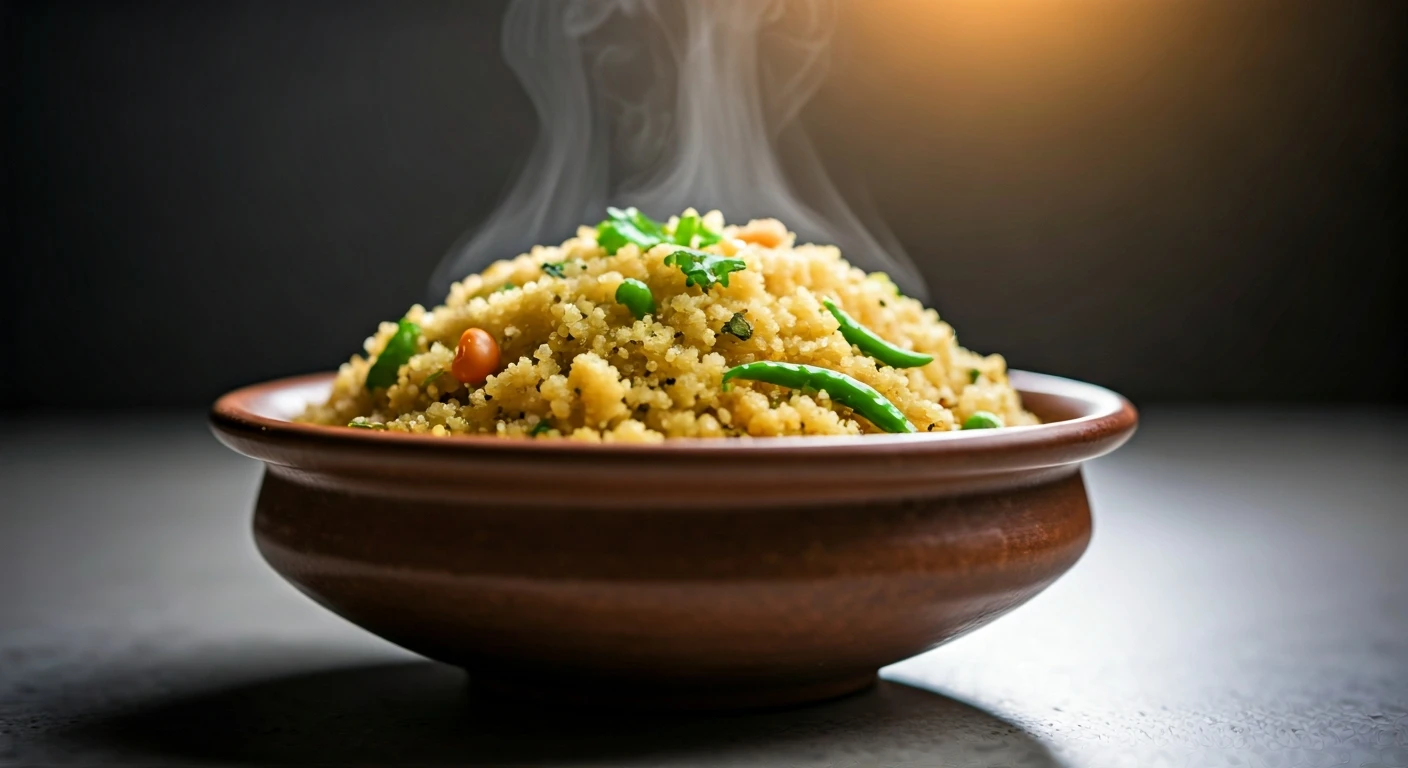
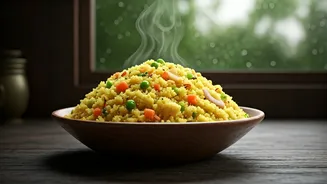
To understand the comfort of upma is to understand the process. It is a mini-symphony conducted in a single kadai. It begins with the gentle roasting of the rava (semolina), a process that fills the kitchen with a nutty, warm aroma. Then comes the tadka, the lifeblood of so many Indian dishes. Oil or ghee heats up, and in go the mustard seeds, popping with energetic glee. They are soon joined by urad and chana dal for crunch, followed by the fragrant duo of curry leaves and green chillies. Sautéed onions add a hint of sweetness. Finally, hot water is poured in, hissing as it hits the hot pan before the roasted rava is stirred in, magically transforming from a coarse grain into a soft, fluffy, and cohesive meal. Each step is a sensory checkpoint, building anticipation for the final, comforting result.
The Great Upma Debate
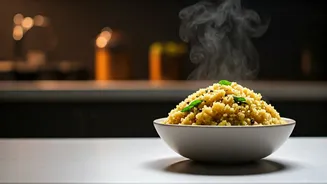
Of course, one cannot speak of upma without acknowledging the elephant in the room: the haters. For every person who finds solace in a bowl, there is another who recoils at the memory of a lumpy, pasty, and bland version, likely served in a hostel mess or a poorly-run canteen. This is the great tragedy of upma. When made badly, it is truly uninspired. But blaming upma for this is like blaming bread for a soggy, stale sandwich. The fault lies not in the dish itself, but in its execution. A well-made upma is light and fluffy, where each grain is distinct yet part of a whole. It is flavourful, with the tadka singing through. Bad upma is a cautionary tale; good upma is a revelation.
A Canvas for Endless Creativity
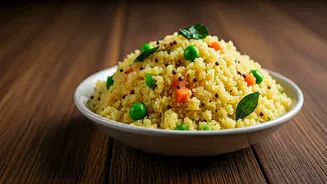
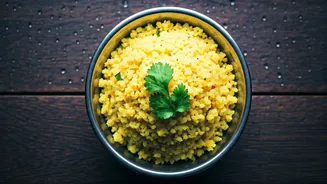
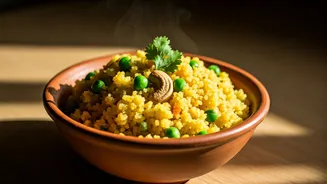
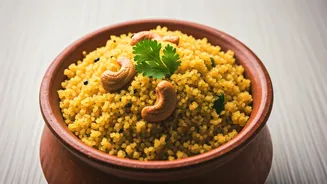
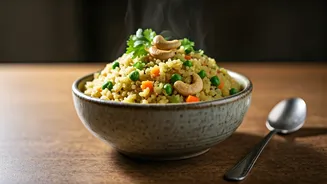
Part of its enduring appeal is its incredible versatility. The basic rava upma is just the starting point. Across India, it takes on countless avatars. In Karnataka, the addition of vangi bath powder and vegetables creates the beloved 'Khara Bath'. Add a pinch of turmeric, and it brightens into a sunny yellow. Throw in peas, carrots, and beans, and it becomes a complete, nutrient-packed meal. A generous dollop of ghee on top adds richness, while a squeeze of lime at the end provides a fresh, zesty finish. Beyond semolina, there’s semiya (vermicelli) upma, bread upma for using up leftovers, and even quinoa upma for the health-conscious. It is a forgiving canvas, inviting cooks to add their own personal touch, making it their own.
More Than a Meal, It’s a Feeling
Ultimately, the power of upma extends beyond its taste and texture. It is deeply woven into the fabric of memory and home. For many, it is the taste of childhood—a quick breakfast made by a mother on a school morning. It’s the first dish many learn to cook when they move away from home, a simple and nourishing link to their roots. It’s the reliable go-to that requires minimal ingredients and delivers maximum satisfaction. It doesn’t ask for much, but it gives generously. It’s not just food; it’s a warm hug in a bowl, a reminder that sometimes, the simplest things in life are the most comforting.