





Understanding 'Tech Neck'
Before we dive into the stretches, it's helpful to understand what causes that all-too-common neck strain. When you spend hours looking down at a screen, your head drifts forward, putting immense pressure on your cervical spine. This forward-head posture
forces the muscles in your neck and upper back to work overtime to support your head's weight, leading to stiffness, tension, and pain. Over time, this can contribute to headaches and poor posture. The good news is that taking short, mindful breaks to stretch can counteract these effects.
Seated Cat-Cow
This gentle movement is fantastic for waking up a stiff spine and releasing tension from your neck to your lower back. Sit on the edge of your chair with both feet flat on the floor and your hands on your knees. As you inhale, gently arch your back, push your chest forward, and look up toward the ceiling (Cow pose). As you exhale, round your spine, tuck your chin toward your chest, and let your head hang heavy (Cat pose). Flow between these two positions for 8-10 breaths, letting your breath guide the movement. This simple flow enhances spinal flexibility and massages the muscles along the spine.
Gentle Neck Tilts
This classic stretch targets the tight muscles along the sides of your neck. Sit tall with your shoulders relaxed and down, away from your ears. Gently lower your right ear toward your right shoulder, being careful not to raise your shoulder to meet it. You should feel a light stretch along the left side of your neck. For a deeper stretch, you can gently place your right hand on the side of your head. Hold for 15-30 seconds, breathing deeply, then slowly return to the center and repeat on the other side. This helps relieve tightness in the upper trapezius muscles, which often become stiff from poor posture.
The Chin Tuck
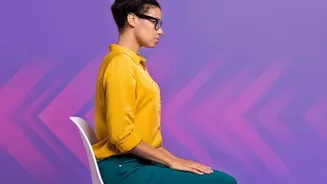
The chin tuck is a simple but powerful exercise for counteracting forward-head posture and strengthening the muscles that support proper alignment. Sit up straight, looking directly ahead. Gently draw your chin backward, as if you are trying to make a double chin, while keeping your head level. You should feel a stretch at the back of your neck. Hold this position for about 5 seconds before releasing. Repeat this movement 10 times. It's a subtle move, but it effectively targets the deep cervical flexors, which are often weak in people with neck pain.
Seated Eagle Arms
Neck pain is often connected to tightness in the shoulders and upper back. The Seated Eagle Arms pose is an excellent way to stretch the muscles between your shoulder blades, which are notoriously hard to reach. Extend your arms forward, then cross your right arm over your left. Bend your elbows and wrap your forearms around each other until your palms can touch (or as close as you can get them). Lift your elbows to shoulder height while keeping your shoulders relaxed. You should feel a deep stretch across your upper back. Hold for 5-10 deep breaths, then unwind and repeat with the left arm on top.
Shoulder Blade Squeeze
To combat the slouching that happens during a long workday, the shoulder blade squeeze is an essential reset. This simple move helps to open up the chest and strengthen the rhomboid muscles in your upper back, which helps pull your shoulders back into better alignment. Sit or stand tall with your arms relaxed at your sides. Gently squeeze your shoulder blades together as if you're trying to hold a pencil between them. Be mindful not to shrug your shoulders up toward your ears. Hold the squeeze for 5-10 seconds, then release. Repeat this 8-10 times throughout the day to reset your posture.