





The Allure of Frozen Water
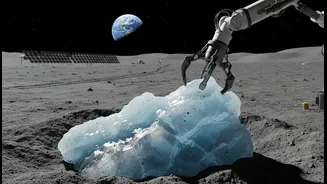
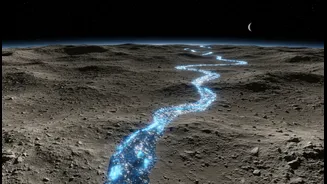
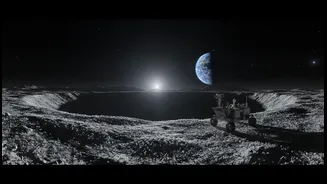
The primary reason for targeting the Moon's South Pole is the confirmed presence of water ice, tucked away in permanently shadowed craters where sunlight never reaches. This frozen water is a game-changing resource. It can be harvested for drinking water and
breathable oxygen for astronauts. More importantly, it can be broken down into hydrogen and oxygen, the primary components of rocket propellant. Having a local source of fuel could fundamentally change the economics of space exploration, making the Moon a stepping stone for future missions to Mars. Instead of launching everything from Earth at enormous cost, future missions could refuel on the Moon.
The Power Problem
One of the biggest hurdles in daily planning is power. Most of the lunar surface experiences roughly 14 Earth-days of sunlight followed by 14 days of darkness and extreme cold. In the South Pole's shadowed craters, temperatures can plummet to minus 334 degrees Fahrenheit. Solar power, while useful, is insufficient for continuous operations through the long lunar night. To solve this, NASA is aggressively developing small-scale nuclear fission power systems. These compact reactors could provide a reliable, sun-independent energy source, capable of powering habitats and equipment for a decade, ensuring astronauts can survive and work through the darkness.
Building with Moon Dust
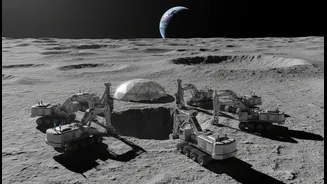
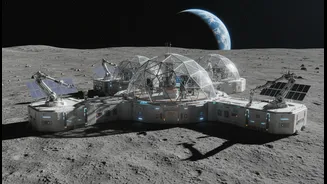
Transporting construction materials from Earth is prohibitively expensive. The solution lies in using what's already there: lunar regolith, the layer of dust and broken rock covering the surface. This presents both a challenge and an opportunity. The dust is sharp and abrasive, capable of damaging spacesuits and equipment, a problem noted during the Apollo missions. However, this same regolith is rich in silicon dioxide and metals, making it a viable material for 3D printing. NASA and its partners are developing technologies to sinter, or melt, the regolith to create bricks, landing pads, and even entire habitat structures, using the local dust as a protective shield against radiation and micrometeoroids.
A Day on the Moon Base
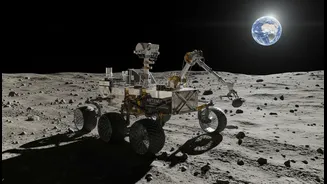
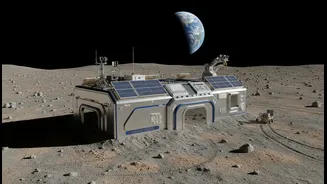
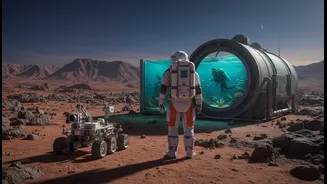
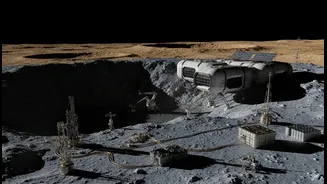
So, what would daily life look like? Experts suggest it will be less like science fiction and more like living at a remote research station in Antarctica. Daily life will revolve around system maintenance, safety procedures, and scientific experiments. Astronauts will spend much of their time indoors, sheltered from radiation and extreme temperatures beneath layers of regolith. Getting around the rugged terrain will require specialized rovers, including pressurized models that act as mobile habitats, allowing scientists to work for extended periods without a spacesuit. Communications will also be a challenge, likely requiring a dedicated constellation of satellites around the Moon to provide uninterrupted contact with Earth.
A Phased, Robotic Approach
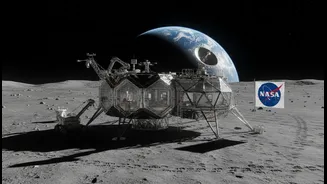
NASA is not building this base all at once. The plan is phased, beginning with robotic missions to test technologies and scout locations. These initial missions, conducted by commercial partners, will deliver science payloads and begin testing systems for power generation, resource extraction, and dust mitigation. This step-by-step approach allows NASA to learn from the extreme environment and gradually build up the necessary infrastructure—from power grids and communication networks to habitats—before astronauts arrive for long-duration stays. This iterative process is crucial for establishing what NASA calls a "sustained human presence" by the 2030s.