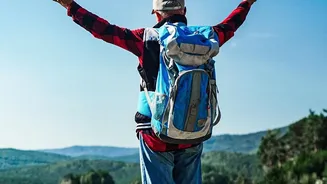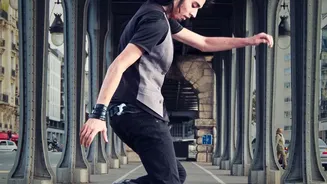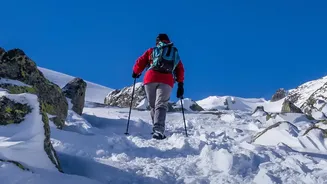



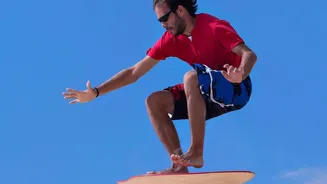

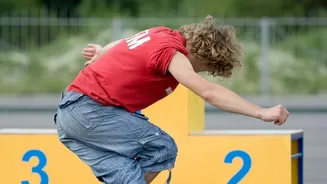
At a glance, hiking and skateboarding seem worlds apart. One is a journey over natural ground, the other a dance with urban pavement. Yet both outdoor activities are celebrated for building excellent balance. But how do these challenges compare?
The Surface Dictates the Dance
The most
obvious difference lies in the ground beneath your feet. Hiking involves navigating unpredictable and varied terrain. One moment you are on packed dirt, the next you are stepping over tangled roots, slick rocks, or loose gravel. Each step is a new problem to solve. Your body must constantly adjust to changes in elevation and surface texture. Skateboarding, by contrast, happens on a largely predictable, man-made surface. While roads and skateparks have cracks, bumps, and transitions, the board itself is the primary source of instability. The challenge is not so much what the ground is doing, but how you control a rolling object on top of it.
Reactive vs. Stabilizing Balance
This difference in surface leads to two distinct types of balance. Skateboarding is a masterclass in dynamic, or reactive, balance. The board is in constant motion, and the rider must make instantaneous, millisecond adjustments to stay upright. It is about responding to the board's movement, shifting weight from heel to toe for steering and control. Hiking, on the other hand, relies more on stabilizing balance. While you react to a loose rock, the larger effort is in maintaining a stable posture over long periods on uneven ground. Your body works to proactively secure your footing and maintain your center of gravity with each deliberate step. It’s a slow, controlled burn of stability rather than a rapid-fire reaction.
Core Power and Muscle Engagement
Both activities demand a strong core, but they use it differently. In skateboarding, the core—including abs, obliques, and lower back—is the epicentre of control, connecting the upper and lower body to translate tiny movements into steering and tricks. It's in a state of constant, dynamic engagement. Skateboarding also heavily recruits the small stabilizing muscles in the ankles and feet to grip and manipulate the board. Hiking is a full-body workout, but balance is primarily driven by the large muscles of the lower body: the glutes, quads, hamstrings, and calves. These muscles work to power you up inclines and, crucially, stabilize your knees and hips on descents. The core acts as a support structure, keeping your torso upright and stable, especially when carrying a pack.
Training Your Sixth Sense
Both sports are phenomenal for developing proprioception—your body's ability to sense its position in space without looking. When you hike, your feet and ankles send constant feedback to your brain about the angle and stability of the ground, allowing your body to make automatic adjustments to prevent a sprained ankle. Over time, this hones your body's awareness on any uneven surface. Skateboarding trains proprioception at high speed. It teaches your body to feel exactly where your weight is over the board and how the four wheels are interacting with the pavement. This develops incredibly fast reflexes and a unique mind-body connection mediated through the board itself.
The Consequence of a Fall
Finally, the mental approach to balance in each sport is shaped by the nature of falling. In skateboarding, falling is an integral and expected part of progression. Falls are frequent, fast, and happen on hard surfaces, but skaters learn how to fall to minimise injury. In hiking, a fall can be much more serious. A simple trip could result in a long tumble down a steep slope, making the consequences potentially severe. Therefore, the balance required in hiking is often more cautious and preventative, focused on ensuring every step is secure. The skateboarder’s balance, meanwhile, is more aggressive and risk_tolerant, accepting instability as part of the flow.