


A Road That Heals Itself
Imagine an asphalt surface that, when a tiny crack appears, can mend itself before it ever grows into a car-swallowing crater. This isn't science fiction; it's the focus of advanced materials research around the world. The concept is known as self-healing
asphalt, a category of smart materials designed to automatically repair damage without human intervention. While traditional asphalt already has a minor, natural ability to heal small fissures in warm weather, this new generation of materials gives that process a powerful, biological boost. The goal is to create more durable, longer-lasting roads that require significantly less maintenance, saving money and reducing traffic disruptions caused by constant repair work. Researchers are exploring several methods, but one of the most promising involves embedding microscopic helpers directly into the asphalt mix.
The Secret Ingredient: Bacteria
The “bio-engineered” part of the headline refers to the use of specific, naturally occurring bacteria. Researchers, primarily in the Netherlands, pioneered the idea of mixing dormant bacterial spores into building materials like concrete and asphalt. Species like Sporosarcina pasteurii or Bacillus pseudofirmus are ideal for this task. These microbes are extremophiles, meaning they can survive in harsh environments, like the highly alkaline conditions of concrete, and can lie dormant for decades without food or oxygen. They are packaged in tiny, protective capsules along with a food source, typically calcium lactate. These capsules are then mixed into the asphalt. As long as the road surface remains intact, the bacteria sleep peacefully within their microscopic shells.
Just Add Water
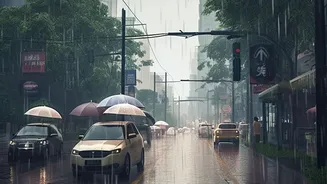
The magic begins when damage occurs. As stress from traffic and temperature changes creates micro-cracks in the asphalt, these fissures eventually break open the protective capsules. This is where the rain comes in. When water from a shower seeps into the newly formed crack, it acts as a trigger, waking the dormant bacteria. The microbes begin to feed on the calcium lactate nutrient source that was packed alongside them. As they metabolize their food, they produce a specific byproduct: limestone, also known as calcium carbonate. This limestone is essentially nature's cement. It fills the crack from within, hardening to seal the gap and restore the road's structural integrity. The repair process is entirely autonomous and waterproof, preventing further water intrusion that would otherwise lead to larger potholes.
Beyond Bacteria: Other Healing Methods
While bacteria are a leading approach, scientists are also testing other self-healing agents. One method involves embedding tiny capsules filled with rejuvenating oils, such as sunflower oil, into the asphalt mix. When a crack forms, the capsules rupture and release the oil, which softens the aged, brittle bitumen (the asphalt's binder), allowing it to flow and fuse back together. Other research focuses on adding fine steel wool fibers or iron oxide nanoparticles to the asphalt. An induction heating machine can then be passed over the road, creating a magnetic field that heats the metal fibers. This heat softens the surrounding asphalt, causing cracks to melt and close. All these technologies aim for the same outcome: stopping tiny cracks before they become major problems.
From Lab to Highway: Challenges and Potential
While incredibly promising, self-healing asphalt is not yet the standard for road construction. One of the main hurdles is cost; initial estimates suggest bio-asphalt could be 15-25% more expensive to produce than conventional mixes. However, proponents argue this is offset by long-term savings from reduced maintenance, with some studies suggesting a 30% reduction in repair needs. Researchers are working to lower costs by using cheaper nutrients for the bacteria or sourcing oils from biomass waste. Pilot projects are underway in several countries, including Germany and the Netherlands, to test the technology's performance under real-world traffic and weather conditions. While lab results are strong—showing healing within days or even hours—large-scale, long-term data is still needed to prove its durability and economic viability across different climates before we see it on our local streets.