



Hanle, Ladakh: India’s First Dark Sky Reserve
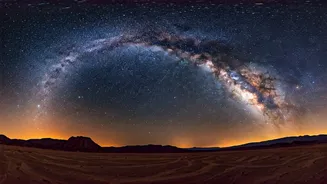
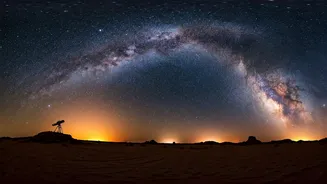
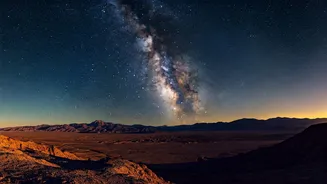
For the most dedicated stargazers, there is no place in India quite like Hanle. Nestled in the high-altitude desert of Ladakh, this remote village was officially designated as India’s first Dark Sky Reserve in 2022. At an altitude of over 4,500 metres,
the air is thin, dry, and exceptionally clear, creating near-perfect conditions for astronomy. The region’s minimal light pollution means the Milky Way isn't just visible; it’s a brilliant, textured band stretching across the sky. Hanle is also home to the Indian Astronomical Observatory, one of the world's highest-located sites for optical, infrared, and gamma-ray telescopes. While access to the observatory itself is restricted, its very presence is a testament to the area's pristine skies. A trip here is not for the faint of heart—it requires careful acclimatisation to the altitude. But the reward is an unparalleled celestial spectacle that feels almost otherworldly.
Spiti Valley, Himachal Pradesh: A High-Altitude Haven
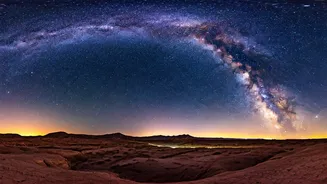
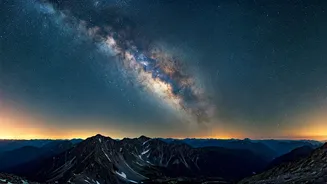
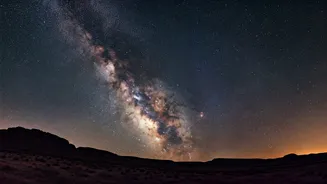
If Ladakh feels a bit too extreme, Himachal Pradesh’s Spiti Valley offers a slightly more accessible yet equally stunning alternative. This cold desert mountain valley is a world away from the bustling tourist trails of Shimla and Manali. Villages like Kaza, Kibber, and Tabo sit under some of the darkest skies in the country. On a moonless night, the sheer density of stars is staggering, with constellations, planets, and even meteor showers appearing with remarkable clarity.
The stark, barren landscape of Spiti provides a dramatic foreground for night photography. Imagine camping near Chandratal Lake, its placid waters reflecting a star-dusted sky. The best time to visit for stargazing is during the summer months, from late May to early October, when the roads are open and the weather is relatively forgiving.
Coorg, Karnataka: The Western Ghats' Starry Secret
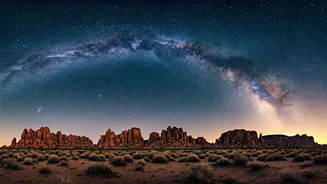
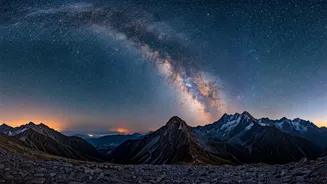
You don’t have to venture into the Himalayas for a great cosmic show. The rolling hills of Coorg (Kodagu) in the Western Ghats offer a fantastic southern sanctuary for stargazers. While the main towns of Madikeri and Virajpet have some light pollution, venturing into the coffee plantations or towards the region's higher peaks reveals a surprisingly dark sky. Tadiandamol, the highest peak in Coorg, is a popular trekking destination that rewards hikers with spectacular nocturnal views.
The best time to visit for clear skies is during the winter months, from October to March, after the monsoons have washed the atmosphere clean. The combination of lush greenery by day and a canopy of stars by night makes Coorg a uniquely serene and romantic stargazing destination.
Rann of Kutch, Gujarat: A Universe on a Salt Canvas
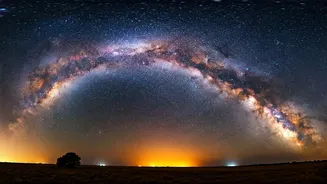
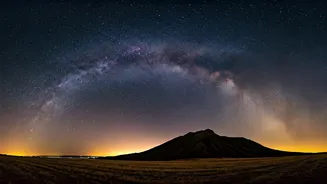
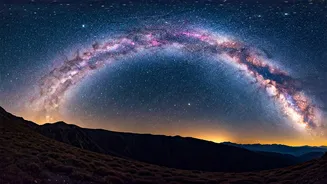
Picture this: a vast, flat expanse of white salt desert stretching to the horizon, meeting a sky completely filled with stars. This is the magic of the Rann of Kutch. The sheer lack of obstruction provides an uninterrupted 360-degree panoramic view of the celestial sphere. During the popular Rann Utsav (winter months), the main tourist area can be bright, but moving just a few kilometres away from the tent city reveals the true darkness of the region.
The best viewing is on a moonless night in the winter, when the air is cool and crisp. The experience of lying on the salt flats and watching the cosmos wheel overhead is profoundly meditative. It’s a place where the scale of the universe feels immediate and overwhelming, putting our earthly concerns into perspective.
Tips for the Aspiring Stargazer
Ready to plan your trip? Keep these simple tips in mind to make the most of your cosmic adventure.
First, check the lunar calendar. The best time for stargazing is during the New Moon phase, when the sky is at its darkest. A bright full moon can wash out all but the brightest stars. Second, give your eyes time to adapt. It takes about 20-30 minutes for your eyes to become fully dark-adapted, so avoid looking at your phone or bright lights. If you need a torch, use one with a red light, as it's less disruptive to your night vision. Finally, download a stargazing app like Star Walk 2 or SkyView Lite. These apps use your phone’s GPS to help you identify constellations, planets, and satellites in real-time.