




More Than Just a Dessert
To understand Durga Puja in Bengal is to understand its deep relationship with sweets. Here, 'mishti' transcends the role of a mere dessert; it is an emotion, a language of love, and a sacred offering. No part of the five-day festival is untouched by
its presence. From the 'bhog' offered to the goddess to the boxes exchanged between friends and family, sweets are the thread that ties devotion, community, and celebration together. They are a symbol of purity when presented as 'prasad' and a gesture of warmth and hospitality shared with guests. The entire festival, from the initial prayers to the final farewell, is sweetened by these culinary treasures, making them an indispensable part of the festive fabric.
Icons Forged in Milk and Sugar
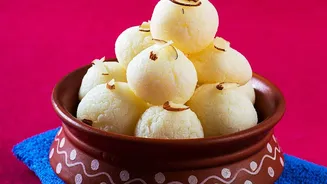
At the heart of this tradition are sweets made from 'chhana', or fresh cottage cheese, a craft said to have been perfected in the region. The iconic Rosogolla, a spongy ball soaked in light sugar syrup, is considered a pure or 'sattvik' offering, making it a staple in the 'bhog' presented to the goddess. Then there is the Sandesh, a drier sweet pressed from 'chhana' and often flavoured with saffron or seasonal nolen gur (date palm jaggery). Its history is deeply rooted in Bengal, with some varieties created specifically for the festive season. Alongside these are household preparations like Narkel Naru, sweet coconut balls that evoke a sense of nostalgia and are lovingly made in family kitchens for offerings and distribution.
The Keepers of the Craft
The preservation of these traditions owes everything to the 'karigors' (artisans) and the legendary sweet shops of Kolkata, some of which have been standing for over a century. Establishments like Girish Chandra Dey & Nakur Chandra Nandy, founded in 1844, and Bhim Chandra Nag, established in 1826, are not just businesses but institutions. They are the guardians of age-old recipes, with skills passed down through generations. These shops become epicentres of activity during Durga Puja, with confectioners working tirelessly to meet the overwhelming demand. While they uphold classic recipes, many have also innovated, creating new sweets that sit alongside the timeless ones, ensuring the tradition evolves without losing its soul.
A Sweet Journey Through Ritual
Sweets mark every key moment of the Puja. The celebration begins with sweets as offerings, part of the 'naivedyam' for the goddess. The community feast, or 'bhog', typically features vegetarian dishes like khichuri and labra, but it's the sweet dish, usually payesh (rice pudding), that completes the sacred meal. The pinnacle of this sweet exchange happens on Bijoya Dashami, the final day of the festival. After the idol immersion, families visit each other's homes to exchange greetings. This ritual, known as 'Bijoyar Mishtimukh', involves offering sweets to mend relationships and share goodwill, symbolizing a sweet beginning after the festivities conclude. A box of sandesh or a pot of mishti doi becomes a gesture of peace, unity, and shared joy.