




What Exactly is an Electric Air Taxi?
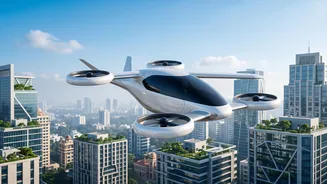
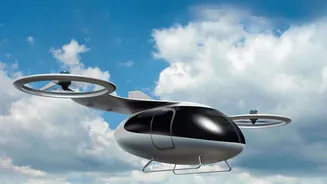
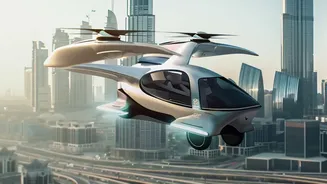
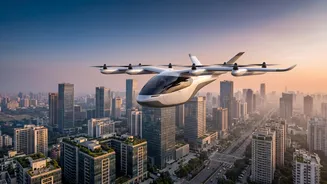
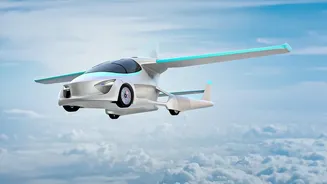
Think of an electric air taxi as a mix between a helicopter and a drone, but quieter and with zero emissions. Known in the industry as eVTOLs (electric Vertical Take-Off and Landing aircraft), these vehicles are designed to transport a small number of passengers
over short to medium distances. They take off and land vertically, eliminating the need for long runways. Powered by electricity, they are significantly quieter and more environmentally friendly than traditional helicopters. This technology forms the backbone of a concept called Urban Air Mobility (UAM), which aims to create a new layer of transportation above our congested city streets. The goal is to offer a fast, efficient, and green alternative for urban travel.
Why India is a Prime Market
India's sprawling, densely populated cities like Mumbai, Delhi, and Bengaluru are infamous for their traffic congestion, where commutes can stretch for hours. This makes the country a massive potential market for UAM. Imagine a 90-minute car journey from Connaught Place to Gurugram being reduced to just seven minutes. That’s the promise companies are making. This potential has attracted significant interest. InterGlobe Enterprises, the parent company of IndiGo, has partnered with US-based Archer Aviation to launch an air taxi service in India, with plans to acquire up to 200 aircraft. Similarly, Blade India, which already operates helicopter services, has agreements to purchase hundreds of eVTOLs from manufacturers like Eve Air Mobility and Jaunt Air Mobility.
The Regulatory Runway Takes Shape
For these futuristic aircraft to fly, a robust regulatory framework is essential, and India is actively building it. The Directorate General of Civil Aviation (DGCA) is the primary body responsible for safety, aircraft certification, and pilot licensing. In early 2026, the Ministry of Civil Aviation circulated a draft national policy on UAM, and the DGCA has already issued guidelines for certifying eVTOLs and the 'vertiports' they will operate from. The government is aiming for commercial flights to begin by 2028, with testing set to ramp up significantly in the preceding years. Indian startups like The ePlane Company are also in the advanced stages of the DGCA certification process for their own locally developed aircraft. This methodical approach, focusing on clear rules before scaling up, is crucial for ensuring safety and public trust.
Hurdles Before Takeoff
Despite the optimism, the path to a sky full of air taxis is filled with challenges. The first major hurdle is infrastructure. Cities will need a network of vertiports—mini-airports for eVTOLs—which require significant investment and urban planning. Another key issue is airspace management. Safely integrating thousands of new aircraft into the already busy airspace above cities requires sophisticated air traffic control systems, likely powered by AI. Then there is the question of cost and accessibility. While some estimates suggest a flight from Connaught Place to Gurugram could cost between ₹2,000 and ₹3,000, it remains to be seen if this can become a mass transit solution rather than a premium service for a select few. Finally, public acceptance hinges on a proven track record of safety, which will only come after extensive testing and transparent regulation.
Integrating with City Life
For electric air taxis to be truly effective, they cannot operate in isolation. The vision is to weave them into the existing urban transport fabric. This means designing vertiports that are seamlessly connected to metro stations, major business hubs, and airports. The service is expected to initially launch in Delhi, Mumbai, and Bengaluru, focusing on high-traffic routes that promise the most significant time savings. The goal is to create a multi-modal transit system where a commuter could take a metro, hop on an eVTOL for a cross-city jump, and then switch to a last-mile service. Beyond passenger transport, these aircraft also hold potential for other uses, including emergency medical services, organ transport, and high-value cargo logistics, adding another dimension to their utility in a modern megacity.