





Planning an international holiday used to be about finding the best sights and the cheapest flights. Now, a new factor is increasingly deciding where we go: the hassle of entry rules. A major 2026 survey confirms what many travellers feel.
Complexity is the New Dealbreaker
According to
the 2026 Global Passenger Survey from the International Air Transport Association (IATA), a staggering 43% of travellers have been discouraged from visiting a destination simply because of its immigration requirements. This is a sharp increase from 33% just a year prior, signalling a major shift in how people plan their trips. The primary reason isn't the cost of a visa, but its complexity. Travellers are increasingly put off by complicated forms, the need for in-person appointments, and long, uncertain waiting times. This frustration has become so significant that the ease of getting in can now outweigh the appeal of the destination itself.
The Rise of the Visa-Free Holiday
For Indian travellers, this trend is reshaping the world map. Countries that have simplified or removed visa requirements are seeing a measurable boom in visitors from India. Destinations across Southeast Asia like Thailand and Malaysia, which have extended visa-free policies for Indians, are reaping the benefits. These nations have become top choices for both planned holidays and spontaneous getaways, as the removal of bureaucratic hurdles makes travel significantly more accessible. The message is clear: a welcoming visa policy is one of the most effective tourism campaigns a country can run. While the Indian passport offers visa-free or visa-on-arrival access to around 57 countries, this still lags behind many other nations, making these visa-friendly spots particularly attractive.
The Hidden Cost of Difficult Visas
On the flip side, destinations with notoriously difficult visa processes are losing out. The Schengen visa, required for travel to much of Europe, is often cited as a major bottleneck for Indian tourists due to a shortage of appointments, long processing times, and high rejection rates. Similarly, the United States introduced a mandatory 'Visa Integrity Fee' in 2026, significantly raising the overall cost of applying. These hurdles act as a powerful deterrent, not only adding financial strain but also creating uncertainty that discourages travellers from even starting the planning process. Reports suggest these barriers suppress a huge amount of potential tourism revenue from what is one of the world's fastest-growing travel markets.
Travellers are Ready for a Digital Shift
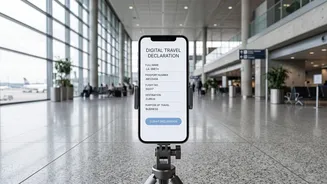
While complex rules are a growing frustration, the IATA survey shows that travellers are overwhelmingly willing to embrace technology to fix the problem. Around 86% of passengers are happy to share their immigration information digitally before they even get to the airport. There is also strong support for biometric identification, with many preferring to register their details once and move smoothly through airport checks without repeatedly showing their passport. More than 100 countries now offer some form of e-Visa, and travellers strongly prefer applying online to visiting a consulate in person. The demand is for smarter, more streamlined systems that replace outdated paperwork with modern, secure technology.