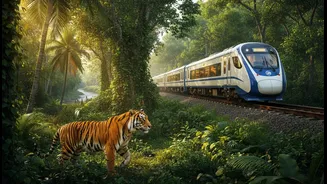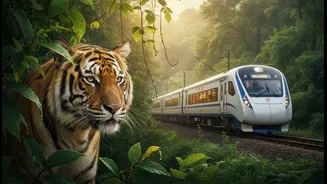




The Promise: High-Speed to the Wild
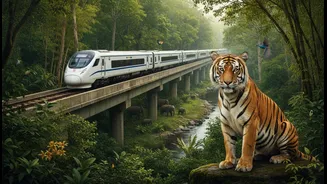
The narrative promoted by Indian Railways and tourism operators is one of seamless connectivity. The expanding network of Vande Bharat Express trains promises to bring India's iconic national parks closer than ever, reducing reliance on flights and long,
tiring drives. The vision is simple: a comfortable, modern train journey that drops you at the doorstep of adventure. This has excited not just business travellers but also nature enthusiasts eager for more accessible holidays. The marketing suggests that destinations once requiring complex multi-leg journeys are now just a train ride and a short drive away, opening up new possibilities for weekend trips and extended wildlife tours.
The Reality Check: Minding the Last-Mile Gap
The critical factor that separates hype from reality is the "last-mile" journey. Vande Bharat trains connect major cities and towns, not remote forest gates. The convenience of your trip depends entirely on the distance and transportation options available from the nearest Vande Bharat station to the park itself. While some connections are surprisingly smooth, others can involve several hours of road travel, potentially negating the time saved by the high-speed train. A traveller's experience hinges on this final leg, which requires careful planning, booking a reliable taxi, and factoring in additional time and cost that isn't part of the initial train ticket.
Case Study: Ranthambore National Park, Rajasthan
Ranthambore is perhaps the best-case scenario for a Vande Bharat wildlife trip. Multiple routes, including the popular circuits from Delhi and the recently introduced link from Agra to Udaipur, stop at Sawai Madhopur Junction (SWM). This station is exceptionally close to the park, just 10-12 kilometres from the main safari gates. The drive takes only 20-30 minutes, and taxis or auto-rickshaws are readily available. For travellers from cities like Delhi, Agra, or Jaipur, this makes the Vande Bharat a genuinely efficient and comfortable option, transforming a long road trip into a relaxed rail journey followed by a short local transfer. It's a prime example of where the promise aligns perfectly with the reality.
Case Study: Jim Corbett National Park, Uttarakhand
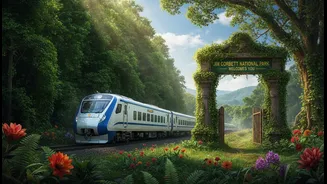
The connection to Jim Corbett, India's oldest national park, is more nuanced. The nearest Vande Bharat stop is Dehradun, served by the Delhi-Dehradun route. However, Dehradun is approximately a four to five-hour drive from Ramnagar, the main town and entry point for Corbett. While the train journey from Delhi to Dehradun is swift, the subsequent road trip is considerable. A more practical, though less direct, option for many travellers is to take a connecting train from a major hub to Ramnagar itself, which has its own railway station just 12 kilometres from the park. Therefore, while the Vande Bharat is an option, it isn't necessarily the most direct or efficient one for reaching Corbett.
Case Study: Kaziranga and Bandipur
For other major parks, the situation varies. To reach Kaziranga National Park in Assam, a UNESCO World Heritage site, the nearest major Vande Bharat station is Guwahati. From Guwahati, the park is still a significant road journey of about four to five hours. While new Vande Bharat services, including a sleeper train, are improving connectivity to the Northeast, the last-mile challenge remains. In the south, Bandipur National Park is accessible via the Chennai-Mysuru Vande Bharat. After alighting at Mysuru, visitors face an 80-kilometre road trip that takes about two hours. It's a feasible and scenic drive, but one that must be factored into the total travel time.