






The Soul of Monsoon Cravings
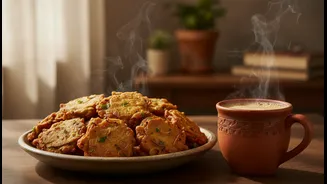
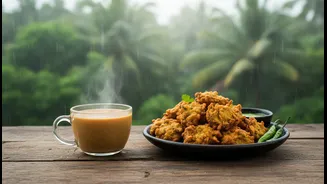
That sudden, intense desire for chai and pakoras when the sky turns grey isn’t just about hunger; it’s a powerful mix of nostalgia, psychology, and sensory triggers. For many, the association begins in childhood, with rainy days meaning a break from outdoor
play and a warm, comforting snack prepared in the kitchen. Psychologists call this 'associative learning,' where the brain links the comfort of family, the sound of rain, and the taste of these specific foods. Over years, the rain itself becomes a trigger for these feelings of warmth and togetherness. The contrast between the cool, damp weather and a hot, crispy snack heightens the sensory experience, making it feel incredibly satisfying. This craving is less about nutritional need and more about a longing for the emotional comfort these foods represent.
A Look at the Health Factor
While pakoras and sugary chai are undeniably delicious, the traditional methods of preparation often involve deep-frying and significant amounts of sugar. Regularly consuming deep-fried foods can increase calorie intake and has been associated with a higher risk of health issues. Foods fried in certain oils can be high in unhealthy fats, which may contribute to heart disease and other chronic conditions when consumed frequently. Similarly, chai loaded with refined white sugar can lead to blood sugar spikes. The idea isn't to eliminate these monsoon joys, but to understand their impact and explore ways to make them a more mindful indulgence.
Smarter Snacking: The Guilt-Free Pakora
The good news is that you don't have to give up pakoras to be health-conscious. Modern kitchen technology offers fantastic alternatives to deep-frying. Air-fried pakoras, for instance, can achieve a satisfying crispiness with a fraction of the oil. The key is a thick batter, often a mix of gram flour (besan) and a little rice flour for extra crunch, and preheating the air fryer. Baking is another excellent option. Simply arrange the battered vegetables on a baking sheet and cook in a hot oven until golden brown. You can also make the batter itself healthier by loading it with a wider variety of chopped vegetables like carrots, spinach, or even broccoli, increasing the nutrient and fibre content.
Rethinking Your Comforting Cup of Chai
The classic masala chai is a comforting brew, but the sweetness can be made healthier without sacrificing flavour. Instead of refined white sugar, consider traditional alternatives like jaggery (gur), which adds a deep, caramel-like flavour and retains some minerals. Other natural sweeteners like date syrup, coconut sugar, or a few drops of stevia can also reduce the sugar load effectively. You might also find that enhancing the spices in your chai—adding more ginger, cardamom, or a pinch of clove—provides so much flavour that you can naturally reduce the amount of sweetener you need. This small switch allows you to enjoy multiple cups through a rainy afternoon without the accompanying sugar crash.
A Journey Through India's Pakora Diversity
Beyond the familiar onion, potato, and spinach varieties, India has a vast and delicious landscape of regional pakoras. In Maharashtra, 'kekda bhaji' is made with thinly sliced onions that fry into a spindly, extra-crispy nest. Rajasthan is famous for its 'mirchi vada,' where large green chillies are stuffed before being fried. In Jharkhand, 'palash ke phool ke pakode' are made from the flowers of the flame of the forest tree, offering an earthy taste. Bengal has its 'beguni,' made with slices of eggplant. Exploring these variations is a wonderful way to expand your monsoon food horizons, trying different vegetables, flours, and spice blends that celebrate the country's rich culinary heritage.