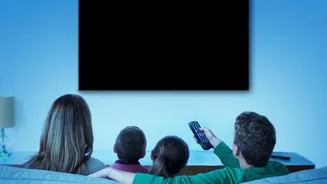







Remember when the entire family’s evening schedule was dictated by the TV? That era of shared, appointment viewing has given way to a new age where entertainment is personal, portable, and always on. Here’s how that dramatic shift happened.
The Single Screen & The Nation
In the 1980s,
Indian entertainment was a collective experience, largely curated by one broadcaster: Doordarshan. Shows like 'Hum Log', India's first soap opera which aired in 1984, brought the stories of middle-class families into living rooms, creating a shared cultural fabric. Epics like 'Ramayana' and 'Mahabharata' weren't just TV shows; they were national events that brought life to a standstill, with families gathering religiously around a single television set. This was the age of appointment viewing, a fixed schedule that united the country in a singular narrative, fostering a collective viewing culture that is rare today.
The Cable Boom and Reign of the Soaps
The 1990s and early 2000s ushered in the satellite television boom, shattering Doordarshan's monopoly and unleashing a flood of private channels. This era belonged to the daily soap opera. Serials like 'Kyunki Saas Bhi Kabhi Bahu Thi' became phenomenally popular, dictating not just evening schedules but also conversations, fashion, and family values. These 'K-serials' perfected a formula of domestic drama, emotional cliffhangers, and elaborate family sagas that captivated a massive audience, particularly homemakers. Prime time was synonymous with the saas-bahu drama, and the remote control was often a symbol of power in the household.
The Digital Disruption: A Screen for Everyone
The real revolution began with the arrival of affordable smartphones and cheap data plans. This technological shift put the power of choice directly into the hands of the viewer. The single television in the living room was no longer the sole gateway to entertainment. Suddenly, every member of the family had a personal screen. This transition from a 'we' experience to a 'me' experience was profound. Consumption became private, personalised, and on-demand, breaking the fixed schedules that had defined media habits for decades. Binge-watching became the new norm, a behaviour accelerated by the COVID-19 pandemic lockdowns.
Rise of Web Originals: Bold and Unfiltered
Over-the-Top (OTT) platforms like Netflix, Amazon Prime Video, and Disney+ Hotstar tapped into a hunger for content that traditional television couldn't satisfy. Web originals offered sharper, bolder, and more diverse storytelling. Freed from the constraints of broadcast censorship and the need to appeal to the entire family simultaneously, creators began exploring complex themes, nuanced characters, and gritty realism. Shows like 'Scam 1992', 'The Family Man', and 'Made in Heaven' found huge audiences by telling stories that were deeply rooted in Indian cultural reality but with a global sensibility. This new wave has been compared to the golden era of Doordarshan for its focus on content over glamour and for creating a new ecosystem of stars.
The New Family 'We-Time'
So, is family viewing dead? Not entirely, but it has certainly been redefined. The rise of large-screen connected TVs is fostering a new kind of 'co-viewing'. Two-thirds of audiences with connected TVs watch streaming content with their families, prompting platforms to invest in more inclusive, family-friendly shows. However, the dynamic has changed. Instead of one show for everyone, entertainment is now a negotiation. It might mean watching a movie together on a weekend, while weekdays are for individual binging in separate rooms. The shared experience is no longer a default but a conscious choice, a new ritual in the modern Indian home.