


The Human Body in Zero Gravity
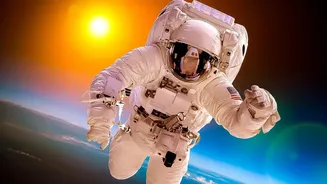
Space is an unforgiving environment. Without Earth's gravity, the human body undergoes significant changes. Astronauts can experience a rapid loss of bone density, at a rate ten times faster than patients with osteoporosis on Earth. Muscles weaken, cardiovascular
systems adapt in unexpected ways, and even the immune system's T-cells, crucial for fighting infection, can be affected by microgravity. Add to this the challenges of radiation, isolation, and psychological stress, and it becomes clear why space medicine is a highly specialized field. For India's Gaganyaan mission and the future Bharatiya Antariksh Station to succeed, ensuring the health and performance of the crew is paramount.
A Partnership Forged for the Stars
To tackle these challenges, the Indian Space Research Organisation (ISRO) has signed a Memorandum of Understanding (MoU) with the All India Institute of Medical Sciences (AIIMS) in Delhi. This formalizes a partnership that combines ISRO’s engineering prowess with AIIMS's deep medical and physiological expertise. The collaboration aims to create training modules for astronauts and conduct both ground-based and in-space research. Key focus areas include human physiology, cardiovascular regulation, musculoskeletal health, immunology, genomics, and behavioural health. By working together, the two institutions plan to generate reliable Indian data on how the body responds to space, creating protocols to maintain astronaut health during long-duration missions.
From Space Stations to Rural Clinics
The most exciting aspect of this collaboration is its potential to benefit healthcare on Earth. Technologies developed for the extreme, resource-limited environment of space often find powerful applications back home. Telemedicine is a prime example. Systems created to monitor an astronaut's health from thousands of kilometers away can be adapted to connect specialists in urban hospitals with patients in remote or underserved areas, a critical need in a country as vast as India. Similarly, research into the rapid bone loss and muscle atrophy seen in astronauts can provide invaluable insights into treating osteoporosis and aiding rehabilitation for bedridden patients on Earth. Even food technology gets a boost; designing nutritious, long-lasting meals for astronauts has led to innovations in food science that can be applied more broadly.
Innovations with Down-to-Earth Impact
The history of space exploration is filled with medical spinoffs. Advancements in MRI and CT scan imaging, implantable heart pumps, and even automatic insulin pumps have roots in technology developed for space missions. The ISRO-AIIMS partnership is poised to contribute to this legacy. The development of compact, durable medical devices for space can lead to portable diagnostic tools for terrestrial use. For instance, research into managing medical emergencies in zero gravity could refine emergency protocols on Earth. Furthermore, studying how the immune system behaves in space could unlock new understandings of autoimmune diseases and aging. This collaboration is not just about supporting a space program; it's about building a national capacity for cutting-edge biomedical research and development.