
The aroma of roasting chestnuts is a hallmark of winter festivities. But this delightful experience can quickly turn into a startling mess if one key step is missed. Here’s why a simple 'X' is your best friend for a perfect, burst-free roast.
The Science Behind the Bang
Ever wondered
why an unscored chestnut can explode with surprising force in a hot oven? The answer lies in simple physics. Unlike drier nuts like almonds or walnuts, a fresh chestnut is about 50% water by weight. As the chestnut heats up, this internal water turns into steam. The hard, impermeable shell traps this rapidly expanding steam, causing pressure to build dramatically. If the pressure exceeds the shell's strength, it will burst open, often with a loud pop and a significant mess. Scoring the shell by cutting an 'X' creates a necessary vent. This allows the steam to escape gradually, preventing the pressure from building to an explosive point. It's the same principle as piercing a potato with a fork before baking it.
How to Score Chestnuts Safely
Scoring is simple, but it requires care as the shells are tough and can be slippery. First, place the chestnut on a cutting board with its flat side down for stability. Using a small, sharp paring knife or a serrated knife, carefully cut an 'X' into the rounded side of the nut. The goal is to slice completely through the hard outer shell and the thin, papery skin beneath it, but to avoid cutting deeply into the nut itself. Some find that sturdy kitchen scissors can also do the job safely; you can make one cut, turn the nut, and make the second to form the 'X'. This incision not only prevents explosions but also makes the chestnuts much easier to peel after they are roasted.
The Perfect Roasting Method
Once all your chestnuts are scored, it’s time to roast. Preheat your oven to a temperature between 180°C and 220°C (350°F to 425°F), as different recipes suggest slightly different heats. Spread the scored chestnuts in a single layer on a baking sheet, with the 'X' facing up. Roasting time typically ranges from 15 to 35 minutes, depending on the size of the nuts and your oven's temperature. You'll know they are done when the shells at the 'X' begin to peel back and curl, and a sweet, nutty aroma fills your kitchen. It's a good idea to give the pan a little shake about halfway through to ensure they cook evenly.
Peeling and Enjoying Your Treat
The final, crucial step is peeling, and timing is key. You must peel the chestnuts while they are still quite warm. If you let them cool completely, the inner skin will stick stubbornly to the nut, making them difficult to peel. A popular trick is to remove the chestnuts from the oven and wrap them in a clean tea towel for 5 to 10 minutes. The trapped steam helps to loosen both the outer shell and the inner papery skin. Once they are cool enough to handle but still warm, simply pull back the shell from the scored 'X'. The shell and skin should come off easily, revealing the tender, sweet chestnut inside. Enjoy them immediately on their own or use them in festive stuffings, soups, and desserts.
Selecting the Best Chestnuts
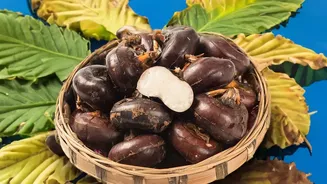
Your roasting success begins at the market. When buying fresh chestnuts, look for nuts that are firm, glossy, and feel heavy for their size. Avoid any that have wrinkled or cracked shells, mouldy spots, or feel soft and squishy. These can be signs of dryness or decay. A good test is to give a chestnut a shake; if it rattles, it's likely old, and the nut inside has dried out and shrunk away from the shell. Store your fresh chestnuts in the refrigerator until you are ready to use them to keep them from drying out.