




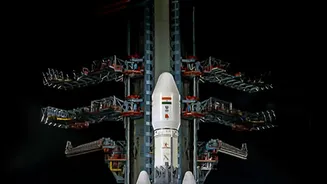
A New Era of Accelerated Ambition
Following a string of historic successes, including the Chandrayaan-3 lunar landing and the Aditya-L1 solar observatory, ISRO is not resting on its laurels. The agency has laid out a roadmap with dozens of launches planned over the coming years, a clear
signal of its intent to scale up operations and solidify India's position as a leading space-faring nation. This new phase moves beyond one-off celebratory missions to a sustained, high-cadence launch capability. The plan includes a mix of scientific, commercial, and strategic missions, each designed to build on previous successes and expand India’s technological frontiers. This intense activity is a declaration that India is moving from proving its capabilities to demonstrating its dominance in space.
Gaganyaan: India's Human Spaceflight Dream
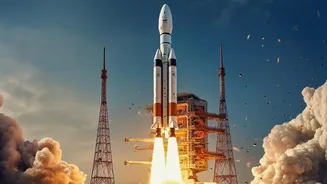
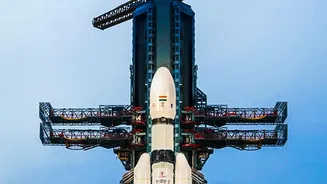
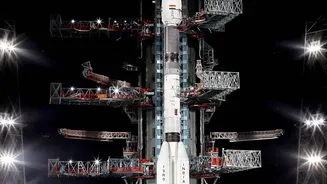
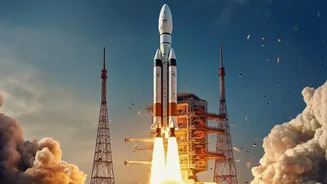
At the heart of ISRO's current ambition is the Gaganyaan mission, India's quest to send its own astronauts into orbit. The program is proceeding with meticulous caution, with the first uncrewed test flight, G1, being a major priority for 2026. This mission will test the human-rated LVM3 rocket, the crew module's life support systems, and critical abort and recovery procedures. Following G1, another test flight featuring the humanoid robot Vyommitra is planned before the first crewed flight, which will carry three Indian Air Force pilots into a 400 km orbit. Gaganyaan is more than a prestige project; it represents the pinnacle of indigenous technological achievement and a crucial step towards long-term human presence in space.
The Next Frontier: Probing Venus and Mars
ISRO is also setting its sights on our planetary neighbours. After the stunning success of the first Mars Orbiter Mission (Mangalyaan), a follow-up, Mangalyaan-2, is in the works. While details are still emerging, it is expected to be a more complex mission, potentially involving a lander and rover. Even sooner, India plans to journey to Earth's other neighbour with Shukrayaan-1, the Venus Orbiter Mission, which is planned for a 2028 launch. This mission aims to study the dense, toxic atmosphere and volcanic surface of Venus, seeking to understand why Earth's 'twin' evolved so differently. These interplanetary ventures underscore India's growing confidence in executing complex, long-duration space missions.
Eyes on Earth and the Commercial Market
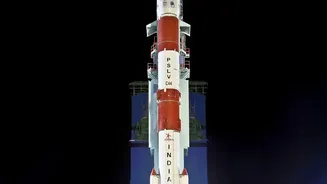
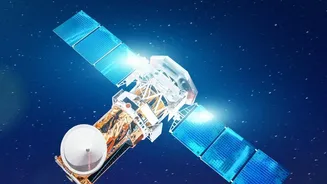
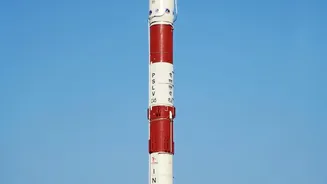
While deep space missions capture the imagination, a significant portion of ISRO's manifest is dedicated to vital Earth-centric activities. This includes the landmark NASA-ISRO Synthetic Aperture Radar (NISAR) satellite, which launched in 2025 to monitor Earth's changing ecosystems, ice sheets, and natural hazards with unprecedented detail. On the commercial front, ISRO's commercial arm, NewSpace India Limited (NSIL), is aggressively marketing the PSLV, GSLV (now LVM3), and SSLV rockets. This strategy is fostering a vibrant domestic space ecosystem, with private companies like Skyroot Aerospace already achieving milestones like the first private orbital launch from India. This symbiotic relationship between ISRO and private players is crucial for India's goal of capturing a larger share of the global space economy.