





The Pacific's Big Player: El Niño and La Niña
The most famous climate pattern influencing India is the El Niño-Southern Oscillation (ENSO), which plays out in the vast equatorial Pacific Ocean. ENSO has two opposite phases: El Niño and La Niña. During an El Niño, trade winds weaken, allowing warm
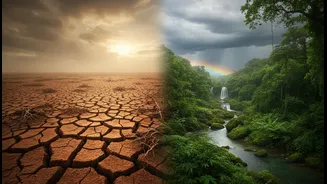
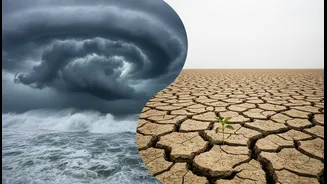
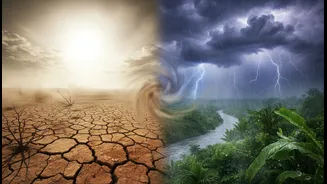
water from the western Pacific to flow towards South America. This shift in ocean heat disrupts normal atmospheric circulation across the globe. For India, El Niño is often bad news. It tends to suppress monsoon rainfall, leading to drier conditions and an increased risk of drought, particularly in the central and northwestern parts of the country. This can cause significant stress on agriculture, water resources, and power generation. La Niña is the reverse: the eastern Pacific cools, and trade winds strengthen, which typically results in a stronger monsoon and above-average rainfall for India.
The Indian Ocean's Own Game: The Dipole
Closer to home, the Indian Ocean has its own climate see-saw called the Indian Ocean Dipole (IOD), sometimes referred to as the 'Indian El Niño'. First identified by Indian researchers in 1999, the IOD is defined by the difference in sea surface temperatures between the western Indian Ocean (near the African coast) and the eastern Indian Ocean (near Indonesia). It has three phases: positive, negative, and neutral. A neutral IOD means there's no significant temperature difference and no major impact on regional climate. But when the dipole is active, its effects can be profound.
Positive vs. Negative: The Dipole's Dual Impact
During a 'positive' IOD, the western Indian Ocean becomes warmer than the east. This temperature difference helps push moisture-laden winds towards the Indian subcontinent, enhancing the Southwest Monsoon. A strong positive IOD can bring generous, sometimes excessive, rainfall, boosting agricultural output, replenishing reservoirs, and supporting rural incomes. In a 'negative' IOD, the opposite happens. The eastern Indian Ocean warms up, shifting rainfall away from India towards Indonesia and Australia. This phase often leads to below-normal rainfall and can increase the risk of drought conditions across many parts of India.
When Giants Interact: The Combined Effect
The big question for forecasters every year is how these two patterns will interact. They can occur independently, but they often influence each other. El Niño and a positive IOD, for example, tend to co-occur. In this scenario, the IOD can act as a saviour. A strong positive IOD can partly or even completely offset the negative impact of an El Niño, rescuing the monsoon from failure. This happened famously in 1997, when a super El Niño occurred, but a strong positive IOD helped India receive near-normal rainfall. Conversely, if an El Niño occurs alongside a negative IOD, the combined effect can be devastating, significantly increasing the odds of severe drought.
Why This Matters for India
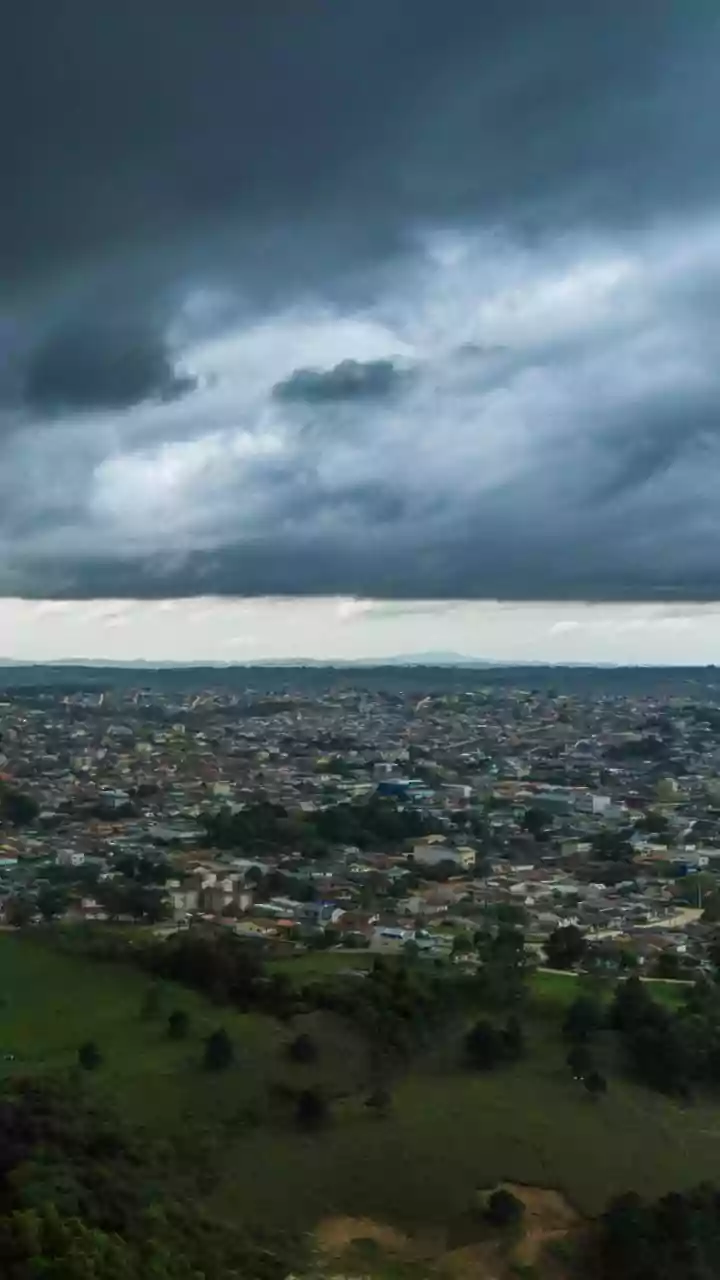
Understanding these patterns is not just an academic exercise. With nearly half of the workforce dependent on agriculture, the monsoon's performance is directly tied to the nation's economic health. A weak monsoon triggered by El Niño can reduce crop yields, impacting food security and driving up inflation. The 2019 monsoon, for instance, had a delayed start due to a weak El Niño, but a powerful positive IOD took over mid-season, leading to a deluge that refilled reservoirs. Forecasts for 2026 suggest a developing El Niño, with hopes that a potential positive IOD might again help to mitigate its drying effects, especially in the latter half of the monsoon season.