



Emotional Intelligence and Empathy
Emotional intelligence is the ability to understand and manage your own emotions, as well as recognise and influence the emotions of others. It's the core of effective leadership, collaboration, and building trust. While AI can be programmed to recognise emotional
cues from text or voice, it doesn't actually feel or experience these emotions. It simulates understanding based on data, but lacks the genuine empathy that comes from lived experience and shared human connection. Think of a manager who senses their team is burnt out and adjusts workloads, or a salesperson who builds a real relationship with a client. These actions are driven by a deep, intuitive understanding of people that machines cannot replicate. This uniquely human ability is becoming more valuable as routine analytical work gets automated.
Complex Problem-Solving and Critical Thinking
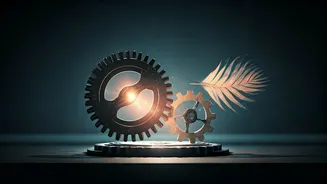
AI is brilliant at solving problems within a defined set of rules. However, the real world is filled with complex, ambiguous situations that don't have a clear rulebook. This is where human critical thinking shines. It involves questioning assumptions, evaluating information from varied sources, and using judgment when the path forward isn't clear. Over-reliance on AI can even risk eroding these skills, as it’s tempting to accept an AI-generated answer without scrutiny. Humans, unlike AI, can step back, see the bigger picture, and use intuition to navigate novel challenges. The most effective approach involves human-AI collaboration, where AI provides data and analysis, but humans apply critical thought, strategic direction, and final judgment.
Genuine Creativity and Originality
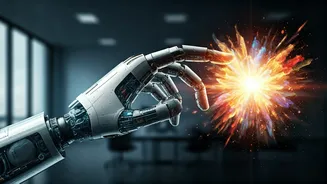
Generative AI can create art, write poetry, and compose music. But its creativity is based on remixing and recombining the vast datasets it was trained on. True human creativity, on the other hand, is about generating genuinely new ideas and making original connections born from curiosity, personal experience, and emotional depth. Research has shown that while AI can boost the output of ideas, it can also lead to more similar and less diverse concepts, a phenomenon sometimes called 'preference collapse'. True innovation often requires breaking rules and taking irrational leaps of faith, something AI, which is designed to find probable outcomes, struggles with. The future of creativity will likely be a partnership where AI handles the grunt work, but the spark of a truly original idea still comes from a human mind.
Leadership and Collaboration
Effective leadership is about much more than data analysis and workflow optimization. It's about inspiring a shared vision, motivating a team through difficult times, and understanding the unspoken dynamics in a room. These are deeply human endeavours rooted in trust, empathy, and communication. While an AI can analyse performance metrics, it can't sense a team's flagging morale or navigate the delicate art of conflict resolution. Similarly, true collaboration involves more than just sharing information; it’s about building consensus, fostering psychological safety, and adapting to the strengths and weaknesses of team members. These social skills are becoming even more critical in a world where technical tasks can be automated, placing a premium on those who can bring people together to achieve a common goal.
Ethical Judgment and Moral Reasoning
AI operates based on the data and algorithms it's given, without an inherent sense of values, fairness, or ethics. Many real-world decisions, especially in fields like law, medicine, and business leadership, are not black and white. They exist in shades of grey and require navigating complex ethical dilemmas. A human can weigh a decision's impact on different stakeholders, consider societal values, and apply a moral framework. This requires moral courage—the willingness to question a decision that looks good on paper but feels wrong in practice. As AI becomes more integrated into our lives, the need for humans who can provide ethical oversight, ask difficult questions, and ensure technology is used responsibly will only grow. Ultimately, AI can optimize for a goal, but only humans can decide if that goal is the right one.