








The Traditional Race Against Spoilage
For decades, the journey of an apple from a Kashmiri orchard to a processing unit was a high-stakes race against time. The region produces over 21 lakh metric tonnes of apples annually, with a significant portion classified as 'C-grade' — fruit that is
ideal for juices and concentrates but unsuitable for the fresh market. Historically, a lack of adequate infrastructure meant much of this valuable produce was lost. Poor road connectivity, especially the vulnerable Srinagar-Jammu highway, often led to massive transportation delays. Without a robust cold chain, apples would sit in trucks for days, leading to spoilage and forcing distress sales at throwaway prices. Farmers faced a grim choice: sell immediately at a low price or risk losing the crop entirely. This systemic inefficiency resulted in staggering post-harvest losses, with some estimates suggesting nearly a fifth of the crop could be wasted.
A Cold Chain Revolution
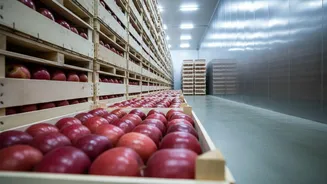
The game-changer has been the widespread introduction of modern logistics, particularly Controlled Atmosphere (CA) storage. Unlike simple refrigeration, CA facilities create a carefully managed environment where temperature, humidity, oxygen, and carbon dioxide levels are precisely controlled. This technology essentially puts the apples to sleep, slowing their ripening process and extending their shelf life for up to 10 months. The expansion of CA storage capacity in Kashmir, though still below the total required amount, has been transformative. It gives growers and processors unprecedented flexibility, breaking the cycle of panic-selling during the harvest glut. Now, instead of flooding the market all at once, C-grade apples can be stored and supplied to crushing units steadily throughout the year, ensuring a consistent supply for processing and better returns for farmers.
Smarter, Integrated Supply Chains
Beyond storage, modernisation is touching every part of the supply chain. Refrigerated transport is becoming more common, protecting the fruit's quality from the orchard to the factory door. Furthermore, digital platforms are empowering farmers with real-time market information. Initiatives like the Kisan Khidmat Ghar (KKG) provide data on mandi prices, helping growers make informed decisions about when to sell. This integration creates a more transparent and efficient value chain. Some projects are even developing entire agro-clusters, integrating pre-production, harvesting, logistics, and marketing into a single streamlined system. This holistic approach ensures that lower-grade apples, which were once seen as a liability, are now efficiently channelled towards value-added products like juice concentrate, which has a wide range of applications in the food and beverage industry.
The Economic and Environmental Payoff
Reducing waste in the apple-crushing season has profound economic and environmental benefits. For an industry that supports an estimated 3.5 million people, minimising post-harvest losses directly translates to higher and more stable incomes for farmers. By ensuring that C-grade apples reach processors, farmers can monetise a part of their harvest that was previously prone to wastage. This bolsters the rural economy and creates steady employment in processing units. Environmentally, preventing tonnes of organic matter from rotting reduces waste and promotes a more sustainable agricultural cycle. As logistics continue to improve, with developments like the introduction of railway freight for apples, the efficiency and resilience of Kashmir's apple economy are set to grow even stronger.