
The Foundation: Rice and Parippu
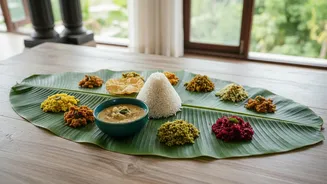
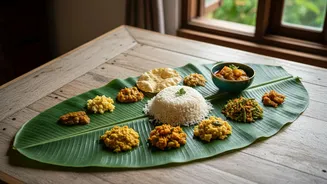
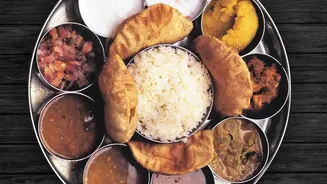
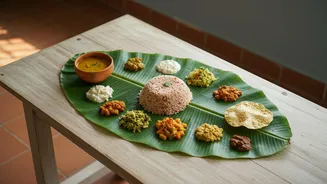
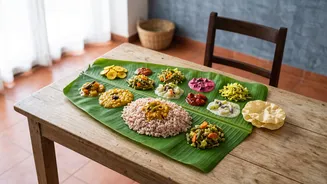
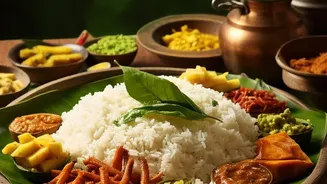
The heart of any Sadya is the rice. Traditionally, it's Kerala’s own semi-polished red rice, also known as Matta rice, which forms the centrepiece on the banana leaf. The meal begins with a serving of this steaming rice, over which the first curry, Parippu,
is poured. This mild and comforting dish is a simple but essential curry made from small gram (moong dal) and topped with a spoonful of ghee, setting a gentle tone for the flavourful journey ahead.
The Accompaniments: Pickles and Chips
On the top-left corner of the banana leaf, a variety of pickles and crunchy items are placed. This includes staples like tangy mango and lime pickles (Manga Achar and Naranga Achar). A key condiment is the Inji Curry, also known as Puli Inji, a sweet, sour, and spicy chutney made from ginger, tamarind, and jaggery. Accompanying them are the essential crunchy elements: Pappadam, light and airy fried wafers, and banana chips, which come in two forms - salted (Upperi) and coated in jaggery (Sharkara Varatti).
The Vegetable Ensemble: Thoran and Avial
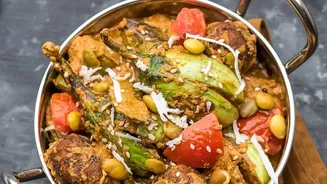
A Sadya is a showcase of vegetables, and Thoran is a prime example. This is a dry stir-fried dish where finely chopped vegetables like beans, cabbage, or beetroot are mixed with grated coconut, chillies, and spices. Another star is Avial, a thick medley of various vegetables like drumsticks, plantain, and yam, cooked in a fragrant coconut and yogurt gravy. It's a hallmark dish, celebrated for its unique texture and creamy consistency.
The Yogurt-Based Curries: Pachadi and Kichadi
Providing a cooling contrast are the yogurt-based preparations. Pachadi can be sweet or sour, often made with fruits like pineapple or vegetables like cucumber in a yogurt and ground mustard-coconut sauce. Kichadi is similar but typically features vegetables like cucumber or ladyfinger in a seasoned curd, offering a refreshing, tangy note to balance the richer dishes. Both are essential for their role in cleansing the palate.
The Main Curries: Sambar, Olan, and Kalan
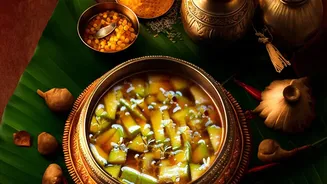
As the meal progresses, more substantial curries are served. Sambar, the beloved South Indian lentil-and-vegetable stew, is a staple. Olan is a milder, elegant curry made from ash gourd and black-eyed peas, cooked in a thin coconut milk gravy. Kalan is a thicker, sour curry made with yam or raw plantain in a robust yogurt and coconut base, offering a distinctly rich flavour. Together, these curries represent a spectrum of tastes from tangy to subtle.
The Finale: A Symphony of Payasams
No Sadya is complete without dessert, and Payasam is the undisputed king. There are often multiple varieties served. Palada Payasam is a creamy, milk-based pudding with delicate rice flakes (ada). Parippu Payasam is a richer dessert made with moong dal, jaggery, and coconut milk, giving it a deep, nutty flavour. Other popular versions include Semiya Payasam (vermicelli) and Chakka Pradhaman (jackfruit), ensuring the feast ends on a truly sweet note.