



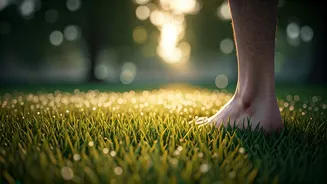



What is Barefoot Alignment?
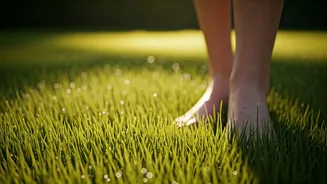
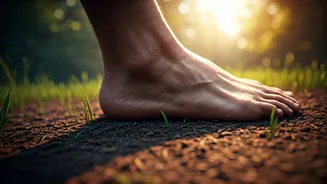
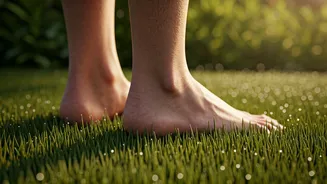
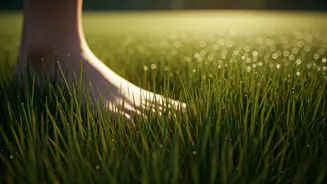
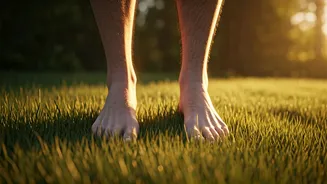
At its core, the trend is a modern repackaging of an ancient practice, now often referred to as 'earthing' or 'grounding'. The central idea is that direct physical contact with the earth's surface can help recalibrate our body's systems. Proponents believe
that modern life, with its rubber-soled shoes and indoor living, has disconnected us from the earth's natural electrical charge. By walking barefoot on natural surfaces like grass, soil, or sand, they claim we can absorb free electrons from the ground. This, in theory, helps to neutralise the damaging free radicals in our bodies, leading to a state of 'alignment'—a term used to describe a feeling of physical balance, reduced inflammation, and mental clarity.
Why Is It Going Viral Now?
The movement's recent surge in popularity is no accident. It taps directly into a growing cultural desire to disconnect from screens and reconnect with nature. After years of digital saturation, the simple act of feeling grass underfoot offers a tangible, sensory escape. Wellness influencers on platforms like Instagram and TikTok have amplified the message, sharing aesthetic videos of barefoot walks at sunrise, touting benefits from better sleep to reduced anxiety. The low barrier to entry—it's free and requires no special equipment—makes it an accessible practice for anyone looking for a low-stakes wellness boost. It represents a backlash against complicated, expensive health fads in favour of something primal and simple.
The Claimed Health Benefits
Advocates for grounding have a long list of purported benefits. The most common claim is a reduction in chronic inflammation, which is a root cause of many diseases. Other widely cited advantages include improved sleep quality, reduced chronic pain, lower stress levels through cortisol regulation, and even better cardiovascular health. On a more mechanical level, walking barefoot is said to improve posture and foot strength. The argument is that modern, overly-cushioned shoes weaken the small muscles in our feet and ankles, leading to instability and problems up the kinetic chain into our knees, hips, and back. Barefoot walking forces these muscles to engage, building a stronger, more natural foundation.
What the Science Actually Says
While the community of believers is strong, the scientific evidence for 'earthing' is still in its infancy and considered preliminary by the broader medical community. Some small-scale studies have suggested potential benefits for inflammation, mood, and sleep, but many of these have been criticised for small sample sizes or lack of rigorous controls. Where there is stronger consensus is on the biomechanical benefits. Podiatrists and physical therapists generally agree that walking barefoot on safe, soft surfaces can help strengthen the intrinsic muscles of the feet, improve balance, and enhance proprioception—your body's awareness of its position in space. However, these benefits are attributed to the physical act of walking, not necessarily the earth's electrical charge.
The Real Risks on Public Lawns
Before you kick off your shoes in the nearest park, it's crucial to consider the risks. Public parks are not pristine wilderness. The most obvious danger is stepping on sharp objects like glass, metal shards, or sharp stones, which can cause cuts and puncture wounds. These wounds carry a risk of infection, including tetanus, a serious bacterial disease. Lawns may also be treated with pesticides and herbicides, chemicals you may not want to absorb through your skin. Furthermore, people with certain medical conditions, such as diabetes, may have reduced sensation in their feet (neuropathy), making them unable to feel an injury until it has become serious. Those with flat feet or plantar fasciitis may find that walking barefoot without support can exacerbate their condition.
How to Try Barefoot Walking Safely
If you're curious to try it, a cautious approach is best. Start slow with just five to ten minutes at a time to allow your feet and calf muscles to adapt. Choose your location carefully; a clean, familiar backyard is safer than a busy urban park. Visually scan the area for hazards before you begin. After each session, wash your feet thoroughly with soap and water and check for any cuts or scrapes. Pay attention to how your body feels. If you experience any new or worsening pain in your feet, ankles, or knees, it’s a sign to stop and consult a professional. The goal is mindful connection, not injury.