





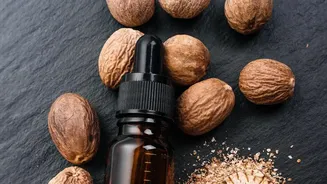

The Alluring 'Brain Tonic'
For centuries, traditional medicine has revered nutmeg as a 'brain tonic'. Proponents claim it can enhance memory, improve focus, and even lift your mood. Some folk traditions have used it to aid sleep and reduce stress. These beliefs are rooted in the
complex chemical makeup of the spice, which contains compounds that interact with our bodies in powerful ways. The allure is understandable: a simple, natural spice that could sharpen the mind and calm the nerves. This has led many to wonder if they should be adding more of this fragrant spice to their daily diet for its supposed cognitive and mood-enhancing effects.
A Look at the Science
The key to nutmeg's effects lies in its essential oils, which contain active compounds like myristicin, elemicin, and eugenol. Myristicin, in particular, is the primary psychoactive component. In small, culinary amounts, these compounds contribute to the spice's aroma and flavour, and are thought to provide antioxidant and anti-inflammatory benefits. Some animal studies and traditional use suggest these compounds might protect the brain from stress and stimulate nerve activity, lending some credibility to its reputation as a cognitive enhancer. However, the very compound that gives nutmeg its potential benefits is also the source of its significant risks.
The Potent Dark Side
This is where the 'more is not better' warning becomes critical. When consumed in large quantities, myristicin has toxic and psychoactive effects. The body metabolizes myristicin into a compound that can affect the central nervous system, producing effects similar to some hallucinogens. Symptoms of nutmeg intoxication are unpleasant and can be severe, including nausea, dizziness, dry mouth, confusion, a rapid heartbeat, and hallucinations. These effects can take hours to begin and may last for a day or even longer. In very high doses, or when combined with other substances, it has been linked to organ failure and, in rare cases, can be fatal.
How Much Is 'Too Much'?
The gap between a safe culinary amount and a toxic dose is surprisingly narrow. A single serving of a baked good or a sprinkle in your drink typically uses a tiny fraction of a teaspoon and is perfectly safe. Most recipes call for just a quarter or half a teaspoon for an entire dish that serves multiple people. Toxic symptoms can begin to appear after ingesting as little as 5 to 10 grams, which is roughly one to two teaspoons of ground nutmeg. Recreational doses, which are extremely dangerous, can be much higher. Given that a whole nutmeg seed weighs about 7 grams, it's clear that consuming even one or two whole seeds could lead to significant poisoning.
Enjoying Nutmeg Safely
The key takeaway is not to fear nutmeg, but to respect it. Keep it as a flavouring agent, not a health supplement. The amount used in cooking and baking is far below the toxic threshold and poses no danger. Enjoy your pumpkin spice lattes, holiday eggnog, and spiced cakes without worry. For the best flavour and potency, consider buying whole nutmeg and grating it fresh as needed — this also makes it harder to consume large amounts accidentally. The bottom line is simple: use nutmeg as it has been used for generations, as a delicious spice to be enjoyed in moderation. Let its warm flavour enhance your food, but don't look to it as a quick fix for brain health.