



The Unseen Threat Below
For decades, the scientific consensus held that while West Antarctica's ice was a known concern, the colossal East Antarctic Ice Sheet was largely stable. This massive ice sheet, containing enough water to raise global sea levels by over 50 meters, was considered
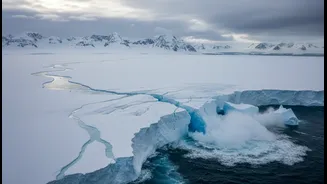
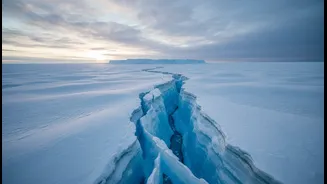
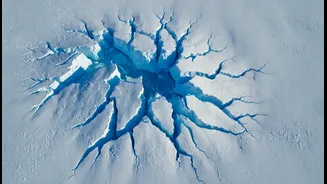
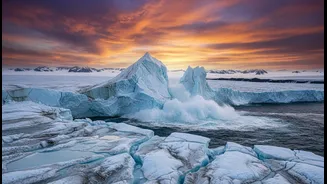
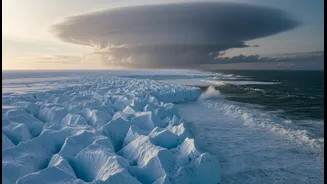
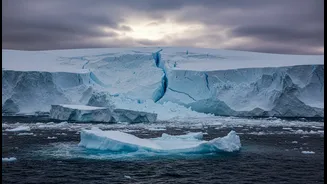
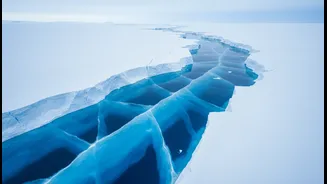
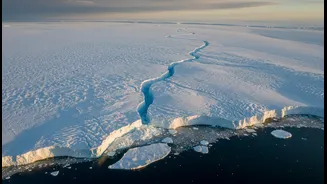
too high and cold to be at immediate risk. However, recent studies are challenging this comforting assumption. The "fresh attention" from climate scientists stems from the discovery of new processes accelerating melt in ways that previous models did not account for. Research has revealed that warmer ocean water is not just nibbling at the edges of the ice shelves; it's being channelled deep beneath them, melting the ice from below at a much faster rate than anticipated. This hidden melting process creates instability that current climate projections may be missing, suggesting future sea-level rise could be significantly underestimated.
West Antarctica's 'Doomsday Glacier'
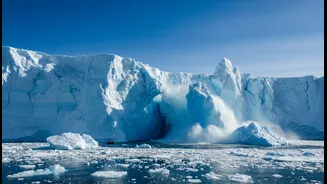
Much of the immediate focus is on West Antarctica, particularly the Thwaites Glacier. Nicknamed the 'Doomsday Glacier', it is one of the largest and fastest-changing glaciers in the world. Spanning an area the size of Great Britain, its complete collapse alone could raise global sea levels by over half a meter. The International Thwaites Glacier Collaboration has found that seawater is infiltrating miles beneath the glacier's grounding line—the point where the ice meets the seabed—dramatically increasing melt. Scientists warn that the glacier's retreat is likely irreversible, having begun as early as the 1940s. The rapid disintegration of its protective ice shelf, which buttresses the glacier, could accelerate this process, triggering a wider collapse of the entire West Antarctic Ice Sheet.
The Sleeping Giant Awakens
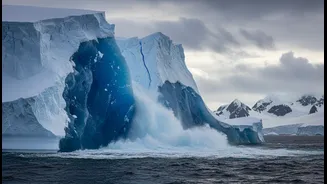
Perhaps the most startling new front in this research is East Antarctica. Once considered a bastion of stability, scientists now know it is far more susceptible to warming than previously thought. Studies show that even moderate warming of 2 to 3°C above pre-industrial levels could trigger tipping points in major East Antarctic basins like the Wilkes Basin. New research indicates that deep channels carved into the underside of ice shelves can trap warm ocean water, intensifying melting even in these colder regions. This mechanism suggests the 'sleeping giant' may not be so dormant after all. The fate of the East Antarctic Ice Sheet, which holds ten times more potential sea-level rise than its western counterpart, is now a critical and urgent question.
A Cascade of Consequences
The science is complex, involving feedback loops where melting begets more melting. As freshwater from the ice flows into the ocean, it changes ocean circulation patterns, which can then draw more warm, deep-ocean water towards the ice sheets, creating a vicious cycle. While some studies point to temporary gains in ice mass due to increased snowfall in certain areas, the overwhelming consensus is that the overall trend is one of accelerating loss. The Antarctic ice sheet does not behave as a single entity but as a series of interconnected basins, where melting in one area can lead to cascading instability in others. This interconnectedness makes predicting the exact timeline of collapse difficult but highlights the immense scale of the potential risk.
Why It Matters for India
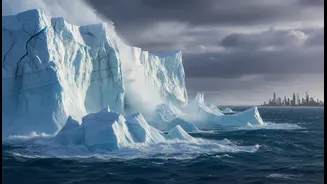
The changes happening thousands of kilometers away in Antarctica have direct and severe implications for India. With a coastline stretching over 7,500 kilometers and home to bustling metropolises like Mumbai, Kolkata, and Chennai, India is acutely vulnerable to sea-level rise. Even a modest increase beyond current projections could dramatically expand the reach of storm surges and lead to permanent flooding in low-lying coastal zones. The potential ice loss from Antarctica—equivalent to several meters of sea-level rise if major sections collapse—represents an existential threat to these coastal communities, their economies, and critical infrastructure. The fresh attention on Antarctica's instability underscores the urgent need to understand these global risks to better prepare for a future with higher seas.