
Meet S/2023 U1
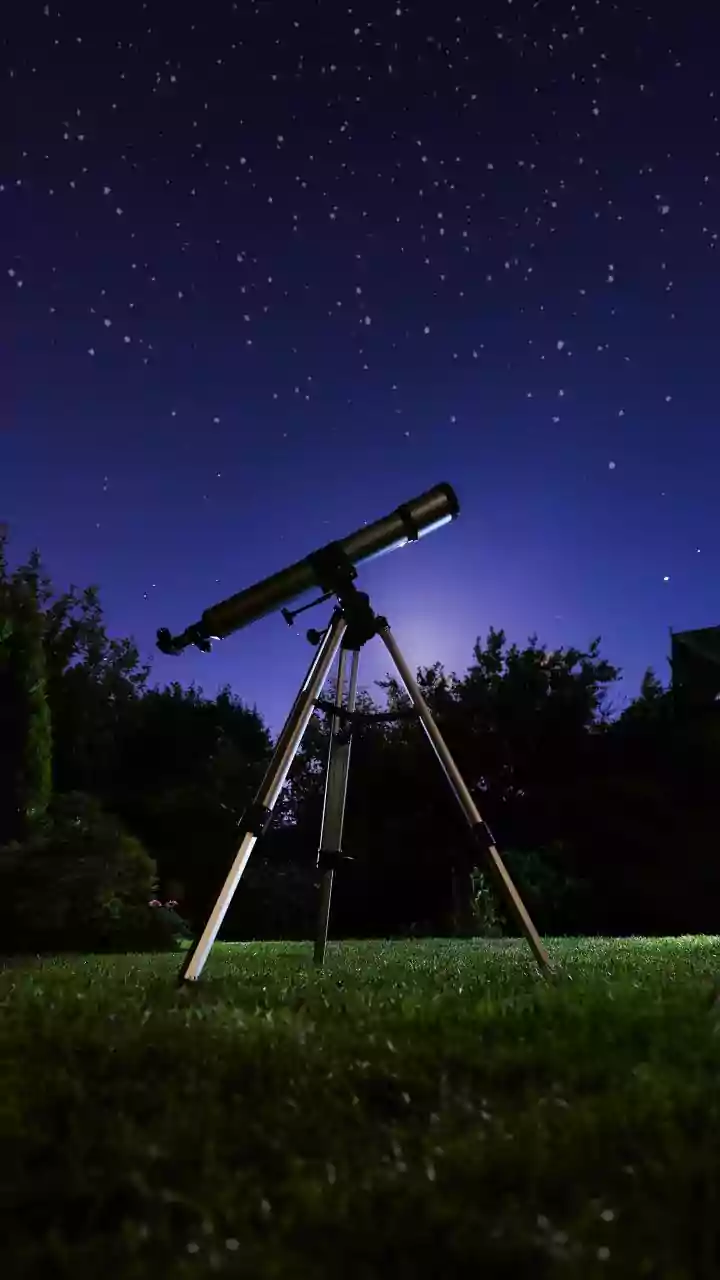
The newest addition to Uranus's family of moons is provisionally named S/2023 U1. First spotted in late 2023 using the powerful Magellan telescopes in Chile, its existence was confirmed and announced in early 2024. This isn't a large, planet-like satellite;
S/2023 U1 is incredibly small, estimated to be only about 8 kilometres in diameter, making it likely the smallest of Uranus's known moons. Its discovery was a technological feat, requiring special image processing techniques to pick its faint signature out from the darkness of deep space. This is the first new moon found around Uranus in over two decades, bringing the planet's total count of known natural satellites to 28.
The Oddball Orbit
What makes S/2023 U1 so fascinating to scientists is not its size, but its journey around the planet. Most of Uranus's moons orbit in a relatively neat, flat plane around its equator. In contrast, S/2023 U1 is an 'irregular' moon. It follows a distant, highly eccentric, and inclined orbit. It takes a staggering 680 Earth days to complete a single trip around Uranus. This strange path strongly suggests that S/2023 U1 was not born from the same disk of gas and dust that formed Uranus and its main moons. Instead, it was likely a stray object, a wanderer from the outer solar system that was captured by the ice giant's gravity long ago.
Uranus: The Tilted Giant
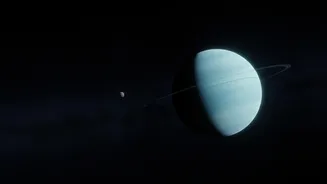
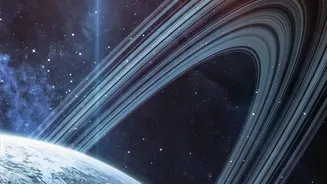
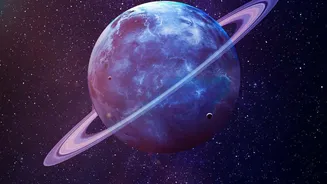
To understand why a captured moon is so significant, one must first appreciate how strange Uranus is. The entire Uranian system is an anomaly in the solar system. Uranus is famously tilted on its side by about 98 degrees, meaning it essentially orbits the Sun like a rolling ball. This extreme tilt, possibly the result of a colossal impact with an Earth-sized object in its distant past, gives it the most extreme seasons of any planet. This sideways orientation affects its rings and its regular moons, which all dutifully orbit around its tilted equator. The discovery of an irregular moon like S/2023 U1, with an orbit that doesn't conform, adds another layer of complexity to this already peculiar system.
A Cosmic Detective Story
The existence of S/2023 U1 and other similar irregular moons around giant planets helps piece together the chaotic history of our solar system's formation. These captured objects are relics from that early era. Studying their orbits provides clues about the gravitational dynamics that shaped the outer planets. Scientists are particularly interested in the fact that even a planet as unusual as Uranus has a population of captured moons similar to those around Jupiter, Saturn, and Neptune. This suggests there may be common processes for capturing moons across all giant planets, regardless of their individual quirks. Each new discovery like S/2023 U1 offers another data point, helping to refine theories about how planetary systems form and evolve over billions of years.