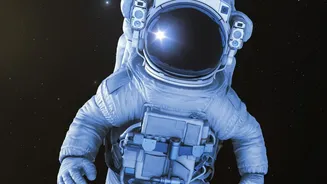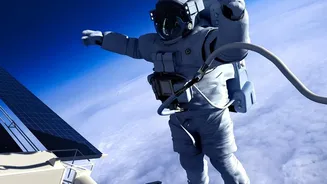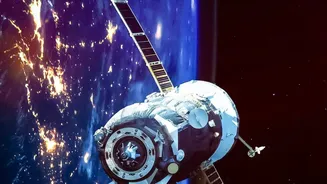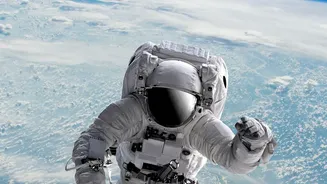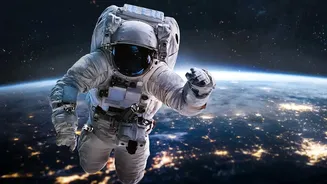


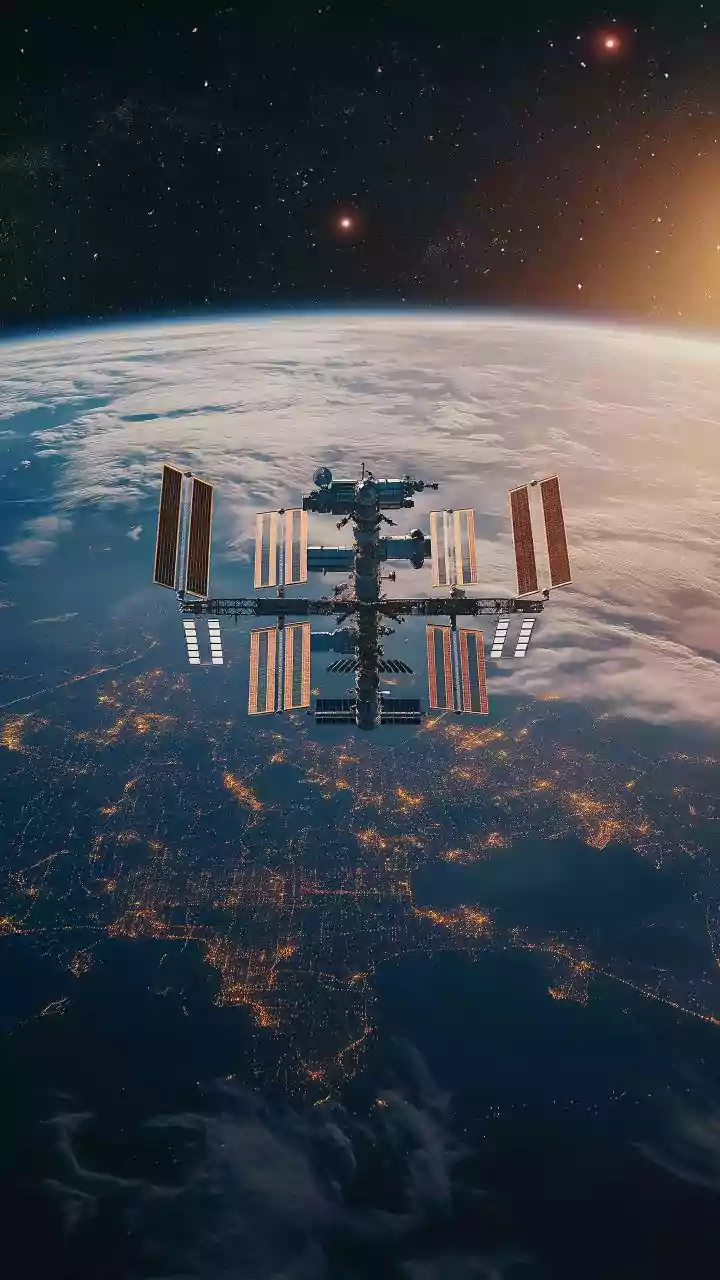
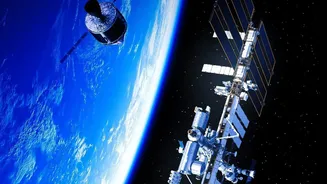
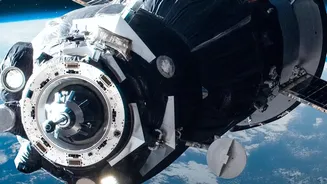
When you see astronauts floating on the International Space Station, it's easy to assume there’s no gravity. But the truth is far cooler. They're not floating; they're falling. And the only thing stopping them from crashing is incredible speed.
Gravity Doesn’t Just Disappear
First,
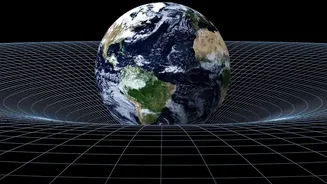
let's clear up a common misconception: space is not a zero-gravity environment. At the altitude of the International Space Station (ISS), about 250 miles up, Earth's gravity is still about 90% as strong as it is on the surface. If you could build a ladder that high and step off, you would fall straight down, just like you would from a building. The reason satellites and astronauts don't come crashing back to Earth isn't because they've escaped gravity's pull, but because they've mastered a delicate dance with it.
The 'Cannonball' Thought Experiment
The best way to understand this dance comes from a thought experiment by Isaac Newton. Imagine a cannon on top of a very tall mountain, so high that it's above the atmosphere, eliminating air resistance. If you fire a cannonball, gravity pulls it down, and it lands some distance away. If you fire it with more speed, it travels farther before hitting the ground. Now, what if you could fire it with an immense amount of speed? The cannonball would still be falling, but because the Earth is round, the ground would curve away from it at the exact same rate it falls. It would perpetually fall 'around' the Earth, never getting any closer to the surface. That, in essence, is an orbit.
So, How Fast Is 'Fast Enough'?
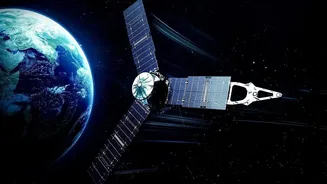
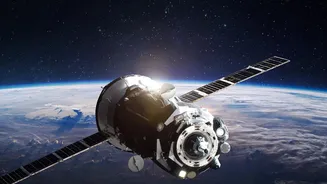
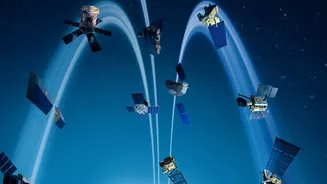
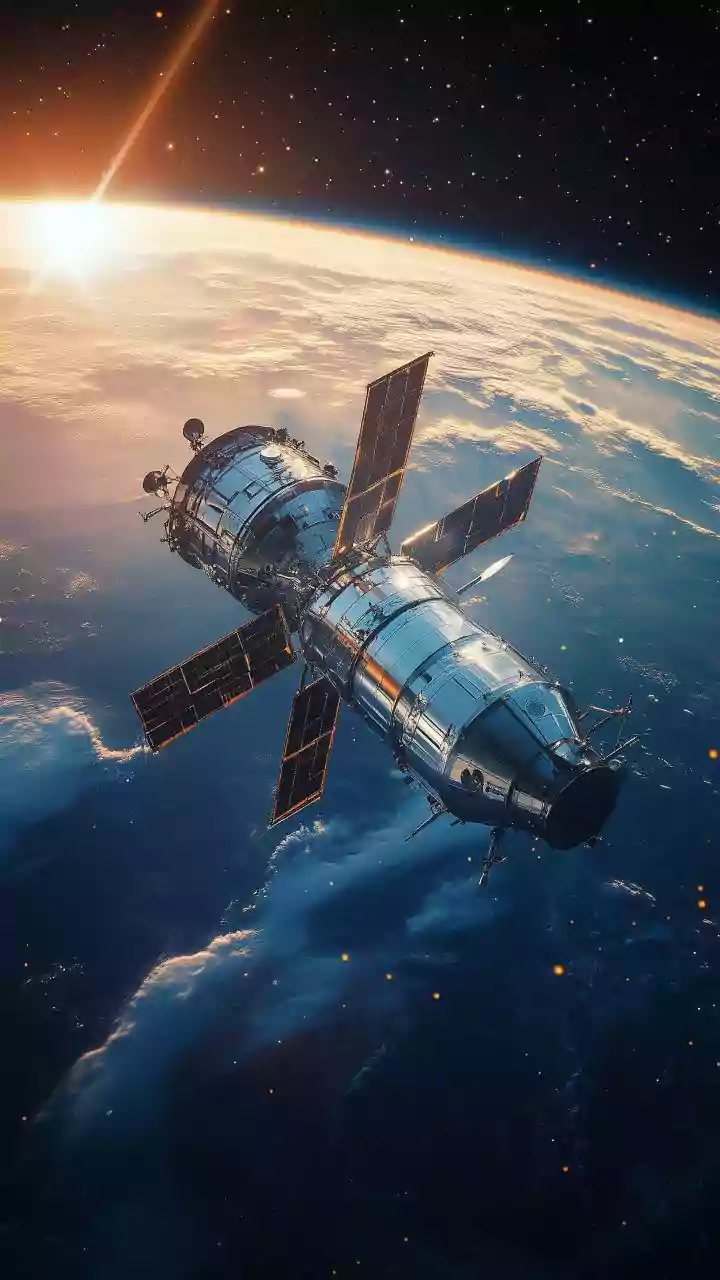
The continuous forward speed mentioned in the headline is the key to achieving this orbital state. To stay in low Earth orbit, an object like the ISS needs to travel at a staggering 17,500 miles per hour, or about five miles per second. At that velocity, for every 8 kilometers it travels forward, the Earth's surface curves downward by about 5 meters. In that same amount of time, gravity pulls the object down by… you guessed it, 5 meters. This perfect balance between forward momentum and downward pull is what keeps satellites from either plummeting back to the surface or flying off into deep space.
Weightlessness Is Just Falling With Style
This brings us back to the floating astronauts. The sensation of weightlessness they experience is more accurately called 'microgravity'. It’s the same feeling you get at the top of a roller coaster hill or, more dramatically, in a falling elevator. Since the space station, the astronauts, and every loose object inside are all falling together around the Earth at the same rate, there's no force pushing up on them. You feel 'weight' on Earth because the ground pushes back on your feet. In orbit, the floor of the station is falling away from the astronauts at the same speed they are, so they float relative to their surroundings. They are in a state of permanent free fall.
Staying Up There Requires Nudges
Even at 250 miles up, the atmosphere isn't completely gone. There are still trace amounts of air that create a tiny, but constant, drag on the ISS. This drag slowly robs the station of its speed and altitude. If left unchecked, the orbit would eventually decay, and the station would spiral back to Earth. To counteract this, spacecraft like the ISS must periodically fire their thrusters to get a 'reboost'. This little push restores the lost velocity, raises the orbit, and ensures that the delicate balance between speed and gravity is maintained, allowing the endless fall to continue.