




The Goldilocks Zone Explained
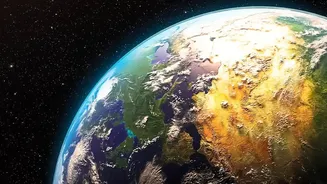
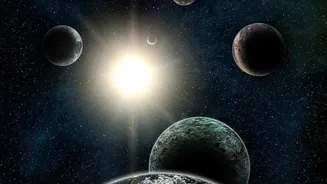
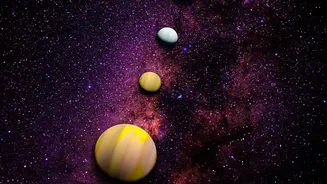
The habitable zone is the orbital region around a star where a planet's surface could theoretically support liquid water. Too close, and water boils away; too far, and it freezes solid. This “just right” distance has been the primary filter for astronomers
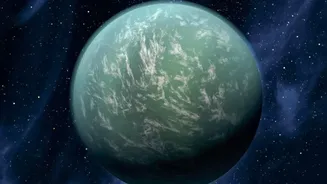
identifying potentially life-bearing exoplanets. After all, life as we know it depends on liquid water. It's a useful starting point, helping scientists narrow down the billions of planets in our galaxy to a more manageable list of candidates. Finding a rocky planet in this zone is the first step, and it has guided missions like NASA's Kepler and the Transiting Exoplanet Survey Satellite (TESS). However, scientists increasingly argue that this is just one piece of a much larger puzzle.
A Planet’s Great Insulator
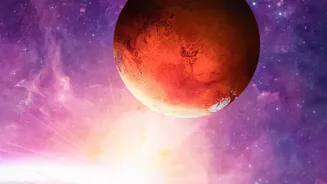
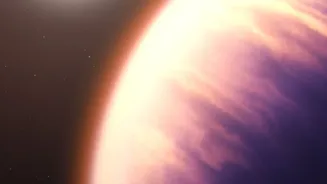
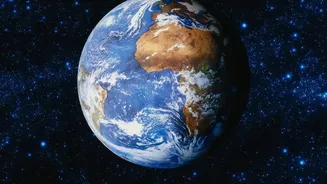
A planet’s address doesn’t matter if it isn't dressed for the occasion. An atmosphere is the single most critical factor after distance, acting as a planet's thermal blanket and protective shield. It traps heat, provides necessary chemicals, and blocks harmful radiation. Venus, for example, is technically within our sun’s habitable zone, but its runaway greenhouse atmosphere makes the surface hot enough to melt lead. Mars, on the other side of the zone, has an atmosphere about 100 times thinner than Earth’s, leaving it cold and exposed. A planet's ability to hold an atmosphere depends on its size and gravity. Too small, and the gas escapes into space. But the composition also matters; different gases have different greenhouse effects, meaning two planets at the same distance from their star could have wildly different surface temperatures based on their atmospheric makeup alone.
When Stars Get Stormy
Even with the right orbit and a good atmosphere, a planet faces another major threat: its own sun. Many of the most common stars in our galaxy, known as red dwarfs, are prone to violent temper tantrums. They erupt with powerful stellar flares and coronal mass ejections—collectively known as stellar weather—that blast nearby planets with high-energy radiation and charged particles. These events can be devastating for habitability. A single, powerful flare can dramatically alter a planet’s atmospheric chemistry, deplete its protective ozone layer, and even strip the atmosphere away entirely over time. Research shows that frequent, lower-energy flares can be more damaging in the long run than less common, high-energy ones. This means that many planets found in the habitable zones of these active stars might be constantly irradiated, making it difficult for life to ever get started, let alone survive.
Beyond the Zone
The limitations of the habitable zone concept are forcing scientists to think more broadly. Some are proposing new definitions, like the “Continuous Habitable Zone,” which considers planets that have remained stable for billions of years, allowing time for life to evolve. Others are looking at how life itself might change a planet, widening the boundaries of its own habitable zone over time. Furthermore, discoveries in our own solar system, like the subsurface oceans of moons like Europa and Enceladus, show that liquid water can exist far outside the traditional Goldilocks Zone, powered by internal heat instead of sunlight. This has led to the idea of a “subglacial” habitable zone, greatly expanding the number of places we might find life. As our tools, like the James Webb Space Telescope, get better at analyzing exoplanet atmospheres, the focus is shifting from simply finding planets in the zone to understanding the complex interplay of all these factors.