



Saturn Puts on Its Best Show
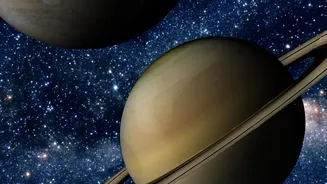
The star of the October sky is undoubtedly Saturn. On October 4, the ringed planet reaches opposition, an event where Earth passes directly between Saturn and the sun. This alignment means Saturn will be visible all night long, rising in the east around
sunset and setting in the west near sunrise. It will also be at its closest point to Earth for the year, making it appear larger and brighter than usual. You won't need a telescope to spot Saturn's steady, yellowish light, but if you have one, now is the perfect time to get a glimpse of its famous rings, which are once again visible after appearing edge-on in 2025. Look for it all month in the constellation Cetus.
A Rare Jupiter Hide-and-Seek
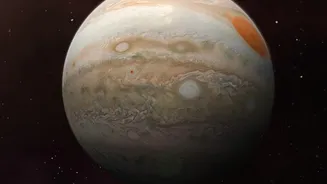
Set your alarm for the early morning of October 6 for a truly special event: a lunar occultation of Jupiter. A waning crescent moon will pass in front of the giant planet, causing it to temporarily disappear from view. This rare spectacle will be visible in darkness across the eastern and central United States and parts of Canada. Jupiter will vanish behind the moon's bright edge and reappear from the dark, unlit side about an hour later. Even without a telescope, you'll be able to watch the bright planet and the moon draw closer together in the pre-dawn sky. This is one of the best Jupiter occultations for North America in years.
The Orionid Meteor Shower Peaks
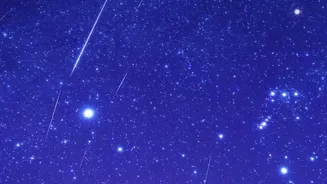
October’s main celestial fireworks display is the Orionid meteor shower, which peaks on the night of October 21-22. Produced by dust and debris left behind by the famous Halley's Comet, the Orionids are known for producing fast, bright meteors. At its peak, you can expect to see up to 20 meteors per hour under ideal dark-sky conditions. The shower's radiant—the point from which the meteors appear to originate—is the constellation Orion. This year, a bright waxing gibbous moon will be in the sky during the peak, potentially washing out some fainter meteors. For the best view, head out in the pre-dawn hours of October 22 after the moon has set.
The Full Hunter's Moon
This month's full moon, known as the Hunter's Moon, will reach its peak illumination just after midnight on the morning of Monday, October 26. However, the best time to enjoy its beauty is the evening before, on Sunday, October 25, when it rises in the east around sunset. A full moon rising on the horizon often appears larger and more golden than when it's high in the sky, creating a stunning photo opportunity. The name dates back to at least the early 18th century and reflects the season when hunters would use the bright moonlight to track game in freshly harvested fields.
More Sights to Spot
Beyond the main events, there are other celestial targets worth finding. The Draconid meteor shower offers a minor display peaking on the evening of October 7-8; it's an unusual shower best viewed in the early evening rather than after midnight. On the morning of October 11, look for Mars passing through the Beehive star cluster in Cancer, a sight best viewed with binoculars. And on the night of October 27, the Moon will have a close encounter with the beautiful Pleiades star cluster, also known as the Seven Sisters.