


The Price of a Sedentary Day
In our modern world, many of us spend a significant portion of the day sitting—at a desk, in a car, or on the couch. This prolonged sedentary behaviour often leads to a forward-hunched posture, which can weaken back muscles, cause stiffness, and lead to chronic
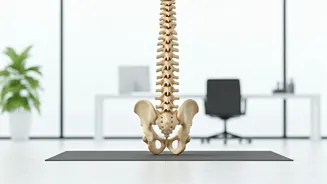
lower back pain. [4, 12, 15] This constant forward flexion puts immense strain on the spinal discs and can misalign the spine's natural curves. [4] Over time, this contributes not only to physical discomfort but also to fatigue and stress. Counteracting this daily forward fold with a gentle backbend is crucial for maintaining spinal health and overall well-being. [15]
Meet Bhujangasana: Your Spine's Best Friend
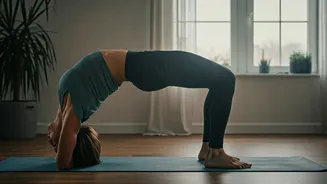
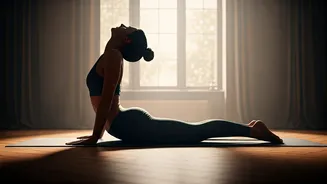
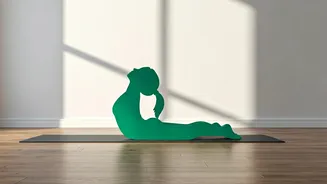
Enter Bhujangasana, popularly known as Cobra Pose. The name comes from the Sanskrit words 'bhujanga' for serpent and 'asana' for pose, as the posture mimics a cobra raising its head. [7, 15] It is a foundational backbend in yoga, celebrated for its ability to strengthen the spine, improve flexibility, and open the chest. [2, 4] Unlike more intense backbends, Cobra Pose is accessible and can be modified to suit various levels of flexibility, making it a perfect antidote to the effects of prolonged sitting. [11] Regular practice helps strengthen the muscles that support the spine, promoting better posture and alleviating discomfort. [3, 12]
Benefits Beyond the Backbend
The advantages of incorporating Cobra Pose into your routine extend far beyond simple spinal relief. This powerful pose strengthens the spine, shoulders, and arms while stretching the chest, abdomen, and shoulders. [2, 10] It helps improve posture by counteracting slouching habits and strengthening the muscles needed for an upright stance. [3, 10] The gentle pressure on the abdomen stimulates digestive organs, and the opening of the chest can improve lung capacity and aid in respiratory conditions like asthma. [2, 17] Furthermore, by enhancing blood circulation and activating the nervous system, Bhujangasana can help reduce stress, anxiety, and fatigue, leaving you feeling more energized and relaxed. [7, 10, 17]
Your Step-by-Step Guide to Cobra Pose
To perform Cobra Pose safely and effectively, follow these steps: 1. Begin by lying flat on your stomach, with your forehead resting on the floor and your legs together, tops of the feet on the mat. [2] 2. Place your palms on the floor under your shoulders, keeping your elbows tucked in close to your torso. [1] 3. Press the tops of your feet and thighs firmly into the floor to stabilize your lower body. [1] 4. On an inhalation, gently begin to lift your head, chest, and upper abdomen off the floor, using your back muscles to initiate the movement. Push lightly with your hands for support. [2] 5. Keep your neck long, shoulders rolled back and down away from your ears, and your gaze directed slightly forward or upward without straining. [1] Focus on lifting your sternum rather than your chin. [1] 6. Keep your navel on the floor and ensure you are not putting excessive weight on your hands; the primary work should be in your back muscles. [17] 7. Hold the pose for a few even breaths. To release, exhale and gently lower your body back to the mat. [2]
Beginner-Friendly Variations
If the full expression of Cobra feels like too much, there are several gentler variations to help you build strength. 'Baby Cobra' or 'Low Cobra' is an excellent starting point. In this version, you lift your chest only a few inches off the floor, keeping your elbows bent and relying almost entirely on your back muscles. [21] You can even test this by hovering your hands off the floor for a moment. [21] For those who prefer not to be on the floor, a 'Seated Cobra' in a chair or a 'Standing Cobra' against a wall can offer similar chest-opening benefits. [1, 11] These modifications allow you to experience the gentle backbend and postural benefits without putting pressure on the abdomen or lower back. [1, 11]
Safety First: Pointers and Precautions
While Bhujangasana is highly beneficial, it's not suitable for everyone. Individuals who are pregnant or have recently had abdominal surgery should avoid this pose. [3, 9] It is also contraindicated for those with severe back injuries like a herniated disc, carpal tunnel syndrome, or fractured ribs. [3, 9, 16] Listen to your body and avoid pushing into pain. If you feel any sharp pinching or compression in your lower back, lower down immediately. [1] A common mistake is to clench the buttocks, which can compress the lower spine; try to keep them relaxed. [1] Remember to move slowly and mindfully, linking your breath to the movement.