




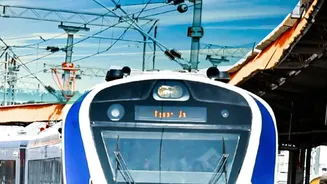


A seemingly minor detail in the new Vande Bharat Sleeper train—a sliding door—is capturing public attention, thanks to a travel video. This small feature signifies a major shift in Indian Railways' approach to passenger comfort and modern design.
What's All the Buzz About a Door?
Anyone
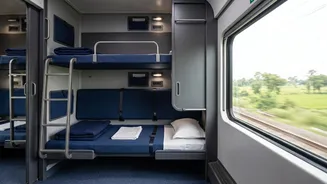
who has travelled overnight in a 3AC coach, especially in a berth near the main door, knows the struggle. The constant traffic of passengers and vendors, the clatter of the door, and drafts of cold air can make for a restless night. A video by travel content creator Dhananjay Kumar highlighted how the new Vande Bharat Sleeper tackles this issue head-on. The design incorporates an automatic sliding door that separates the main passage and toilets from the sleeping area. More importantly, there is a significant gap between this door and the first set of berths, creating a buffer zone that shields passengers from the usual disturbances of the entranceway. This thoughtful layout detail, moving the sleeping quarters further from the noisy entrance, has been widely praised online as a simple yet effective solution to a long-standing passenger complaint.
More Than Just a Door
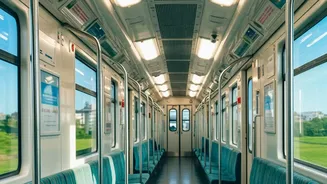
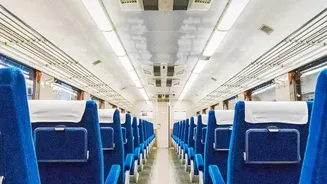
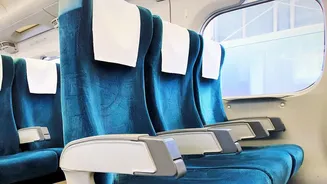
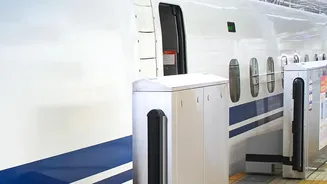
The sliding door is just one component of a broader effort to make the Vande Bharat Sleeper a premium travel experience, potentially replacing Rajdhani Express trains on long-distance routes. The trains, manufactured by BEML in collaboration with Integral Coach Factory (ICF), are designed to operate at speeds up to 160 kmph. Each 16-coach trainset is fully air-conditioned and can accommodate around 823 passengers across AC First, Two-Tier, and Three-Tier classes. The focus is on a smoother, quieter journey. The coaches feature improved suspension and soundproofing to reduce jerks and noise, automatic exterior plug doors, and wider, sealed gangways between coaches. These elements work together to create a more stable and peaceful environment, transforming the quality of overnight train travel.
A New Standard in Onboard Comfort
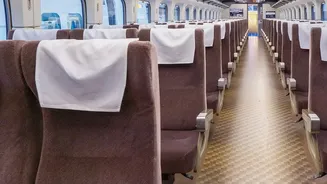
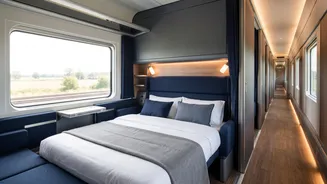
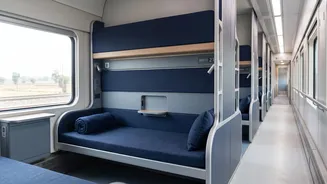
Beyond the ride quality, the interiors of the Vande Bharat Sleeper have been completely re-imagined. Berths are designed to be more ergonomic and comfortable, with better cushioning. Each berth is equipped with its own reading light and USB charging ports. The trains also feature sensor-based lighting in common areas, public announcement and visual information systems, and modular pantries. Toilets have also seen a major upgrade, with bio-vacuum systems designed to be odour-free. For those travelling in AC First Class, there's even the luxury of a hot shower. Safety has also been prioritised, with CCTV cameras, advanced fire safety systems, and the indigenous Kavach anti-collision system integrated into the train's design.
When and Where Can You Travel?
The era of the Vande Bharat Sleeper is already here. After the first prototype was unveiled in September 2024, the first commercial service was launched between Howrah and Guwahati in January 2026. More recently, a service connecting Bengaluru and Mumbai was flagged off on November 1, 2026, cutting travel time between the two major cities by up to eight hours. This Bengaluru–Mumbai train makes stops at key stations including Pune, Solapur, and Kalaburagi. Indian Railways has ambitious plans, aiming to roll out hundreds of these sleeper trains in the coming years, connecting more cities across the country and fundamentally upgrading the long distance travel network. As more routes are announced, these modern trains are set to become a familiar sight on India's rails.