




MS Dhoni: The Instinctive Genius
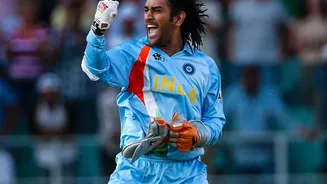
Mahendra Singh Dhoni's brand of intelligence wasn't learned from a coaching manual; it was pure instinct. Known for his preternatural calm, 'Captain Cool' had an uncanny ability to make bold, game-changing decisions that often defied logic but delivered
incredible results. From promoting himself up the order in the 2011 World Cup final to his famously unorthodox field placements, Dhoni played chess while others played checkers. His insights, often picked up by the stump mic, revealed a mind that was always several steps ahead of the play. Dhoni’s leadership was also about emotional intelligence; he knew how to get the best out of his players, turning journeymen into match-winners and creating an unshakeable sense of belief in his team.
Shane Warne: The Master Manipulator
Shane Warne's genius was as much psychological as it was technical. He wasn't just a leg-spinner; he was a master showman who played with the batsman's mind. Warne created an aura of mystique, famously claiming to have an arsenal of deliveries, some of which may not have even existed, just to plant seeds of doubt. His craft was built on 'high skill and low cunning', setting up batsmen over the course of several balls, or even several overs, for an inevitable dismissal. The 'Ball of the Century' that bamboozled Mike Gatting in 1993 was a prime example of his skill, but his true intelligence lay in his relentless tactical pressure and his ability to turn a match with a single, perfectly executed plan.
Anil Kumble: The Engineer's Brain
Anil Kumble brought an engineer's precision and analytical mindset to the art of leg-spin. Holding a degree in Mechanical Engineering, Kumble wasn't a classical, big-turning spinner. Instead, he used relentless accuracy, subtle variations in pace, and a deadly flipper to dismantle batting lineups. His intelligence was methodical and strategic. This was most famously demonstrated when he became only the second bowler in Test history to take all ten wickets in an innings against Pakistan in 1999. As a player and later a captain and coach, 'Jumbo' was known for his studious approach to the game, always planning and preparing with a level of detail that set him apart.
Kumar Sangakkara: The Articulate Tactician
Few cricketers have ever sounded as intelligent as Kumar Sangakkara, and his gameplay backed it up. A qualified lawyer, Sangakkara possessed a sharp, eloquent, and deeply analytical mind. His intelligence was evident not just in his elegant batting but also in his captaincy and wicketkeeping. He was a student of the game, constantly thinking about technique, mindset, and strategy. Behind the stumps, he had the best view in the house, using his position to read the game, advise his bowlers, and manipulate field settings. Sangakkara was a statesman of the sport, understanding that a player's responsibility often extended beyond the boundary rope, a perspective that showcased his profound intellect.
Mike Brearley: A Degree in People
Mike Brearley is perhaps the most famous example of a player picked almost exclusively for his brain. An average cricketer by his own admission, Brearley was an extraordinary captain for England. Australian bowler Rodney Hogg famously said Brearley had a 'degree in people', and it was this skill that made him legendary. A psychoanalyst by profession, he possessed a unique talent for man-management, able to inspire and get the best out of complex personalities like Ian Botham and Bob Willis. His tactical brilliance and ability to read players and situations turned the 1981 Ashes series on its head. Brearley's career is the ultimate proof that in cricket, a sharp mind can be the most potent weapon of all.