


Why Traditional Room Labels Fail Us
For generations, we’ve been taught to store things where they 'belong'. Kitchen items go in the kitchen, bedroom items in the bedroom, and so on. This makes sense in a large house with distinct, single-purpose rooms. But in modern Indian apartments, where space
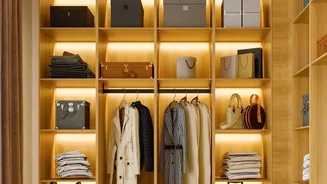
is a premium and rooms are often multi-functional, this rigid system breaks down. Your 'living room' might also be your office, your gym, and your dining area. Storing your work laptop in the bedroom cupboard or your yoga mat in the hall closet creates needless friction in your daily routine. You end up making multiple trips across the house just to gather the items you need for one single activity, leading to frustration and clutter.
The New Philosophy: Activity Zones
Instead of organising by room, try organising by activity. This concept, sometimes called 'zone-based storage', means you group items together based on how you use them. Think about your daily life not in terms of rooms, but in terms of tasks: getting ready in the morning, working from home, preparing a meal, or relaxing in the evening. By creating mini-stations or 'activity zones' for these tasks, you keep everything you need for a specific purpose in one convenient place. This simple shift in perspective is transformative. It streamlines your routines, reduces clutter, and makes your home feel more intuitive and supportive of your actual lifestyle.
Your Morning Routine, Streamlined
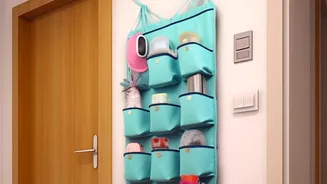
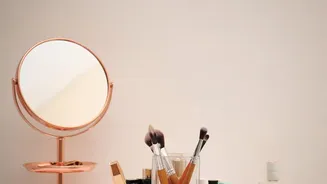
Let’s take a common example: your morning rush. Traditionally, the items for this are scattered. Your clothes are in the bedroom wardrobe, your skincare is in the bathroom, your work bag is by the door, and your coffee mug is in the kitchen. Now, imagine an 'Exit Station' near your front door. This could be a slim console table or a wall-mounted unit. Here, you could have a small mirror, a tray for your keys and wallet, a hook for your work bag, and a shelf for your 'on-the-go' items like sunscreen, a travel pass, and a portable charger. You create one smooth, efficient flow from waking up to walking out the door, rather than a chaotic scramble across multiple rooms.
The Five-Minute Commute: A WFH Zone
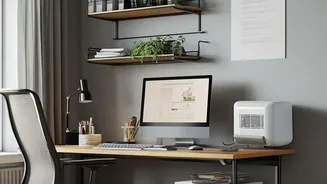
The work-from-home era has made us all too familiar with the 'office' bleeding into personal space. An activity zone is the perfect solution. Designate one corner or even a single cabinet as your complete office. This doesn't have to be a whole room. It could be a 'work-in-a-box' setup where a stylish storage ottoman holds your laptop, charger, notebook, and pens. At the start of the day, you 'commute' to your designated spot and set up. At the end of the day, everything goes back into the box, allowing you to mentally and physically disconnect from work and reclaim your living space.
Beyond the Daily Grind: Hosting and Hobbies
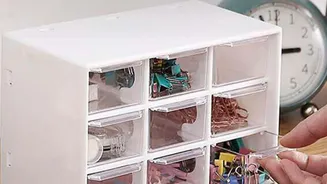
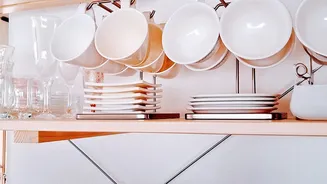
This principle works for infrequent activities too. Do you have special crockery, napkins, and candles you only use when guests are over? Instead of storing them separately in the kitchen and linen closet, create a 'Hosting Kit'. Keep everything together in one designated box in your storage unit or on a high shelf. When you have people over, you just need to grab one box. The same applies to hobbies. Whether it’s painting, knitting, or electronics, having all your supplies in a portable caddy or a dedicated drawer means you’re more likely to enjoy your hobby, as setting up and cleaning up becomes effortless.
How to Start Your Reorganisation
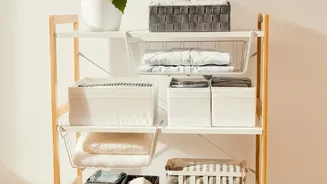
Making this shift can feel daunting, so start small. Don't try to reorganise your entire house in one weekend. Pick one activity that causes you daily friction—like making your morning chai or your kids’ study time. Gather every single item you need for that task from around the house. Then, find a logical home for all of them together, as close as possible to where the activity happens. This might be a single drawer in the kitchen, a basket on a shelf, or a small rolling cart. Once you experience the ease of having one activity perfectly organised, you’ll be motivated to create more zones throughout your home.