


A New Kind of Satellite
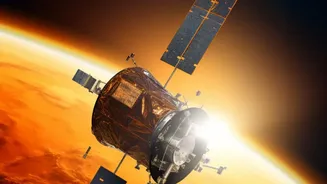
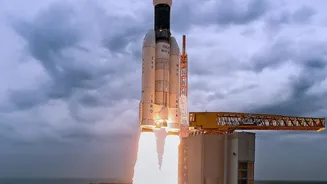
The headline-making mission is from Indian startup TakeMe2Space, which is launching its MOI-1A satellite on October 1, 2026, aboard a SpaceX rocket. Described as India's first orbital computing satellite, this spacecraft represents a fundamental shift.
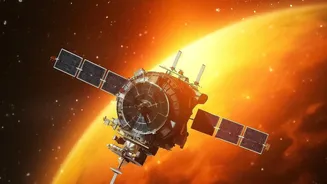
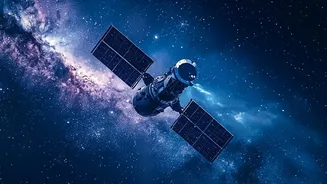
Instead of just capturing vast amounts of raw data and beaming it all back to Earth for analysis, MOI-1A is designed to do the thinking in space. This sub-50 kg satellite is equipped with powerful edge-computing processors, essentially giving it an onboard brain to process information in real-time.
How Onboard AI Changes the Game
The key innovation is 'orbital computing'. Traditionally, Earth-observation satellites collect terabytes of imagery and data, which must then be transmitted to ground stations. This process consumes enormous bandwidth, time, and money. MOI-1A flips the script. Customers can upload their own artificial intelligence models to the satellite. As it passes over a designated area—be it agricultural land, a mining operation, or a shipping lane—the AI processes the imagery on the spot. It then sends back the results or the specific insights requested, not the mountain of raw data. This makes data analysis faster, more efficient, and more cost-effective.
Exploring a Range of Applications
The potential uses for this technology are vast and varied. TakeMe2Space has already signed 23 customers for this single mission, spanning multiple sectors. These include companies in agriculture that can monitor crop health, mining firms assessing sites, and insurance companies evaluating conditions on the ground. Other applications include supply-chain management, geospatial mapping, and even education. By providing targeted analysis directly from orbit, the satellite offers a bespoke intelligence service that was previously impractical.
Part of a Broader National Strategy
While the TakeMe2Space launch is a significant private-sector milestone, it aligns with a larger strategic push by the Indian Space Research Organisation (ISRO). ISRO has confirmed that AI and machine learning are now essential for space missions, a major change from just a decade ago when they were largely theoretical. The space agency has plans to launch a fleet of 50 new AI-powered satellites over the next five years to enhance the nation's surveillance and geo-intelligence capabilities. These future satellites are being designed to interact with each other, creating an intelligent, layered network from low Earth orbit to geostationary orbit. For instance, a high-altitude satellite could detect an area of interest and task a lower-orbiting satellite to perform a more detailed observation. This integrated approach is seen as crucial for everything from disaster management to border security.
From Chandrayaan to Commercial Ventures
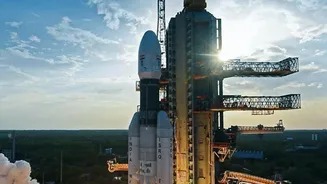
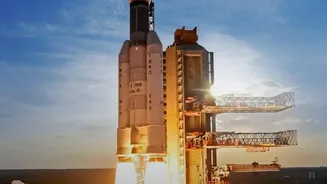
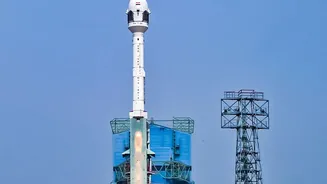
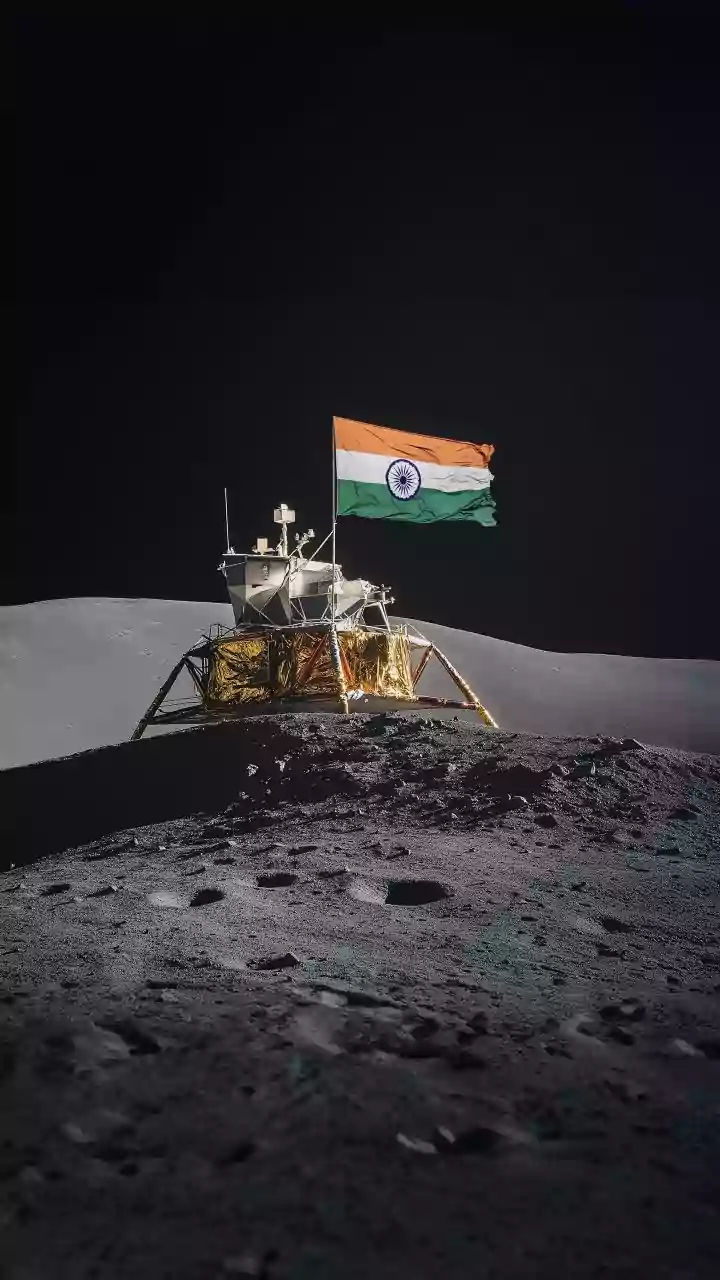
ISRO has already successfully deployed AI in its missions. The celebrated Chandrayaan-3 mission used AI algorithms to help its lander and rover navigate the lunar surface safely, avoiding obstacles and making real-time decisions. This demonstrated India's growing prowess in creating autonomous systems for complex environments. The same principles of onboard processing and intelligent decision-making are now being commercialised and expanded. Beyond observation, ISRO is also developing the AI-powered humanoid robot, Vyommitra, to test systems for the Gaganyaan human spaceflight programme. This shows that from deep space exploration to commercial Earth observation, AI is becoming a cornerstone of India's ambitions in space.