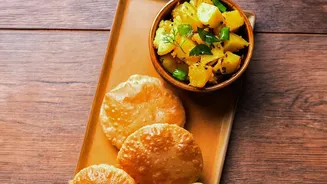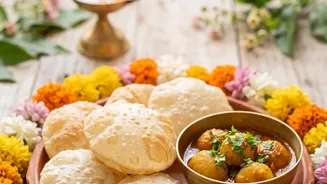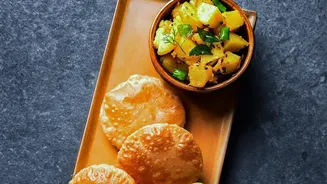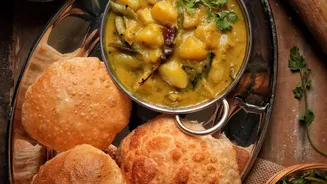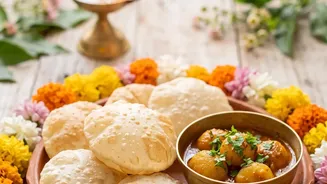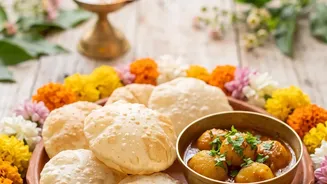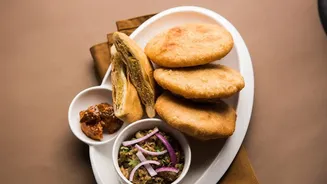

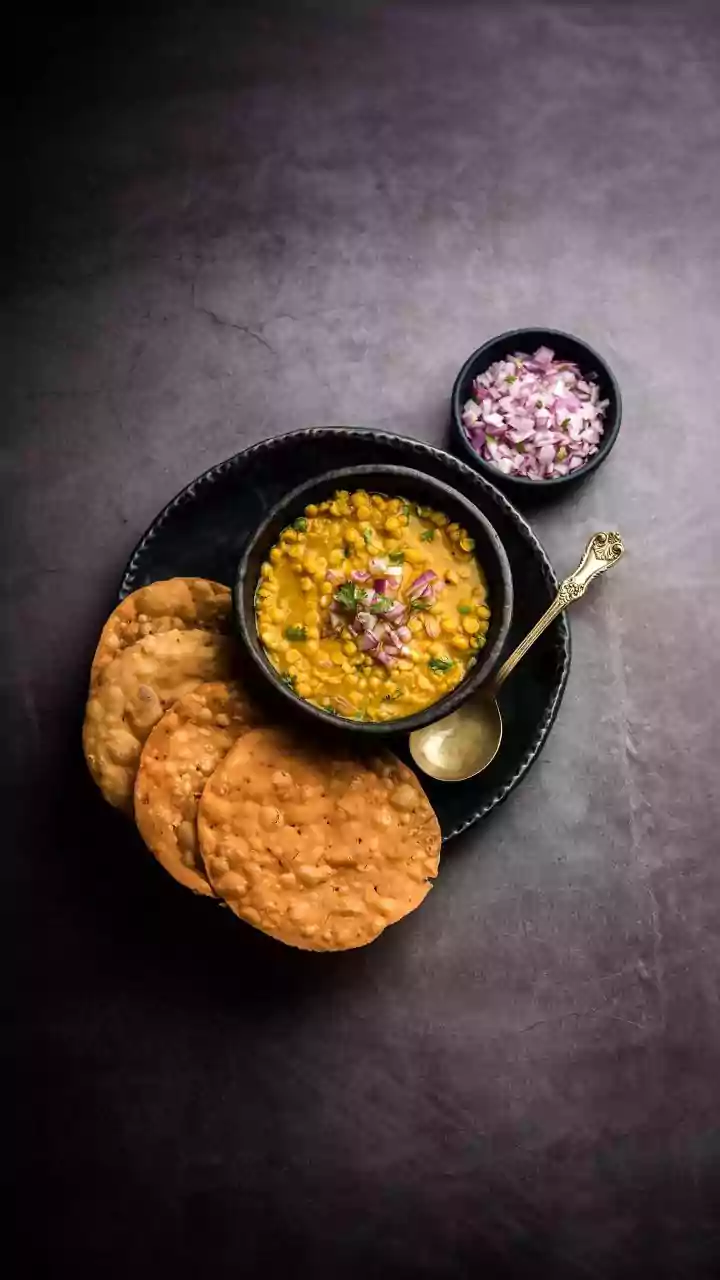




Some mornings are for function. A quick slice of toast, a smear of jam, and you’re out the door. But other mornings, memory demands something more. It asks for the breakfast that feels like a hug: the classic, timeless puri sabzi.
An Entire Sensory Experience
Toast announces itself
with a mechanical pop. Puri sabzi, on the other hand, is a full-blown sensory opera. It begins with the rhythmic sound of dough being kneaded, followed by the soft slap as it’s rolled into perfect circles. Then comes the hiss and sizzle as a puri hits hot oil, puffing up into a golden sphere of joy. While this happens, the air is already thick with the fragrance of the sabzi—the earthy aroma of boiling potatoes mingling with a tempering of cumin seeds, turmeric, and ginger. It isn't just food being prepared; it's an atmosphere being created, one that hooks directly into the parts of our brain reserved for comfort and home.
The Ritual of Togetherness
Toast is often a solitary affair, eaten while scrolling through a phone or rushing to a meeting. Puri sabzi is rarely eaten alone. It is a dish of community and occasion. It’s the star of lazy Sunday brunches, festive mornings, and long-awaited family gatherings. The act of making it is often a shared one, a tradition passed down through generations. Someone rolls the puris, another fries them, and everyone gathers to eat them hot and fresh. This shared experience is what transforms a simple meal into a cherished ritual. It’s a symbol of abundance and celebration, a stark contrast to the sheer utility of modern convenience breakfasts.
The Modern Breakfast and Its Compromise
Let's be clear: there is nothing inherently wrong with toast and jam. In a world of tight schedules and morning rushes, its appeal is undeniable. It’s fast, it’s easy, and it gets the job done. Western-style breakfasts like cereals, toast, and smoothies have become staples in urban Indian households for precisely this reason. However, this efficiency comes at a cost. The trade-off for speed is often a loss of ritual, a disconnect from the process, and a lack of the deep, sensory satisfaction that traditional meals provide. A slice of processed bread with sugary jam simply cannot compete with the cultural and emotional weight of a meal that has been a part of family life for generations.
A Craving for More Than Just Food
Ultimately, the nostalgia associated with puri sabzi isn't just about the taste, as delicious as it is. It’s a longing for a specific feeling: the warmth of a family kitchen, the joy of a special occasion, and the sense of belonging that comes from a shared meal. It reminds us of childhood, of grandparents' homes, and of a time when life perhaps moved a little slower. Animated videos celebrating the '90s Indian village life' often feature the making of puri sabzi, highlighting its role as a cornerstone of nostalgic memory. When we crave puri sabzi, we are craving that entire universe of comfort. Toast and jam might fill a stomach, but it doesn't have a story to tell.