


What Are Non-Exhaust Emissions?
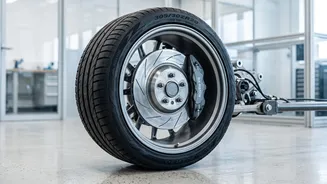
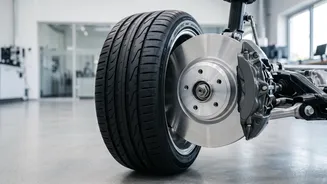
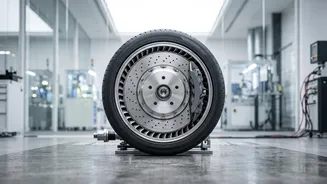
For decades, the focus of emission standards has been on harmful gases and particulate matter (PM) released from a vehicle's engine. However, a significant source of pollution comes from non-exhaust emissions. Every time a driver hits the brakes, the friction
wears down the brake pads, releasing tiny metallic particles into the air. Similarly, as tyres roll across the road, they abrade and shed microscopic pieces of rubber and other synthetic compounds. These particles contribute to the overall PM pollution in our cities, and they are generated by all vehicles, including electric ones which have zero tailpipe emissions.
What Do the Draft BS-VII Rules Propose?
The Ministry of Road Transport and Highways (MoRTH) has issued draft notifications that expand the scope of vehicle pollution regulation significantly. While tailpipe emission limits for pollutants like nitrogen oxides remain largely the same as in the current BS-VI norms, the new rules introduce a groundbreaking change: regulating brake and tyre emissions. For passenger cars, the proposal sets a limit for brake-related particulate matter (PM10) starting from April 1, 2031. The initial limit would be 7 milligrams per kilometre for conventional and hybrid cars, and a stricter 3 mg/km for pure electric vehicles. By 2035, a uniform 3 mg/km limit is proposed for all passenger vehicles. Specific limits for tyre abrasion are also planned, though the exact values are expected to be notified separately. These regulations are part of a phased rollout of the broader BS-VII norms, which are slated to begin for new passenger cars from April 1, 2029.
Why This Shift in Focus Now?
This move reflects a global shift in understanding and regulating vehicle pollution, aligning India's standards more closely with the upcoming Euro 7 norms in Europe. As engines become cleaner, the relative contribution of non-exhaust sources to air pollution becomes more significant. Health experts have increasingly pointed to the dangers of fine particulate matter, which can penetrate deep into the lungs and bloodstream, causing a range of health issues. By targeting brake and tyre wear, the government aims to address a persistent source of pollution that affects air quality even as India pushes for the electrification of its vehicle fleet. The new rules also emphasise real-world driving emissions testing rather than just laboratory conditions, ensuring vehicles remain compliant throughout their operational life.
Impact on the Auto Industry
The proposed timeline and new requirements present a significant challenge for automakers. Manufacturers have flagged concerns about the tight deadline, warning it could disrupt product launch plans and require substantial investment in research and development. To meet the new brake dust limits, companies may need to explore new materials for brake pads or advanced braking systems, like enhanced regenerative braking in EVs. Similarly, tyre manufacturers will need to innovate to reduce abrasion without compromising safety and performance. Industry bodies have reportedly discussed seeking a later start date to manage the technological transition, arguing that resources may be diverted from EV development to ensure compliance for conventional vehicles.
What This Means for Car Buyers
For the average car buyer, the implementation of BS-VII norms will likely have a few key effects. Firstly, there could be an increase in the cost of new vehicles, as manufacturers pass on the expense of new technologies and more rigorous testing. However, the final impact on prices remains uncertain until the rules are finalised. Secondly, the new rules also include provisions for monitoring battery durability in electric and hybrid vehicles, ensuring they retain a certain percentage of their capacity over years of use, which is a win for consumers. Finally, the introduction of an 'Environmental Vehicle Passport' will provide buyers with transparent information on their vehicle's fuel consumption, emissions, and battery health. It is important to note that these rules will apply only to newly manufactured vehicles from the specified dates; they will not affect existing BS-VI compliant cars on the road.