


Why Drainage Is Non-Negotiable
Before you even consider pot size or material, understand this: strawberries demand excellent drainage. Their roots will fail to thrive if they sit in waterlogged soil, a condition often called having 'wet feet'. Without proper drainage, water pools at the bottom
of the pot, depriving roots of the oxygen they need to survive. This leads directly to root rot, a fungal disease that is one of the most common reasons container strawberries fail. A good container allows excess water to escape freely, preventing this issue and ensuring the plant can absorb nutrients effectively. Any pot you choose must have drainage holes; if a decorative pot lacks them, you must drill them yourself before planting.
Finding the Right Size
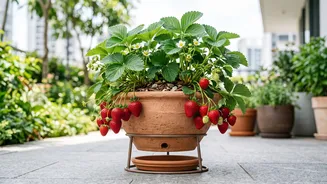
While strawberries have relatively shallow roots, a pot that is too small will dry out quickly and restrict growth. For a single strawberry plant, select a pot that is at least 15-20 cm deep and 20-30 cm wide. If you plan to put multiple plants in one container, like a trough or window box, opt for something larger. A 60 cm long planter can typically accommodate three plants spaced about 20-25 cm apart. A larger volume of soil not only gives roots more room but also retains moisture more evenly, reducing the stress on your plants during hot days.
Terracotta: The Breathable Classic
Terracotta pots are a classic and attractive choice. Their main advantage is porosity; the unglazed clay breathes, allowing moisture and air to pass through the walls. This provides excellent aeration for the roots and acts as a natural buffer against overwatering. However, this same feature means they dry out much faster than other materials, which can be a problem in hot climates and requires more frequent watering. They are also heavier and more fragile than their plastic counterparts.
Plastic Pots: The Lightweight Retainer
Plastic containers are a popular, affordable, and lightweight option, making them ideal for balconies with weight restrictions. Their non-porous walls retain moisture for much longer, meaning you'll water less frequently compared to terracotta. The main drawback is a lack of breathability. In direct sun, dark-coloured plastic pots can overheat, potentially stressing the roots. Over time, roots in a solid pot can also begin to circle the inside wall, which may eventually lead to the plant becoming root-bound.
Fabric Grow Bags: A Modern Alternative
Fabric grow bags offer some of the best features for root health. The porous material provides exceptional drainage and aeration. When roots reach the fabric wall, they are 'air-pruned', which encourages them to branch out into a more fibrous, healthy root system instead of circling. The biggest consideration is that, like terracotta, they dry out very quickly and require diligent watering, especially in summer. While effective, they may not be as durable as rigid pots, often lasting only a few seasons.
Specialty Planters and Potting Mix
Beyond standard pots, you might consider hanging baskets or vertical planters, which are excellent space-savers perfect for trailing strawberry varieties. Just be aware that these can dry out even faster than other containers. Regardless of the container you choose, what you fill it with is just as important. Never use heavy garden soil, which compacts easily and drains poorly in pots. Instead, use a high-quality, well-draining potting mix. A good blend often contains compost, peat or coir, and perlite to ensure the perfect balance of moisture retention and aeration.