



A New Era of Celestial Surveillance
For centuries, our view of the heavens has been limited by the size, sensitivity, and location of our telescopes. We could see the big and the bright, but countless smaller, darker, or faster-moving objects remained hidden. This is particularly true for
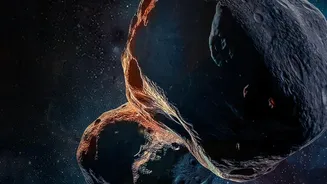
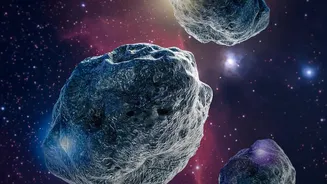
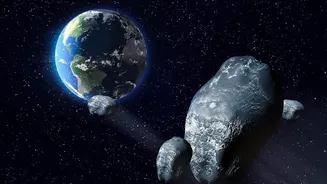
near-Earth objects (NEOs) and the faint signatures of high-energy cosmic rays. Traditional telescopes could only scan small patches of the sky at a time, making a comprehensive census of potential asteroid threats a slow, painstaking process. Now, a new suite of ground and space-based observatories is changing the game entirely. By combining vast fields of view, incredible sensitivity, and advanced data processing, they are transforming planetary defence from a reactive practice into a proactive science.
Casting a Wider Net for Asteroids
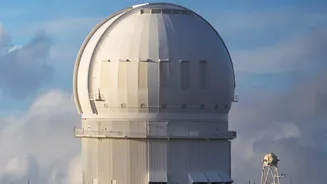
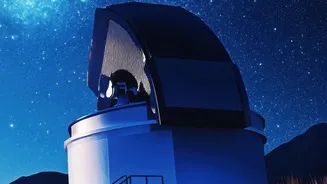
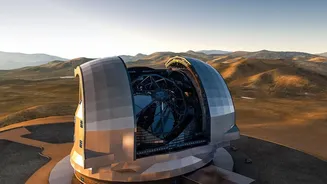
The Vera C. Rubin Observatory in Chile is a prime example of this new paradigm. Set to begin its decade-long Legacy Survey of Space and Time (LSST), Rubin is an asteroid-finding machine. Its power lies in its unique combination of a large mirror and the world's most powerful digital camera, capable of imaging the entire southern sky every few nights. This rapid, repetitive scanning allows astronomers to spot the faint movements of asteroids against the background of stars. Even in its preliminary testing phases, Rubin has already identified thousands of previously unknown asteroids, including hundreds of NEOs. Its ability to detect smaller and more distant objects than ever before will create the most detailed census of our solar system, dramatically increasing our chances of finding potentially hazardous asteroids with years of advance warning.
Seeing the Unseen with Infrared
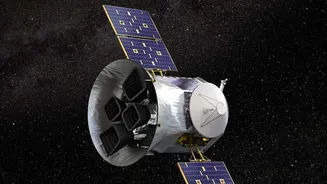
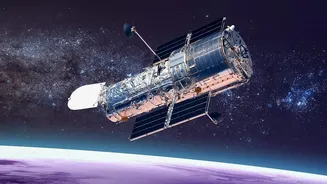
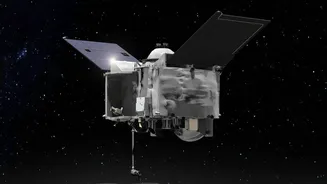
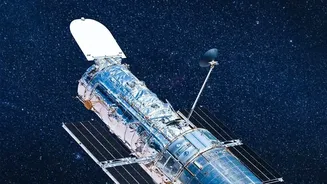
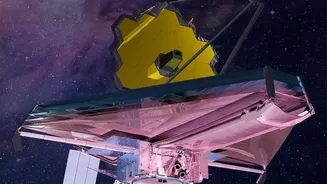
While Rubin scans in visible light, other next-gen telescopes use infrared to spot objects that would otherwise be missed. The recently launched Nancy Grace Roman Space Telescope and the upcoming NEO Surveyor are designed to detect the heat signature of space rocks. Many asteroids are as dark as charcoal, reflecting very little sunlight and making them nearly invisible to optical telescopes. However, as they are warmed by the sun, they glow in infrared light. NEO Surveyor, NASA's first mission built specifically for planetary defence, will be positioned between the Earth and the Sun, allowing it to spot asteroids approaching from the Sun's direction—a notorious blind spot for ground-based observatories. Roman, with its enormous field of view 100 times larger than Hubble's, will contribute to this effort by characterising the size, shape, and composition of these objects with incredible precision.
Decoding Messages from Deep Space
Beyond planetary defence, these advanced instruments are also deepening our understanding of the fundamental universe by studying cosmic rays—highly energetic particles that bombard Earth from deep space. The origin of the most powerful cosmic rays remains a mystery, but telescopes can help trace them. Rather than detecting the rays directly, some ground-based observatories like the Pierre Auger Observatory and radio arrays like LOFAR detect the after-effects. When a high-energy cosmic ray hits our atmosphere, it creates a cascade of secondary particles called an 'air shower', which emits faint radio waves or flashes of fluorescent light. By detecting these faint signals across a network of antennas, scientists can reconstruct the energy and trajectory of the original particle, pointing back toward its violent cosmic source, such as a supernova or black hole. Even the James Webb Space Telescope contributes, as cosmic rays can sometimes interfere with its sensitive instruments, providing data on their presence.