



First, Understand the Spectacle
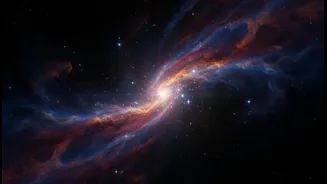
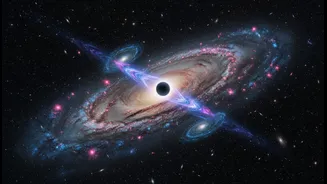
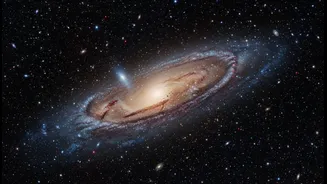
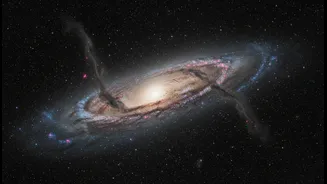
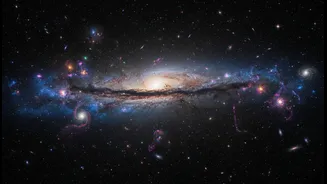
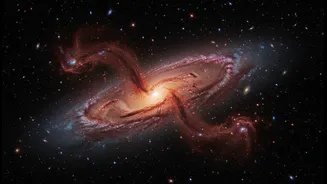
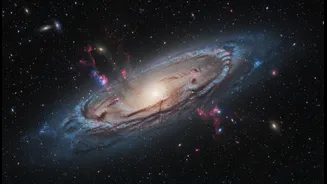
Before diving in, it helps to know what you're looking at. Centaurus A, located about 11 to 13 million light-years away, is the nearest active galaxy to Earth. Its peculiar shape is the result of a massive elliptical galaxy colliding with a smaller spiral
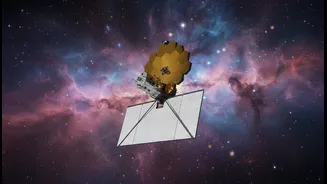
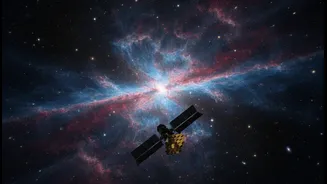
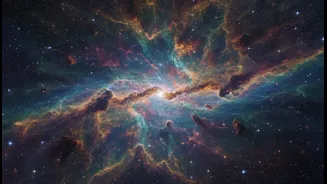
galaxy millions of years ago. At its heart lies a supermassive black hole, 55 million times the mass of our sun, that is actively feeding on surrounding material and blasting out powerful jets. Webb's new image, taken with its Mid-Infrared Instrument (MIRI), pierces through the thick dust lanes that obscure visible light, revealing the glowing, intricate structures of gas and dust shaped by this violent history and the black hole's immense energy.
Explore the Image with Interactive Tools
You don't need to be a NASA scientist to explore the image in detail. Several organizations provide free, web-based tools that let you zoom, pan, and even compare different views of the galaxy. NASA, ESA, and the Space Telescope Science Institute (STScI) host high-resolution versions of the image, often with interactive viewers that let you examine the fine details, from the wispy filaments of dust to the densely packed field of individual stars. You can also use portals like MAST (Mikulski Archive for Space Telescopes) to find the raw data, or explore platforms like ViewSpace, which are designed to make the universe accessible to a wide audience.
Become a Citizen Scientist
Want to contribute to actual research? Projects on platforms like Zooniverse, such as Galaxy Zoo, invite the public to help classify galaxies from Webb and other telescopes. While a specific project for this new Centaurus A image may not be live yet, familiarizing yourself with these platforms is a great first step. By answering simple questions about galaxy shapes and features, volunteers help astronomers process the massive amounts of data and can even be the first to lay eyes on a newly observed feature. NASA curates a list of active citizen science projects, from hunting for asteroids to spotting star-forming clumps, many of which can be done with just a laptop or smartphone.
Engage with Educational Resources
For students and teachers, this image is a perfect teachable moment. NASA's JPL Education site offers extensive materials on the Webb telescope, explaining how it studies galaxies, exoplanets, and the early universe. These resources often include lesson plans, articles, and activities designed to connect complex science to classroom learning. You can explore topics like the electromagnetic spectrum, galaxy collisions, and the life cycle of stars using Centaurus A as a real-world example. The image provides a practical entry point to discuss why infrared astronomy is so powerful, as it can see through dust that blinds other telescopes like Hubble.
Process the Data Yourself
For those with a technical and creative flair, the actual data behind the image is publicly available. Citizen scientists and amateur astronomers often download raw data from the MAST archive to create their own processed images. This involves using software to assign colors to different infrared filters, balance brightness and contrast, and highlight specific features. While it requires some learning, tutorials are available online, and the result is a unique, personal version of the cosmic portrait. This process turns scientific data into art, as demonstrated by the many stunning amateur-processed images in The Planetary Society's image library.
Create and Share Inspired Art
Science and art are deeply connected. Use the image of Centaurus A as an inspiration for your own creative work. This could be a painting, a piece of digital art, a musical composition, or even a short story. Scientists themselves often use creative means to understand data, such as "data sonification," where data points are turned into sounds, or 3D printing models of celestial objects. Sharing your creation on social media or in online communities can connect you with other enthusiasts and offer a new way to appreciate the universe's beauty. The goal is to translate the awe of the cosmos into a tangible form that can be shared.